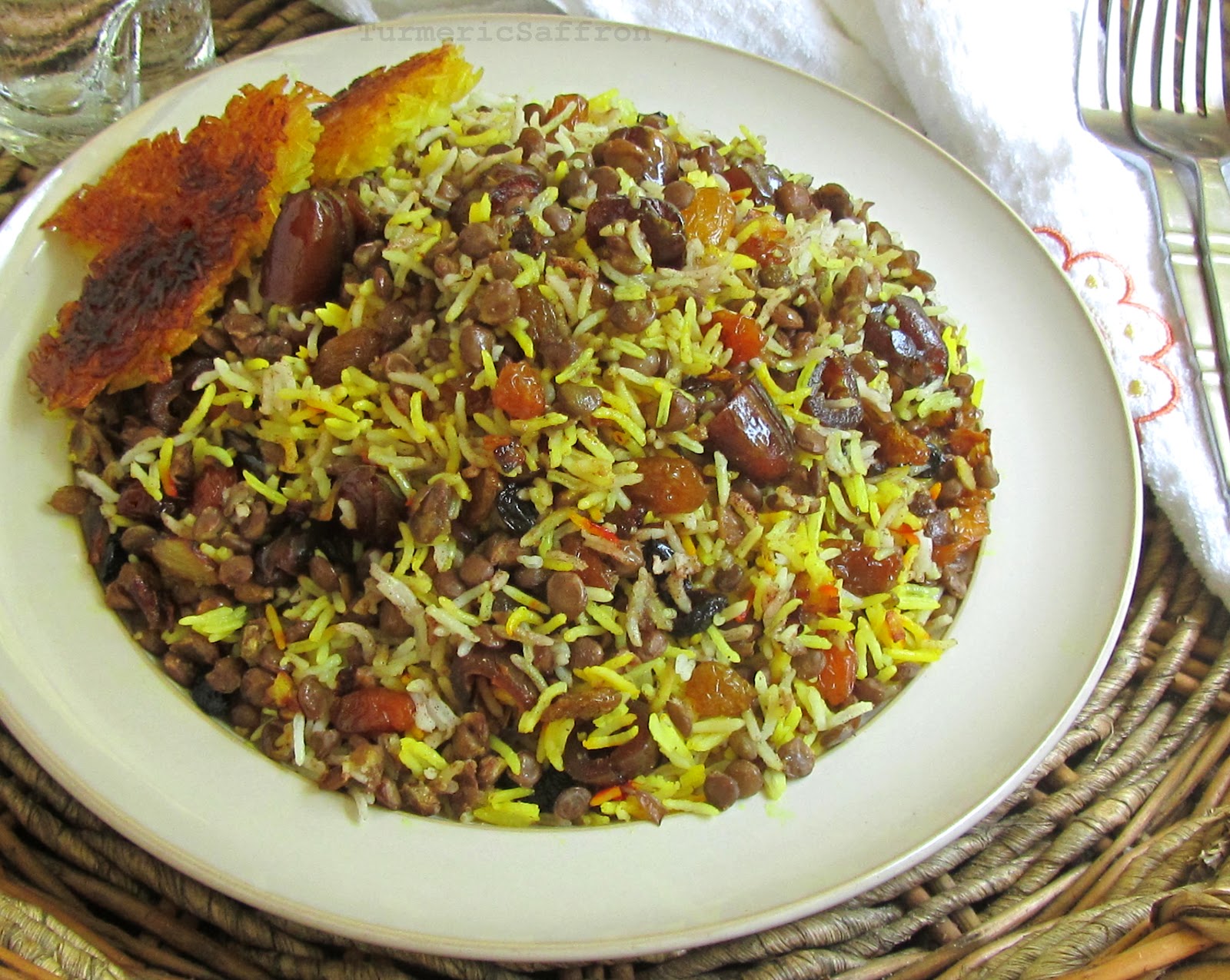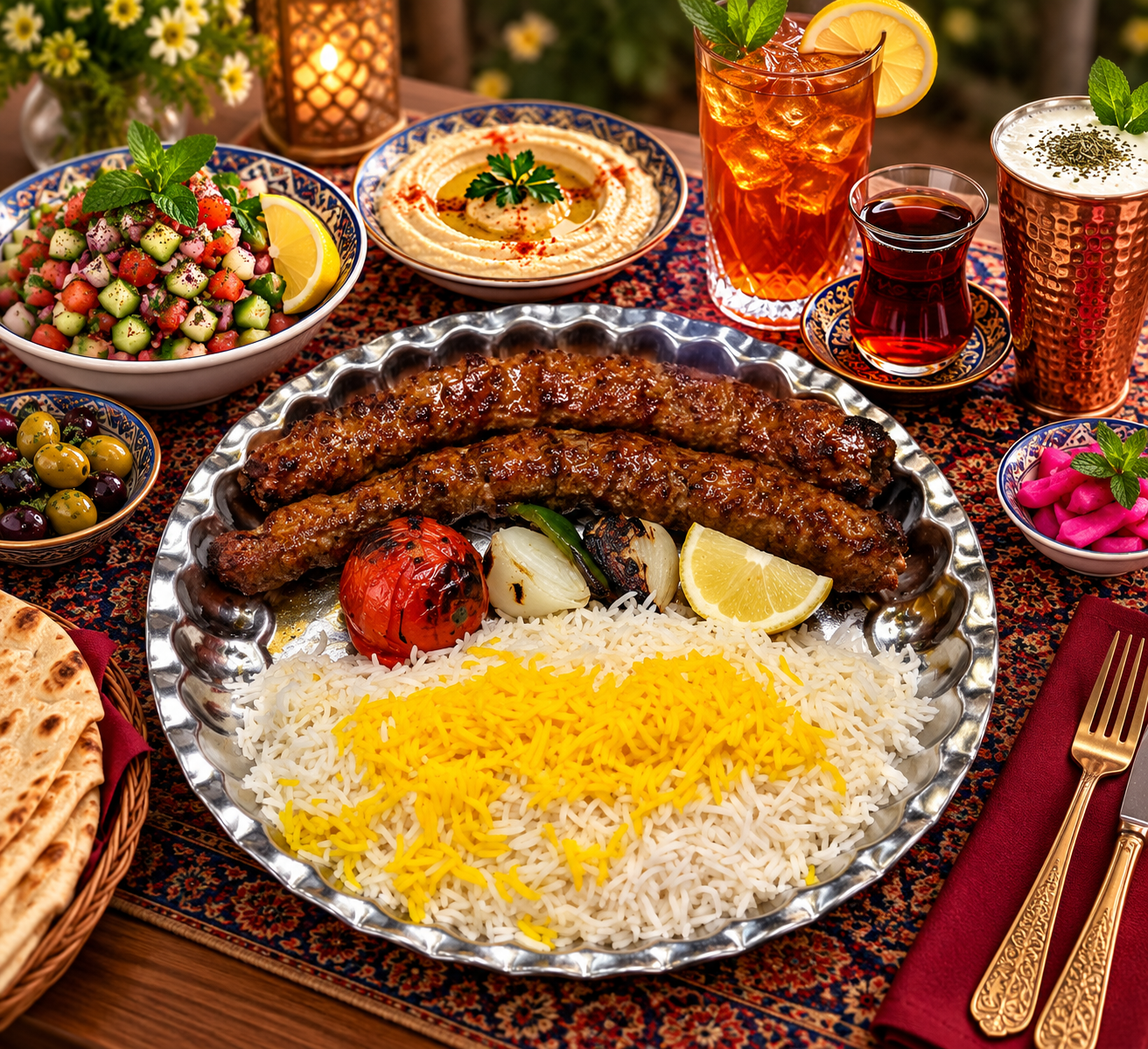
The first time many guests open a Persian cuisine menu, they find a few words they’ve never seen before. I understand the hesitation. Nobody wants to mispronounce something or order blindly. So I put together a short, friendly glossary of the six words I get asked about most. Learn these, and the menu will feel a lot more welcoming.
1. Koobideh
Pronounced “koo-bee-DEH,” this is the dish most guests try first. Koobideh is made with ground beef, seasoned and shaped by hand onto a wide, flat skewer, then grilled over open flame. It’s smoky, tender, and a great starting point if you’re new to the cuisine. Our koobideh is halal.
2. Tahdig
Literally “bottom of the pot,” tahdig is the crispy, golden layer of rice that forms as rice steams. It’s crunchy and savory, and in many Persian homes it’s the most fought-over part of the meal. If you’re curious, ask our team about it when you order.
3. Ash
“Ash” means a thick, hearty soup, usually full of herbs, beans, and grains. The word is often followed by the name of the main ingredient, which is how you get dishes with names like ash e joe or ash e reshteh. It’s a warm, comforting place to begin a meal, and availability changes from day to day, so ask what’s ready.
4. Khoresh
Khoresh is the Persian word for a slow-cooked stew, traditionally served over rice. It’s a big part of everyday Persian cooking, and you’ll see it on many menus. When you spot it, ask what’s cooking that day, because stews are the kind of dish that depends on what the kitchen has simmered.
5. Sabzi
“Sabzi” means herbs or greens, and it shows up everywhere in Persian cuisine. Fresh parsley, cilantro, dill, mint, and scallions aren’t a garnish here. They’re a core ingredient, which is part of why Persian food tastes so fresh and green even when it’s hearty.
6. Mast
Mast is yogurt, and it’s one of the most useful things on a Persian table. It cools down rich grilled food, brings a creamy tang, and shows up in soups, dips, and sides. If you ever feel unsure what to add to your plate, a little mast is rarely the wrong answer.
Putting the Words to Work
Now try building an order out of them. Start with an ash, move to koobideh with saffron rice, add a little mast and some sabzi on the side, and you’ve put together a classic Persian meal without needing to ask for help. And if you do need help, our team loves guiding people through it.
You can browse the full range on our Persian food page, see what comes off the fire on our Persian grill page, and learn more about our home base on our Glendale page. For a neutral deeper dive into the vocabulary and history of this cooking, Wikipedia’s article on Iranian cuisine is a helpful reference.
Guests from Vineyard and Adams Hill often tell me that learning a few of these words made their first visit feel much more comfortable, and I hope it does the same for you.
Frequently Asked Questions
What is koobideh?
Koobideh is a Persian kabob made with ground beef, shaped by hand onto a flat skewer and grilled over open flame.
What does tahdig mean?
Tahdig means “bottom of the pot” and refers to the crispy golden layer of rice that forms during steaming.
What is an ash in Persian cuisine?
An ash is a thick, hearty soup made with herbs, beans, and grains, often named after its main ingredient.
Is it okay to ask the staff for help with the menu?
Absolutely. Our team is always happy to explain dishes and help you build an order you’ll enjoy.
Come Practice Your New Vocabulary
The best way to learn a cuisine is to taste it. We’d love to help you start.
Shamshiri Persian Grill Glendale
122 W Stocker St, Glendale, CA 91202
📞 818-246-9541
📍 Get directions on Google Maps