Persian rice dishes are less a side than most people think: they are half the meal, and each style has a kabob it suits best. Plain saffron chelow goes with koobideh, sour zereshk polo with chicken, herby sabzi polo with fish. Glendale diners who match rice to the grill eat a far better plate.
The short version
- Chelow, the steamed saffron-topped rice, is the classic partner for koobideh and most beef or lamb kabobs.
- Tahdig is the crisp golden crust from the bottom of the pot, and it is treated as a prize, not a leftover.
- Zereshk polo, studded with tart barberries, is traditionally served with chicken.
- Persians cook with long-grain rice, traditionally Iranian varieties such as Tarom and Domsiah, and basmati is the common substitute abroad.
- Several mixed rice dishes, like adas polo and baghali polo, work as vegetarian mains on their own.
Why rice carries the Persian table
In Persian cooking, rice is the centrepiece and the kabob is its partner. That is the opposite of how many Americans order. The grill gets the attention, but the rice gets the care.
Here is why. Good Persian rice is soaked, parboiled, drained and then steamed slowly under a lid wrapped in a towel. The towel catches condensation so the grains stay separate and dry. Each grain should be long, fluffy and unbroken. Butter and bloomed saffron go on top, usually just before serving.
That method produces two things at once. You get the soft, perfumed body of the rice. You also get tahdig, the crust that forms on the bottom of the pot. Our guide on {{sibling:what-is-tahdig-crispy-persian-rice|how tahdig gets its crunch}} covers the different crusts, from plain rice to potato and flatbread layers.
Skip the idea that rice is filler. It is the part that tells you most about the kitchen.
Two families: chelow and polo
Almost every Persian rice dish falls into one of two groups. Chelow is plain steamed rice. Polo is rice layered or mixed with other ingredients while it cooks.
Chelow: the plain canvas
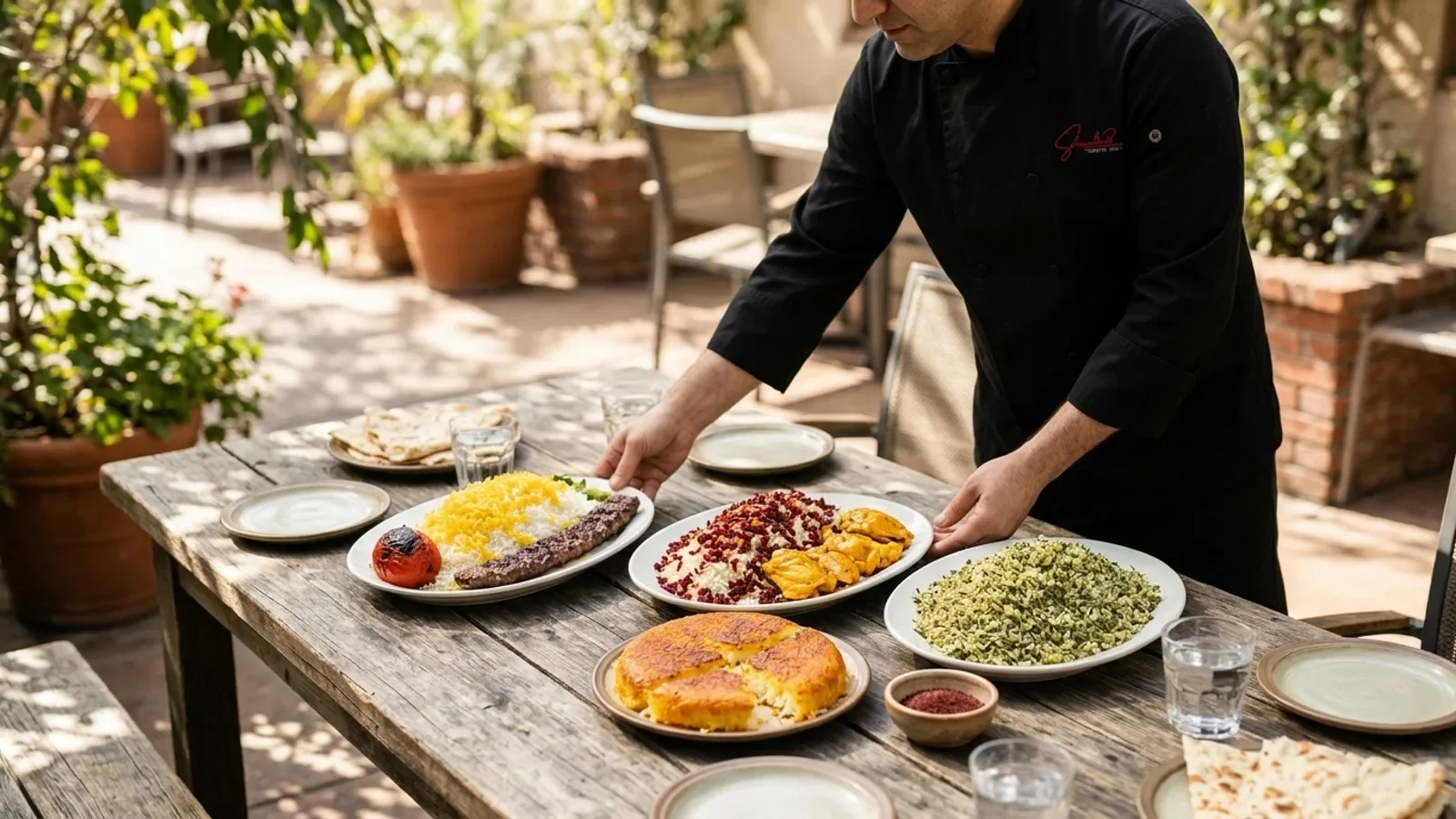
Chelow is white rice crowned with saffron rice and butter. It sounds simple. It isn’t. The plainness is the point, because it lets the char and fat of a kabob take the lead. Chelow kabob, rice with grilled meat, is often called a national dish of Iran for good reason.
There is also kateh, a quicker everyday rice cooked by absorption. It is stickier and homier. You meet it more at family tables than on restaurant plates.
Polo: the mixed rices
Polo dishes fold flavour into the rice itself. Herbs, beans, lentils, fruit and nuts all show up. These rices have their own personality, so they need a kabob that won’t fight them. Get the match right and the whole plate lifts. Get it wrong and two strong flavours cancel each other out.
Matching persian rice dishes to the grill
The rule is simple: the bolder the rice, the simpler the kabob. Plain chelow takes rich ground meat. Fruity or herby rice wants lighter chicken or fish. The table below lays out the traditional pairings.
| Rice dish | What’s in it | Traditional partner | Why it works |
|---|---|---|---|
| Chelow | Steamed white rice, saffron, butter | Koobideh (ground meat kabob), barg (sliced filet) | Neutral rice soaks up juices and lets the grill char lead |
| Zereshk polo | Rice with barberries, saffron, often pistachio and almond slivers | Chicken, including joojeh kabob or braised chicken | Tart berries cut through the richness of the chicken |
| Baghali polo | Rice with fava beans and dill | Lamb, especially lamb shank | Fresh dill balances the depth of lamb |
| Sabzi polo | Rice with chopped fresh herbs | Fish, a classic for Nowruz | Herbs lift mild white fish |
| Adas polo | Rice with lentils, dates or raisins | Works alone or with small meatballs | Sweet and earthy, filling enough to stand on its own |
| Albaloo polo | Rice with sour cherries | Chicken or small meatballs | Sweet-sour fruit pairs with gentle meats |
| Shirin polo | Rice with orange peel, carrot, nuts | Chicken, often at weddings | Sweet and fragrant, too delicate for heavy beef |
The koobideh question
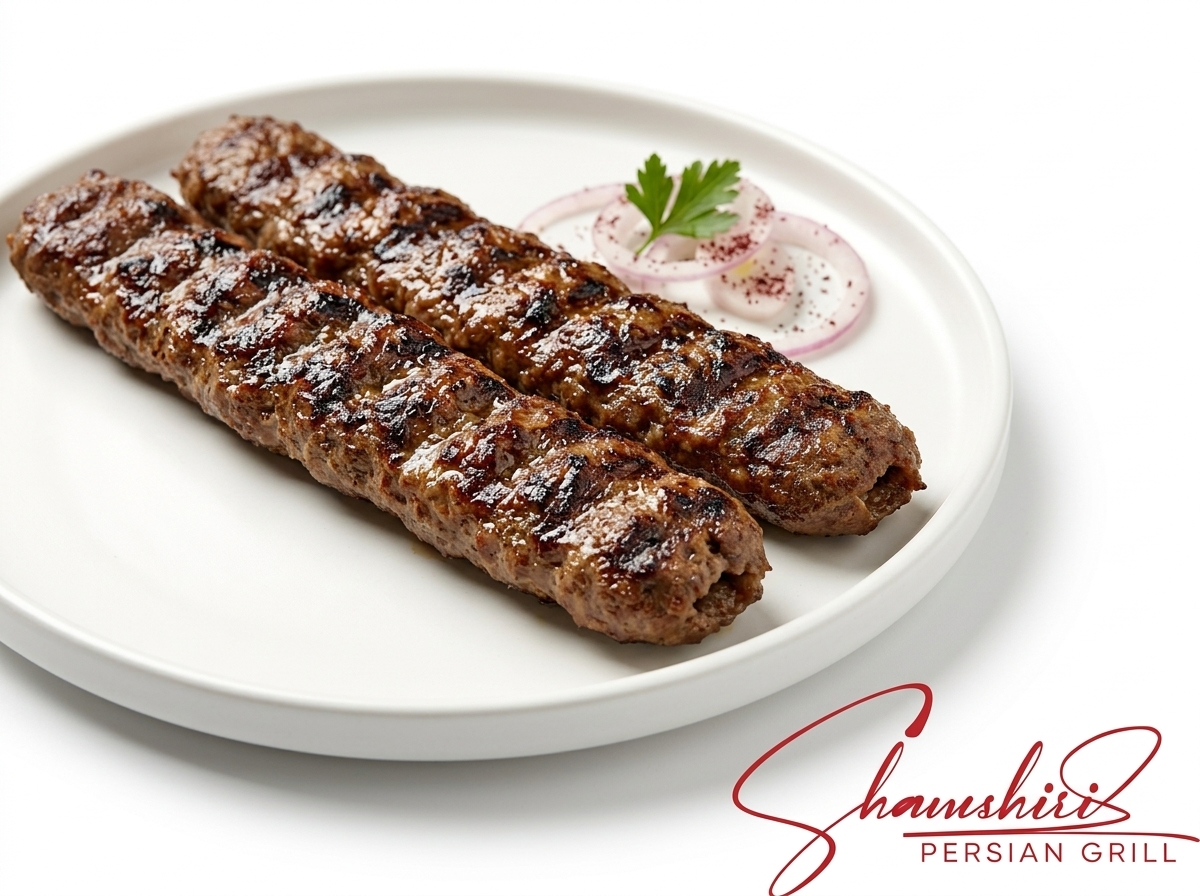
Koobideh kabobs pairing is the easiest call on the list. Go with chelow. The ground meat is juicy and seasoned with onion, so it wants plain saffron rice and a grilled tomato on the side. Mash the tomato into the rice. Add a pat of butter. A dusting of sumac finishes it. That’s the classic plate.
Want more acid? Ask for zereshk polo next to it. Some diners like the contrast. Purists stick with chelow.
Chicken and the barberry rule
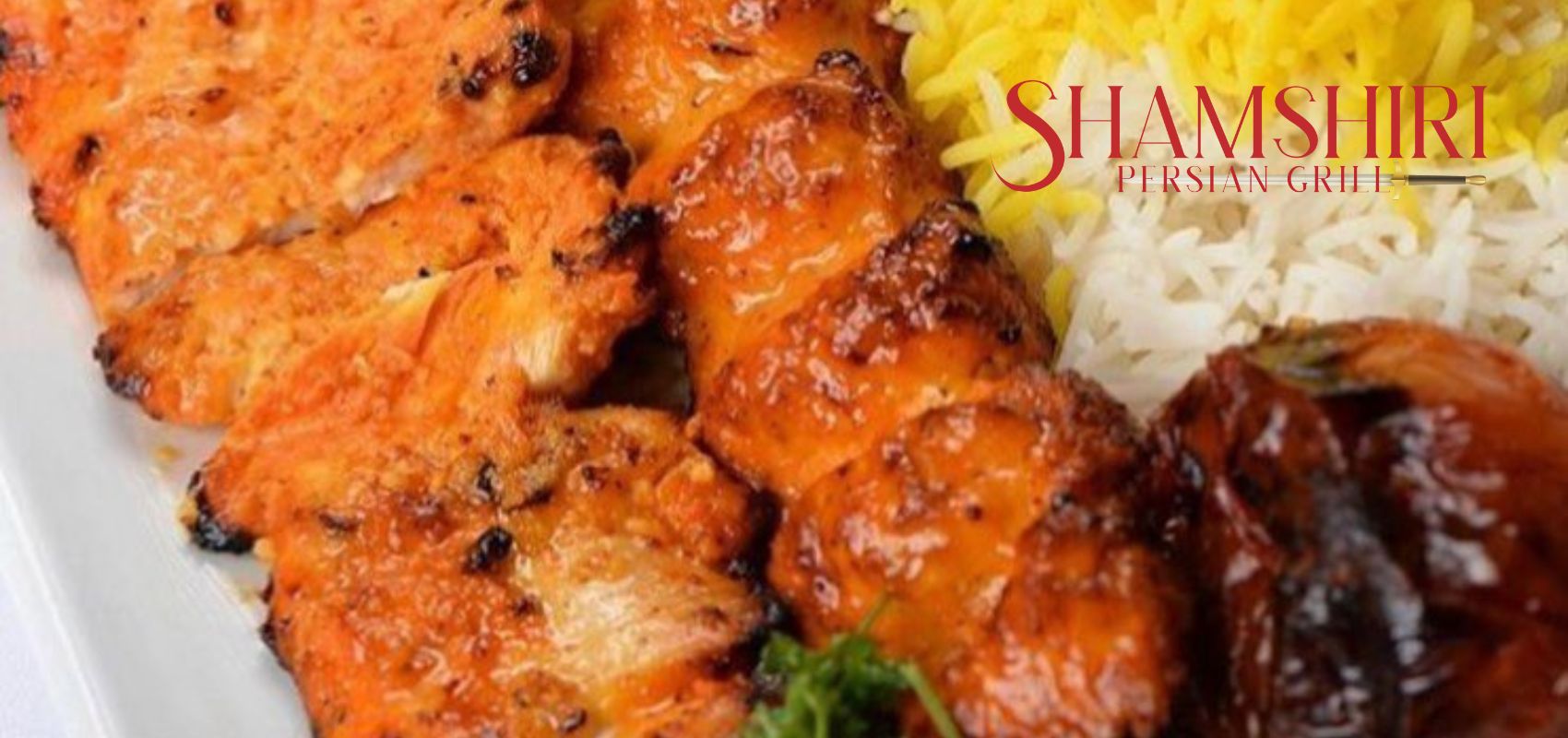
Zereshk polo and chicken belong together. The barberries are small and sour. Saffron chicken is mellow. Together they balance. For the full taste breakdown, read our piece on {{sibling:zereshk-polo-flavor-profile-glendale|what zereshk polo actually tastes like}}.
Vegetarian Persian rice, done properly
Persian cooking has real vegetarian rice options, not just plain rice with the meat removed. Several polo dishes are complete meals without a kabob.
Adas polo is the strongest choice. Lentils add body, dates or raisins add sweetness, and fried onions on top bring crunch. Baghali polo works too when it’s made without the lamb. The dill and fava beans carry it. Sabzi polo, heavy with fresh herbs, pairs well with eggs or a yogurt dip.
Round the plate out with sides. Kashk-e bademjan, a smoky eggplant dip, is a natural fit. So is mast-o-khiar, yogurt with cucumber and mint. Ask how a dish is prepared before you order, since some kitchens cook rice in stock or finish it with animal fat.
Sides that finish the plate
A Persian rice plate is built from small extras. They add sharpness, freshness and texture to a meal that would otherwise be soft and rich.
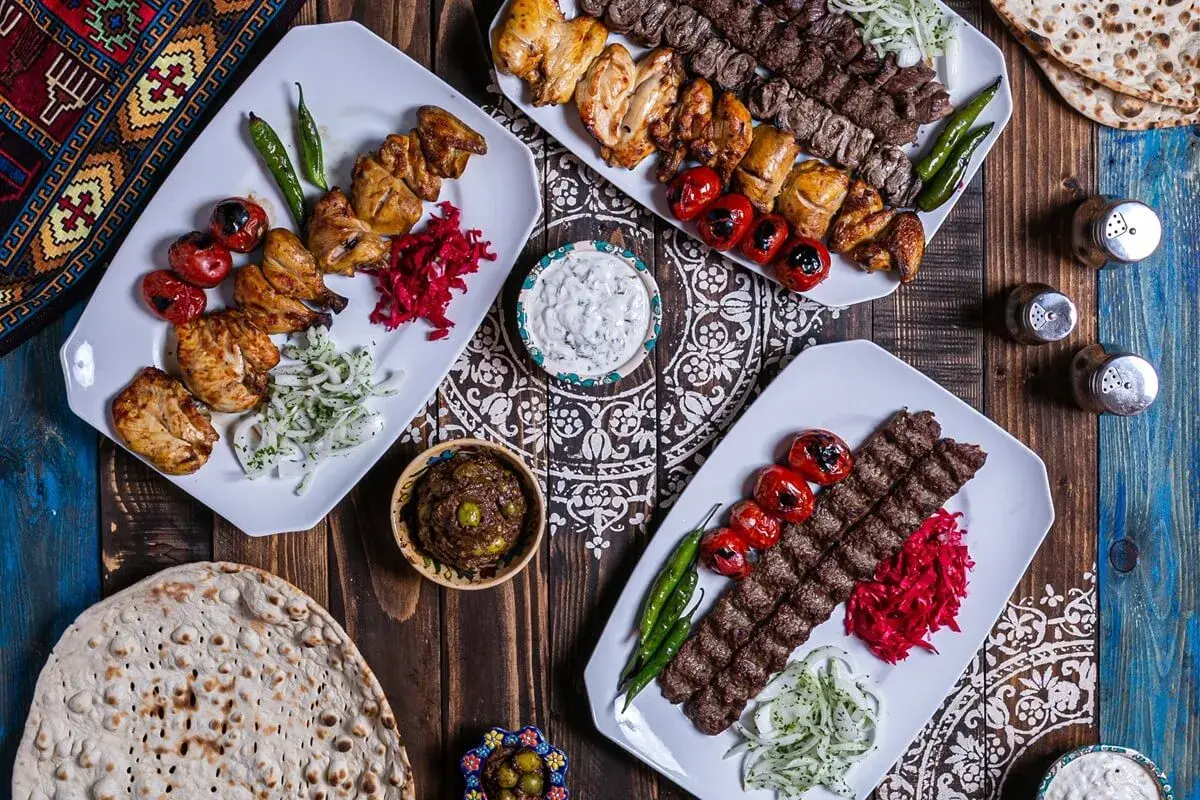
- Grilled tomato: charred alongside the kabob, mashed into the rice.
- Sumac: a tart red spice sprinkled over meat and rice.
- Salad Shirazi: diced cucumber, tomato and onion with lime and dried mint.
- Mast-o-khiar: cool yogurt with cucumber, good against hot grilled meat.
- Sabzi khordan: a plate of fresh herbs, radishes and sometimes feta, eaten by the handful.
- Torshi: mixed pickles for a sour bite between forkfuls.
Don’t skip the herbs. They reset your palate between bites of rich meat.
Telling good rice from tired rice
Good Persian rice looks long, separate and glossy, with a clear saffron cap. Tired rice clumps, breaks and tastes flat.
Check the grains first. They should be whole and long, not snapped in half. Look at the saffron next. Real saffron gives a deep golden-orange colour and a floral smell, while dye gives colour without the aroma. Then look for tahdig. A kitchen that serves crisp, evenly golden crust is paying attention to the pot.
Our checklist on {{sibling:signs-of-authentic-persian-rice-glendale|how to spot authentic Persian rice}} goes further. Read it before your next meal out.
Persian dining in Glendale: what shapes the local table
Glendale sits in one of the densest pockets of Persian and Middle Eastern food in Southern California. That changes what you can expect from a rice plate here. The Los Angeles area has a large Iranian-American community, and Glendale is also home to a major Armenian community whose cooking shares rice, grilled meat and herb traditions with Iran.
Here is why that matters to you. In a market like this, many diners grew up eating these dishes at home. They know what tahdig should sound like when you break it. They notice when barberries are dull or the saffron is thin. Glendale menus tend to cover the full chelow and polo range rather than one token rice.
It also means you can order with confidence. Ask for a specific polo by name. Ask whether tahdig is available. Ask which rice the kitchen recommends with a given kabob. In Glendale, those are normal questions. If ordering still feels unfamiliar, our guide on {{sibling:how-to-order-persian-rice-glendale|ordering Persian rice like a regular}} walks through the vocabulary.
Ready to try a pairing for yourself? Plan a visit to Shamshiri Persian Grill in Glendale, check the menu before you go, and ask which rice the kitchen would put next to your kabob.
Frequently Asked Questions about Persian rice
What side dishes go well with rice?
Yogurt dips like mast-o-khiar, salad Shirazi, grilled tomatoes, fresh herb plates and pickles all go well with rice. In Persian meals, stews such as fesenjan and ghormeh sabzi are also spooned over plain chelow.
What to bring to a Persian potluck?
A tray of polo such as zereshk polo or adas polo travels well and is always welcome, as are dips like kashk-e bademjan or mast-o-khiar. Fresh herbs, flatbread or a fruit and pastry plate are easy additions if you don’t cook.
What is a famous Arabic rice dish?
Kabsa is one of the best-known Arabic rice dishes: spiced long-grain rice cooked with meat, popular across the Gulf. Mandi and maqluba are other widely loved examples, and all of them differ from Persian polo in spicing and method.
What rice do Persians use?
Persians use long-grain aromatic rice, traditionally Iranian varieties such as Tarom and Domsiah. Outside Iran, aged basmati is the usual substitute because it cooks up long, fluffy and separate.
A Glendale note on season and leftovers
Glendale’s mild late-autumn weather suits a long, unhurried rice meal, and it suits carrying leftovers home. Persian rice keeps reasonably well if it’s cooled and refrigerated promptly. Tahdig loses its crunch in the fridge, though, so plan to reheat it in a dry pan rather than a microwave. Our guide to {{sibling:storing-reheating-persian-rice-glendale|storing and reheating Persian rice}} has the details.
Next step: pick your rice, pick your kabob, and {{service|book a table for a Persian rice and kabob meal in Glendale}}.