By the time a plate reaches your table, you’re only seeing the last few minutes of a process that, for some dishes, started the day before. I’ve never really walked a guest through what actually happens behind the scenes at a Persian restaurant, so I figured it was worth doing here.
The Morning Starts With the Stews
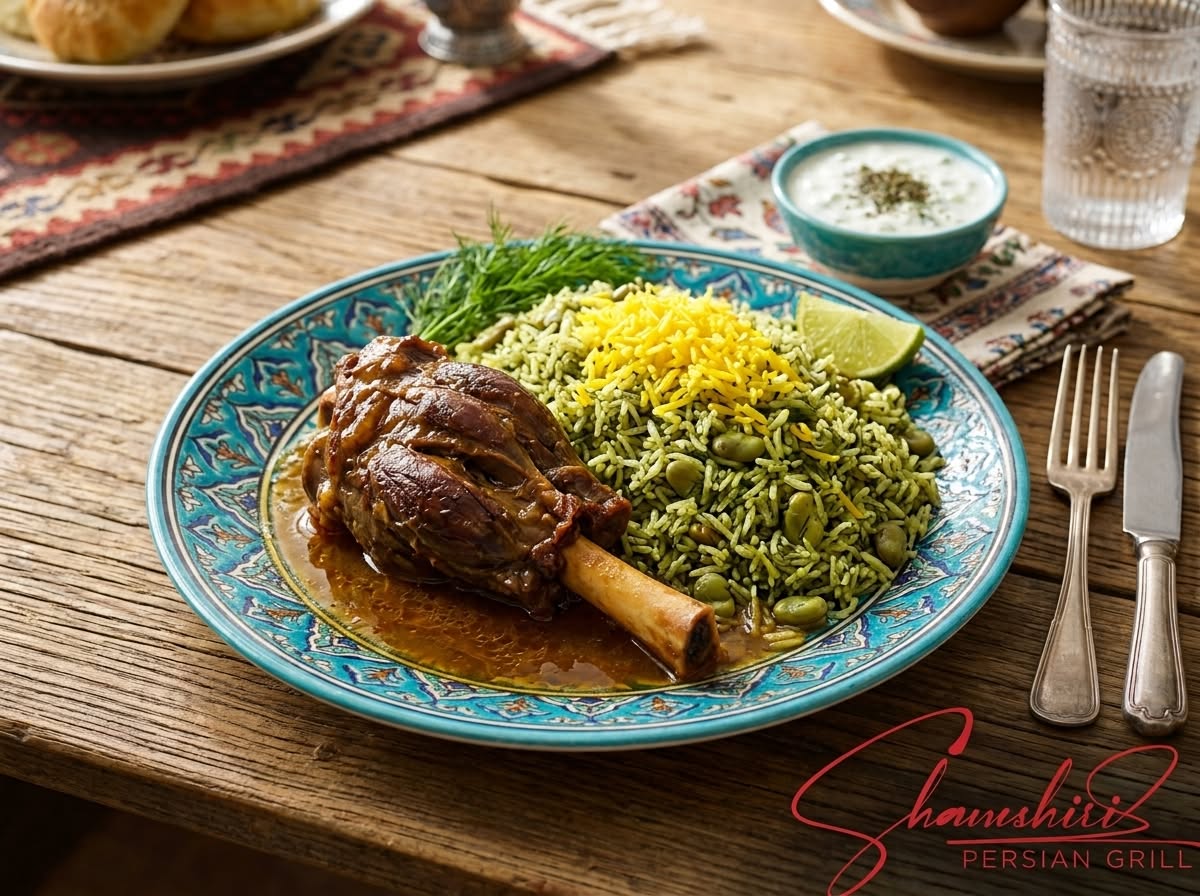
Long before we open, our stews are already on the stove. Ghormeh sabzi and fesenjan need hours of slow simmering to develop properly, so if you’re eating one of these dishes at dinner, there’s a good chance it started cooking that same morning. There’s no way to shortcut this part, rushing it changes the entire flavor.
Marinating the Meat
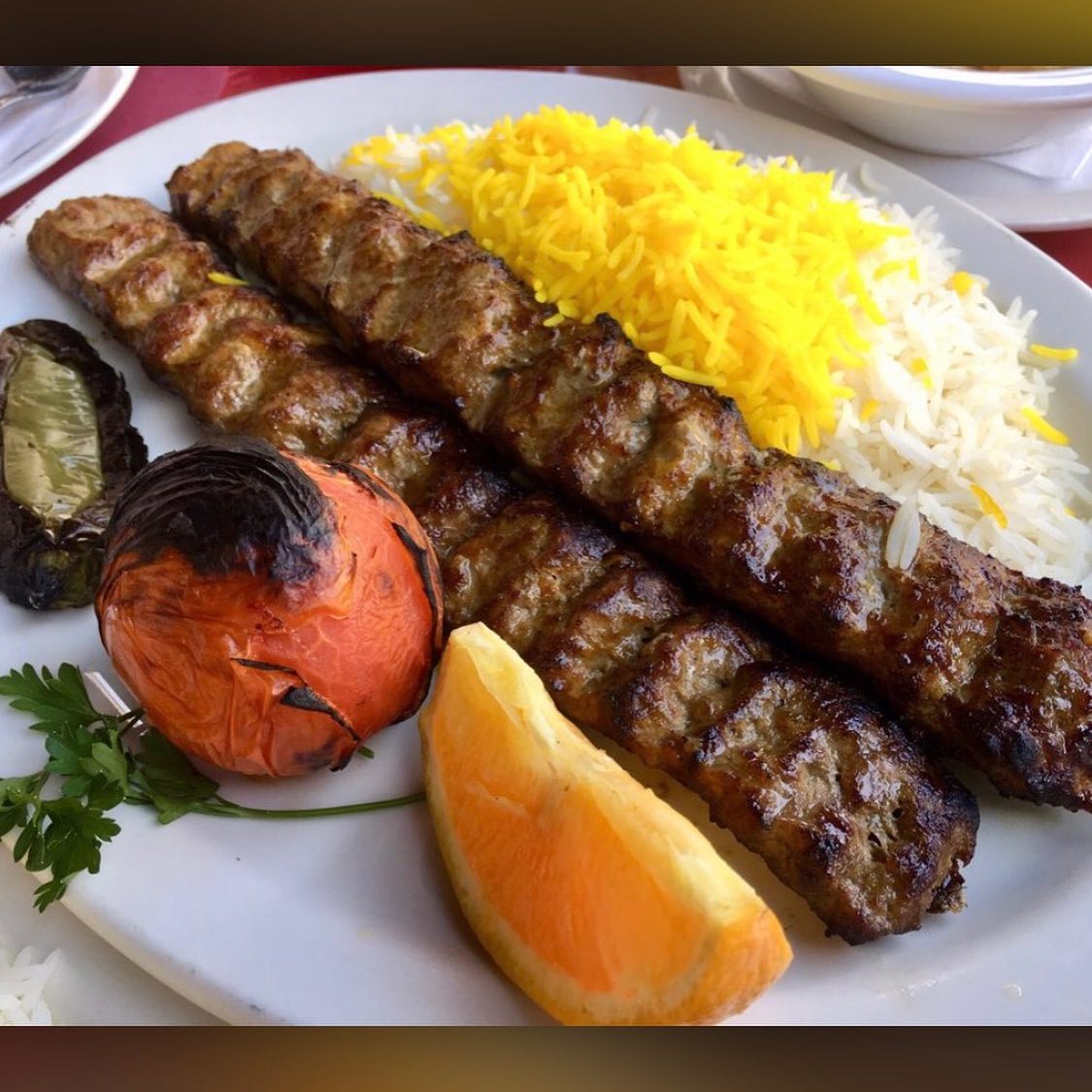
Kabobs go through their own timeline. Chicken and beef are marinated in saffron, lemon, and onion well ahead of service, sometimes overnight, so the flavor has time to actually work into the meat rather than just sitting on the surface.
Prepping the Rice
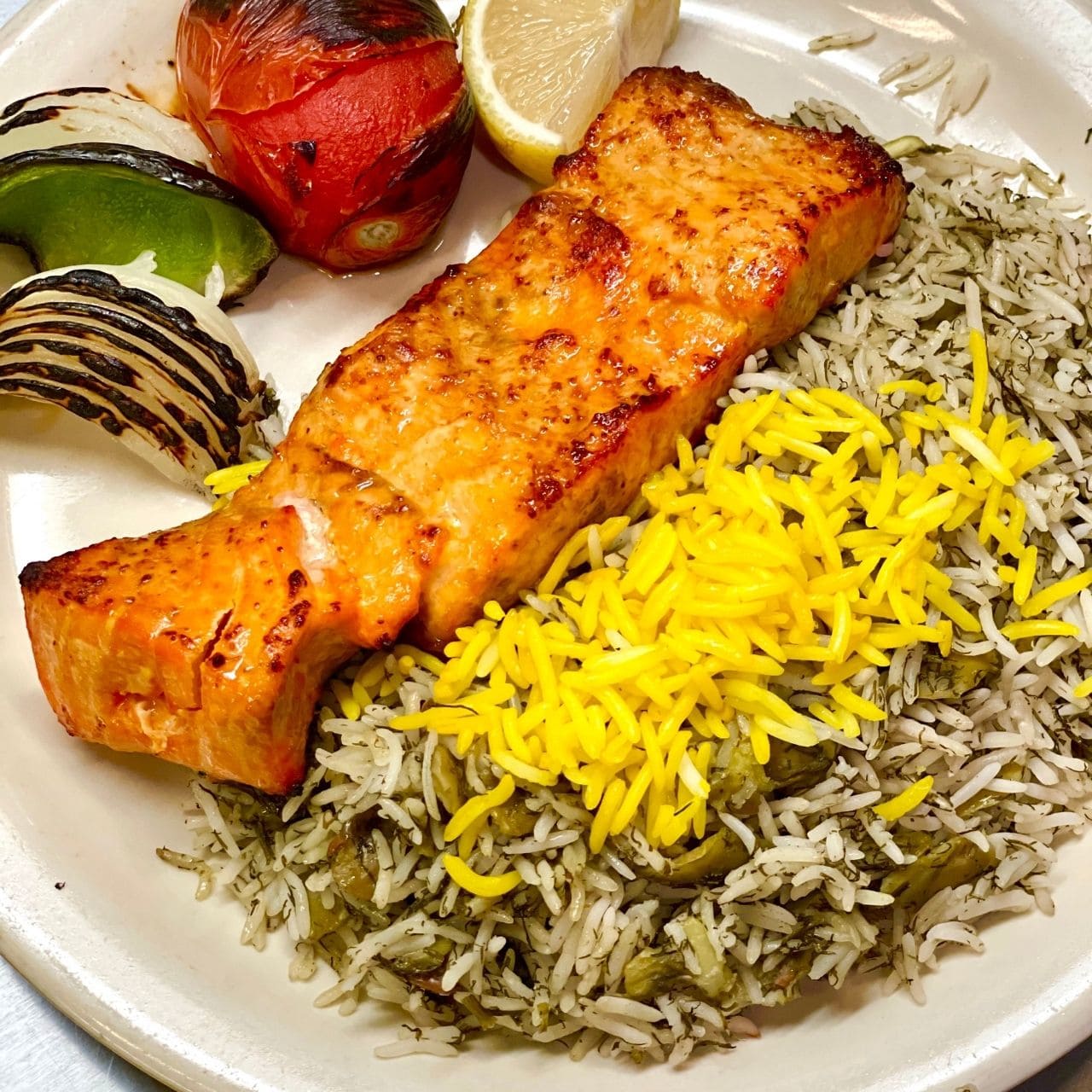
Rice sounds simple, but it’s one of the most technical parts of a Persian restaurant’s kitchen. It’s soaked, parboiled, then steamed carefully to get that light, separated texture — and if you want tahdig, that crispy layer needs its own attention at the bottom of the pot, timed precisely so it doesn’t burn or stay too soft.
The Grill Line During Service
Once service starts, the grill becomes the busiest station in the house. Skewers go on and off constantly, each one watched for exact timing — a few seconds too long and the texture changes completely. This is the part of a Persian restaurant that guests actually see happening, even if they don’t realize how much preparation led up to it.
Why This Matters
I think understanding this timeline changes how people experience the meal. When you order a stew that’s been cooking for six hours, or a kabob that’s been marinating overnight, you’re not just getting a dish off a menu — you’re getting the result of a process that started long before you sat down.
You can see the results of all this prep on our Persian grill menu and our full Persian food offerings, and if you’re curious about where our kitchen’s philosophy comes from, our About page has more of that story.
As this piece on Iranian food culture points out, patience and slow preparation have always been central to Persian cooking, something that’s just as true in our kitchen today as it was in traditional Persian households.
Frequently Asked Questions
How far in advance are stews prepared at a Persian restaurant?
Stews like ghormeh sabzi are often started the same morning, needing several hours of slow cooking before service.
How long is meat marinated before grilling?
Chicken and beef are typically marinated for several hours, sometimes overnight, to fully absorb the flavor.
Why does Persian rice take extra preparation?
Getting light, separated grains and a proper tahdig crust requires soaking, parboiling, and carefully timed steaming.
Can I request how my kabob is grilled?
Yes, just let our staff know your preference and we’ll accommodate where we can.
Come Taste the Process
Now that you know what goes into it, come taste the result for yourself. Visit Shamshiri Persian Grill at 122 W Stocker St, Glendale, CA 91202. Call 818-246-9541 or find us here: Shamshiri Persian Grill on Google Maps. We welcome guests from Grandview and Pacific-Edison as often as those from right around the corner.