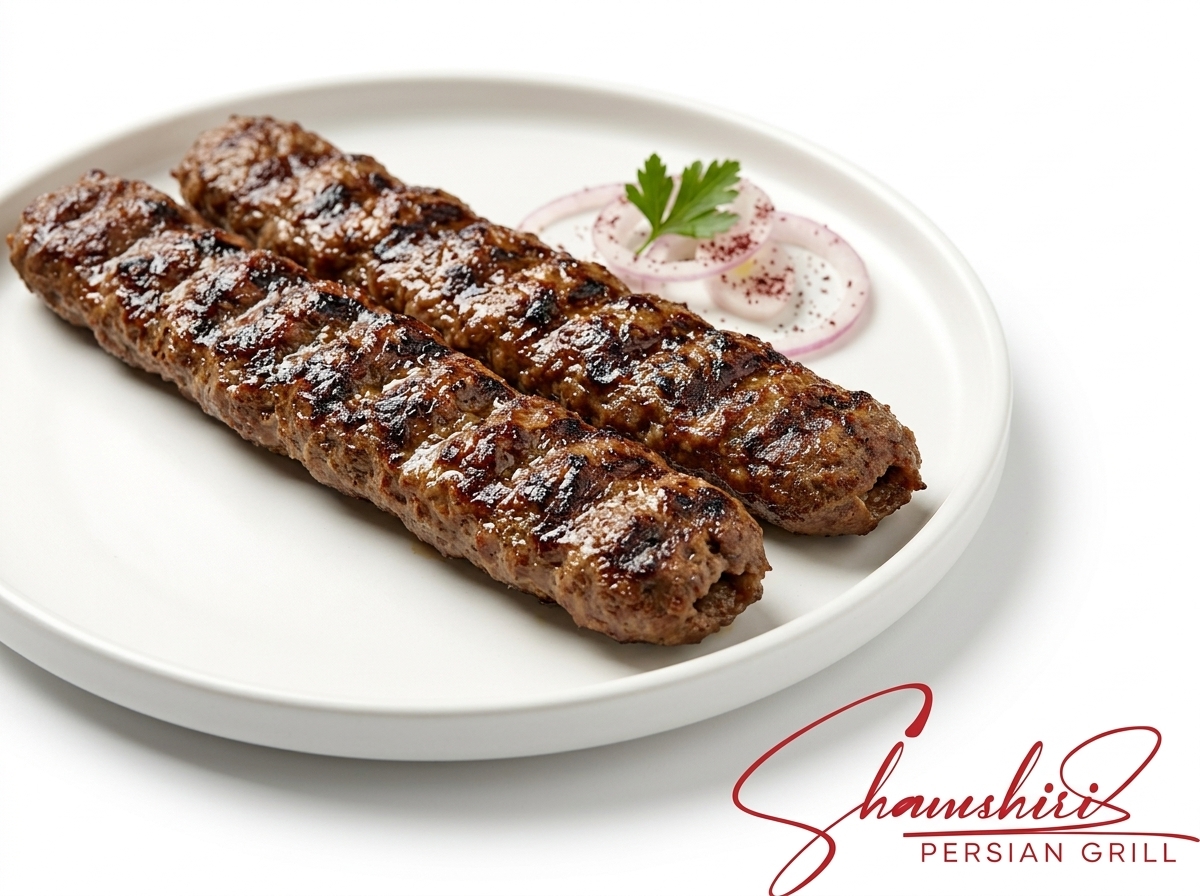
I’ve had guests ask me for our koobideh recipe, expecting some secret spice blend written on an old piece of paper. Here’s the truth: the seasoning isn’t really the secret. Most Persian kitchens use similar ingredients — onion, sumac, salt, sometimes saffron. What actually separates great koobideh kabobs from average ones has almost nothing to do with the recipe and everything to do with technique.
Here’s what I mean by that.
1. It Starts with the Fat Ratio
Too lean, and koobideh kabobs turn dry and crumbly on the grill. Too fatty, and they fall apart into the coals before they finish cooking. Getting that ratio right — and staying consistent with it batch after batch — is one of the first things that separates a kitchen that takes koobideh seriously from one that doesn’t.
2. The Meat Has to Be Worked, Not Just Mixed
This part surprises people. The ground meat needs to be worked by hand until it becomes slightly sticky and uniform in texture. That’s what allows koobideh kabobs to hold together on a skewer without any binder or filler. Skip this step, or rush it, and the meat simply won’t stay on the fire.
3. Shaping Is a Skill, Not a Step
Molding the meat evenly onto a flat skewer, with the right thickness from end to end, takes real repetition to get consistent. Uneven shaping means uneven cooking — parts of the skewer will be done while others are still raw. This is usually where you can tell how experienced a grill cook actually is.
4. Where Most Kitchens Go Wrong
In my experience, the most common mistake isn’t the seasoning — it’s impatience. Kitchens under pressure to move fast during a rush sometimes skip the resting time for the meat mixture, or shape the skewers too quickly. Koobideh kabobs made this way often taste fine, but they’re missing that tender, juicy texture that makes the dish memorable.
5. Why Rushing Ruins It
Letting the seasoned meat rest before shaping allows the flavors to settle and the texture to firm up just enough to hold its shape. It’s not a long wait, but it’s a step that’s easy to cut when a kitchen is busy — and it’s usually the first thing that gets sacrificed when quality starts slipping.
How We Do It in Glendale
We treat koobideh kabobs as one of the dishes we can’t afford to rush, no matter how busy the dining room gets. If you want to see how we approach this dish from start to finish, I wrote more in how Shamshiri perfected koobideh kabob in Glendale, or you can explore it alongside the rest of our grilled dishes on our Persian grill menu.
As this look at Iranian cuisine explains, technique and patience are central to Persian cooking — and koobideh kabobs are one of the clearest examples of that principle in action.
You can find us at 122 W Stocker St, Glendale, CA, or get directions through our Google Maps listing.
Frequently Asked Questions
What’s the biggest mistake people make with koobideh kabobs?
Rushing the process — especially skipping the resting time for the seasoned meat, which affects both texture and how well it holds together on the skewer.
Does the fat ratio really matter that much?
Yes. Too lean and the kabob turns dry and crumbly; too fatty and it can fall apart on the grill. Getting the balance right is essential.
Is saffron required for koobideh kabobs?
Not always. Some recipes use saffron for extra depth, but the core seasoning typically relies on onion, sumac, and salt.
How does Shamshiri ensure consistent koobideh quality?
We hand-shape every skewer using consistent technique and never rush the resting or seasoning process, regardless of how busy service gets.
Taste the Difference Technique Makes
The only way to really understand this is to taste it. Come try our koobideh kabobs at Shamshiri Persian Grill in Glendale, CA.
📞 Call us at 818-246-9541 for reservations or to place an order.