Somebody asked me recently why Persian restaurants always seem to serve so much food, even for small groups. It’s a fair observation. But the answer isn’t really about the menu — it’s about what Persian cuisine has always been used for. Long before it was something you order off a menu, it was how Persians welcomed people into their homes.
I still think about that every time we set a table here in Glendale.
The Idea Behind Taarof
In Persian culture, there’s a concept called taarof — a form of hospitality built around putting the guest’s comfort ahead of your own. It shows up in small ways, like insisting a guest take the last piece of bread, or in bigger ways, like preparing far more food than anyone expects to finish. Persian cuisine grew up inside that culture, and you can still taste it in how meals are served today.
Why the Portions Are Always Generous
If you’ve ever wondered why a Persian meal never seems to run short, this is why. Traditionally, running out of food in front of a guest was considered a real failure of hospitality. That instinct carried straight into how Persian cuisine is prepared — generously, with the assumption that guests should leave the table more than satisfied, never wondering if there was enough.
Persian Cuisine Is Meant to Be Shared
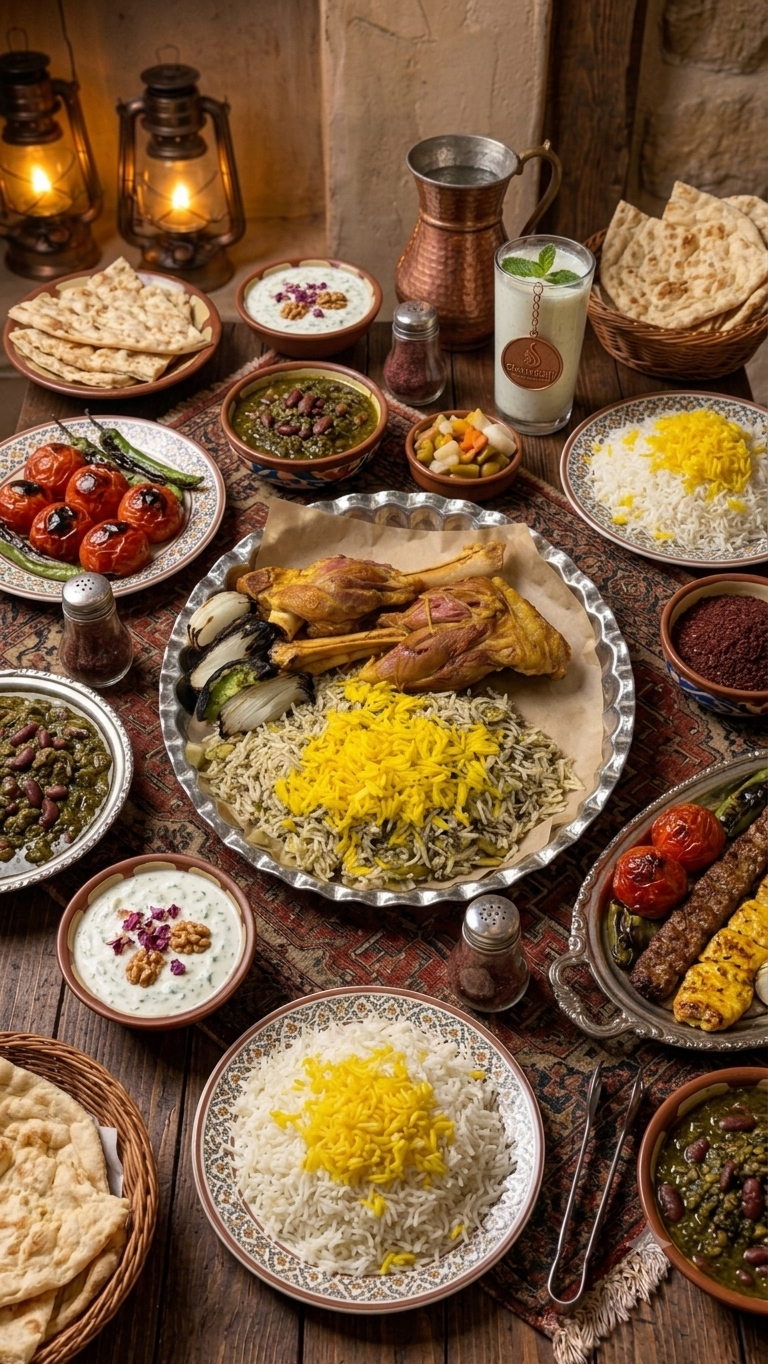
Individual plates aren’t really the tradition. Persian cuisine is built around large platters set in the middle of the table — rice, kabobs, stews — so that everyone reaches in together. It turns a meal into something communal by design, not by accident. Even the way dishes are portioned reflects that the meal is meant to bring people closer, not just fill them up.
The Guest Comes First, Always
This is the part that’s hardest to explain unless you’ve experienced it. In a Persian home, the guest is treated with a level of attentiveness that can feel almost overwhelming to someone unfamiliar with the custom. That same instinct is what I try to bring into our dining room — the idea that a guest shouldn’t have to ask for anything twice.
Bringing That Tradition to Glendale
When you sit down at Shamshiri, I want you to feel some version of that same welcome — not just good food, but the sense that you’re genuinely being taken care of. You can explore the dishes that carry this tradition on our Persian restaurant page, or see the full range of what we serve on our Persian food menu.
As Wikipedia’s overview of Iranian cuisine notes, hospitality has shaped Persian culinary tradition for centuries — long before it became something served in restaurants at all.
We’re located at 122 W Stocker St, Glendale, CA — you can find directions through our Google Maps listing.
Frequently Asked Questions
What is taarof in Persian culture?
Taarof is a Persian tradition of hospitality that prioritizes a guest’s comfort, often expressed through generous gestures like offering food or insisting a guest take more than they normally would.
Why are Persian meals served family-style?
Persian cuisine has traditionally centered on shared platters rather than individual plates, reflecting a culture built around communal dining.
Why are Persian food portions usually generous?
Running short of food in front of a guest was traditionally seen as a failure of hospitality, which shaped a culture of generous, abundant meals.
Does Shamshiri serve dishes family-style?
Yes, many of our dishes are designed to be shared, especially for groups and family gatherings.
Come Feel the Welcome Yourself
Hospitality is easier to experience than to describe. Visit us at Shamshiri Persian Grill in Glendale, CA, and let us show you what that tradition looks like on a plate.
📞 Call us at 818-246-9541 for reservations or to plan a gathering with us.