What makes authentic koobideh kabobs different from standard minced skewers is a strict ratio of 80/20 ground beef or lamb, finely grated and squeezed onions, zero bread or egg binders, and constant rotation over open charcoal on wide flat iron skewers. The short answer is technique over shortcuts. Everything relies on protein binding and heat control.
What meat blend goes into authentic koobideh kabobs?
Traditional recipes use an 80 percent lean to 20 percent fat ratio, combining beef chuck with lamb shoulder or rich tail fat. Lean meat ruins the skewer. Without at least 20 percent fat, the mince dries out over the fire and drops right into the coals before a crust can form.
Here is why the grind matters just as much as the cut. A kitchen runs the meat through a grinder twice to break down the connective tissue and distribute the fat evenly. First comes a coarse plate. Next comes a fine plate. This double pass creates a sticky, paste-like emulsion when worked by hand. Skip any mixture that looks crumbly or overly lean. A proper blend feels tacky to the touch and holds together under its own protein structure.
Why combine beef and lamb? Pure beef chuck delivers a clean, familiar bite and sturdy structure on the metal blade. Lamb shoulder adds depth, aroma, and a softer rendering point. When those fats melt together over hot coals, they baste the inside of the meat while the outside blisters. Some regional variations use pure lamb or pure beef, or even ground chicken thigh for a lighter variation, yet the beef-and-lamb marriage remains the benchmark for texture and richness.
Temperature also controls the outcome during the grinding stage. The butcher keeps the meat near freezing right up until it hits the steel plates. Warm fat smears instead of cutting cleanly. Smeared fat melts out prematurely the second it senses heat, leaving a dry, pebble-like texture on the plate. Cold-ground fat stays suspended in the muscle fibers until the skewer sits over the grill. That trapped fat is what creates the rush of juice when you cut into a finished link.
Why do cooks grate and squeeze the onions instead of chopping them?
Cooks grate the onions and press out the raw juice because excess liquid turns to steam on the grill and cracks the meat right off the skewer. You want the sweet onion pulp, never the free water. Even tiny diced pieces create weak fracture points in the meat mixture.
Try chopping an onion with a knife and pressing it into ground meat on a wide blade. Within two minutes over heat, the pockets of moisture around each diced cube boil. The steam expands, pushes the meat fibers apart, and sends half the dinner falling into the ash bed. Using a fine box grater or food processor breaks the cell walls completely. After grating, the cook transfers the pulp to a fine mesh strainer or cheesecloth and wrings it dry. Do this step thoroughly. What stays behind is soft fiber packed with aromatic sulfur compounds and natural sugars.
What happens to the squeezed onion water? Smart cooks never throw it all down the drain. Keep a small bowl of that concentrated juice near the mixing station to dip your hands in while kneading the meat, or brush it onto whole tomatoes before grilling. Yellow and white onions work best here. Red onions carry too much water and turn an unappealing gray-blue shade when cooked inside a dense meat emulsion. When the wrung-out yellow onion pulp mixes into the double-ground beef and lamb, it disappears visually while flavouring every single millimeter of the kabob.
Why is using breadcrumbs or eggs in the mix a mistake?
Breadcrumbs, flour, and eggs turn a traditional Persian skewer into meatloaf on a stick, masking the texture of the meat and sealing up the natural air pockets. Authentic koobideh kabobs rely entirely on myosin, a natural sticky protein released during vigorous kneading. If a recipe calls for panade or beaten egg, skip that recipe.
Related service: persian food.
The word “koobideh” comes from the Persian verb koobidan, which translates to pounding or slamming. Generations before electric grinders existed, cooks placed meat in a stone mortar and beat it with a wooden mallet until it turned smooth and elastic. Modern kitchens replicate this mechanical action through intense hand-kneading. You work the salted meat and dry onion pulp in a stainless steel basin for ten to fifteen minutes. You lift the mass and slap it back down against the bowl to drive out big air pockets and cross-link the proteins.
Adding baking soda is another shortcut worth avoiding. While a pinch of sodium bicarbonate raises the pH and forces the meat to hold water, too much creates a rubbery, bouncy bite that tastes closer to cured sausage than fresh roasted beef. Pure meat, onion pulp, and proper kneading create a tender, juicy bite that breaks apart gently under a fork. After kneading, the mixture must rest in the refrigerator for several hours so the fat firms back up before mounting on the steel.
What ground meat kabob spices actually belong in a traditional recipe?
The core seasoning inside the raw mince is remarkably restrained: kosher salt, freshly cracked black pepper, a whisper of turmeric, and occasionally steeped saffron water. Notice what is missing. You will not find cumin, coriander, cinnamon, garlic powder, or heavy chili flakes inside a classic Persian koobideh mix.
Many diners new to Persian grilling assume middle eastern ground meat skewers all share the same spice cabinet. Turkish Adana leans into spicy red pepper paste and tail fat. Levantine kafta folds chopped parsley, garlic, allspice, and cinnamon straight into the raw meat. Traditional Persian koobideh strips away those heavy herbs and warming spices so the beef, lamb, and sweet charred onion stand at the front. Turmeric enters the bowl in small quantities primarily for colour and a subtle earthy base note.
Where do sumac and saffron kabobs get their signature flavours if the raw mix is so simple? They arrive at the very end of the cooking cycle. Pure saffron threads are ground into a powder with a pinch of sugar, then bloomed with hot water or melted over ice to extract deep gold pigment and floral aroma. As the skewer comes off the fire, a brush of melted butter and bloomed saffron hits the sizzling crust. Sumac, a tangy crimson berry ground into coarse flakes, stays in a shaker on the dining table. You dust sumac over the hot meat right before eating so the bright, lemony acidity cuts through the rich animal fat without burning over the flames.
How do wide flat skewers and charcoal heat keep the meat from falling?
A wide flat stainless steel blade, called a seekh, provides broad surface area for the sticky meat to grip, while intense radiant charcoal heat sets an outer crust before the fat inside can melt and slip. Round wooden or thin wire skewers cannot hold this mixture. They slice right through the warm meat like cheese wire.
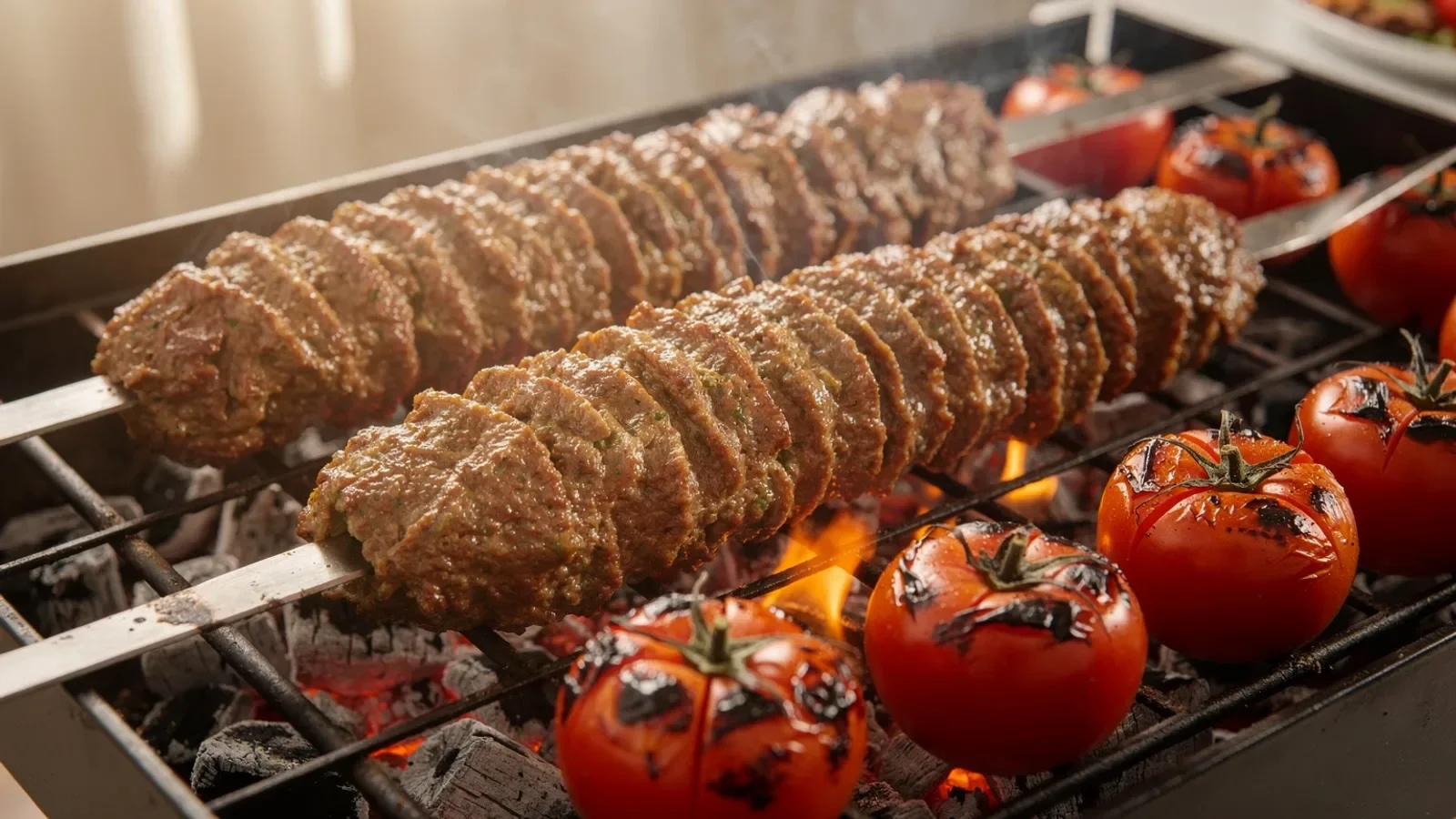
A proper koobideh blade measures roughly two centimeters to three centimeters wide and tapers to a sharp point. Before mounting the cold meat, keep the metal skewers clean, dry, and at room temperature. Cold metal rejects the fat; hot metal melts the touchpoint instantly. The cook takes a measured ball of chilled mince, pierces it down the center with the blade, and presses the meat outward along the steel using wet fingers. Then comes the signature step. Using the thumb and index finger in a rhythmic pinching motion, the cook presses deep horizontal ridges along the length of the meat. These indentations are not just decorative. They equalize the thickness of the meat and allow intense heat to penetrate the thicker core at the same speed as the thin edges.
See also: best kabob restaurant.
Look closely at the top and bottom tips of a hand-mounted skewer. The cook pinches both ends tightly against the bare steel to seal the tube. If the ends flare open, hot air slips between the metal blade and the meat, breaking the vacuum seal and dropping the link into the fire. On the mangal, an open trough grill suspended without grates, the skewers rest directly across the metal edges two to three inches above glowing hardwood lump charcoal. For the first full minute, the grill master flips the blades every ten to fifteen seconds. Constant flipping keeps the rendering fat moving inside the tube and forms a firm outer shell before gravity can pull the raw paste downward. According to the USDA safe minimum internal temperature chart, ground beef and lamb mixtures reach food-safe doneness at 160 degrees Fahrenheit, a window where skilled grillers pull the blades off the heat while the interior remains juicy.
What should Glendale diners look for on the plate to spot the real thing?
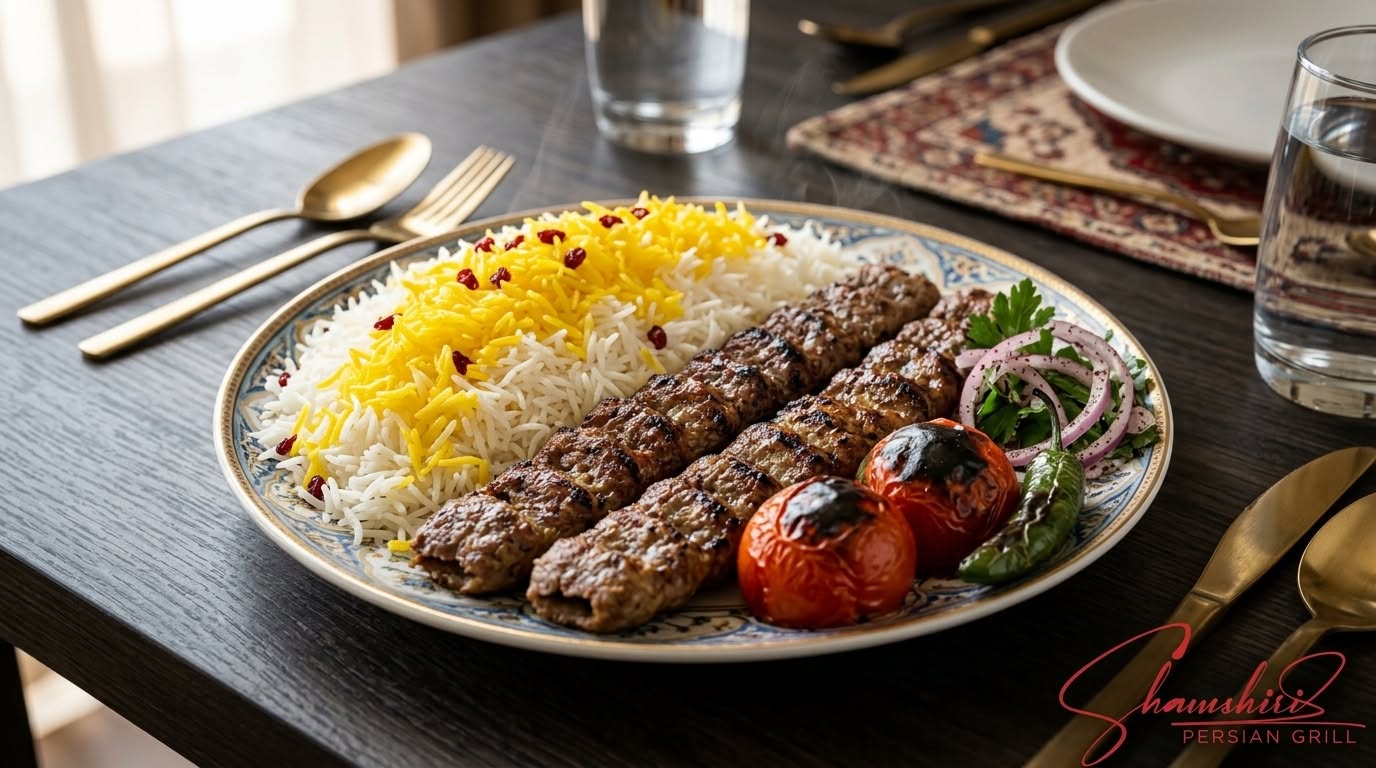
When seeking out Persian kabobs in Glendale, check the skewer presentation for clear finger indentations, a moist glistening exterior tinted gold with saffron, and a platter paired with blistered tomatoes and long-grain basmati rice. Shamshiri Persian Grill Glendale operates in Glendale, CA, a city where diners know the difference between rushed grill work and slow preparation.
Look at the cross-section when you slice the first piece. The interior should look cohesive yet light, never compacted into a dense gray brick and never weeping thin gray water onto the plate. Instead, clear savoury juices and rendered yellow fat should coat the fork. If you see flecks of green parsley or taste heavy garlic and cumin inside the ground meat itself, you are eating a different regional style of skewer, not traditional Persian koobideh. Check the hollow center left behind by the wide flat blade. That narrow flat channel down the middle proves the meat was cooked directly on a wide metal seekh rather than molded on a sheet pan and finished on a standard wire grill grate.
The supporting cast on the platter tells the rest of the story. Because the meat carries a high savory fat percentage, every element alongside it exists to balance the palate:
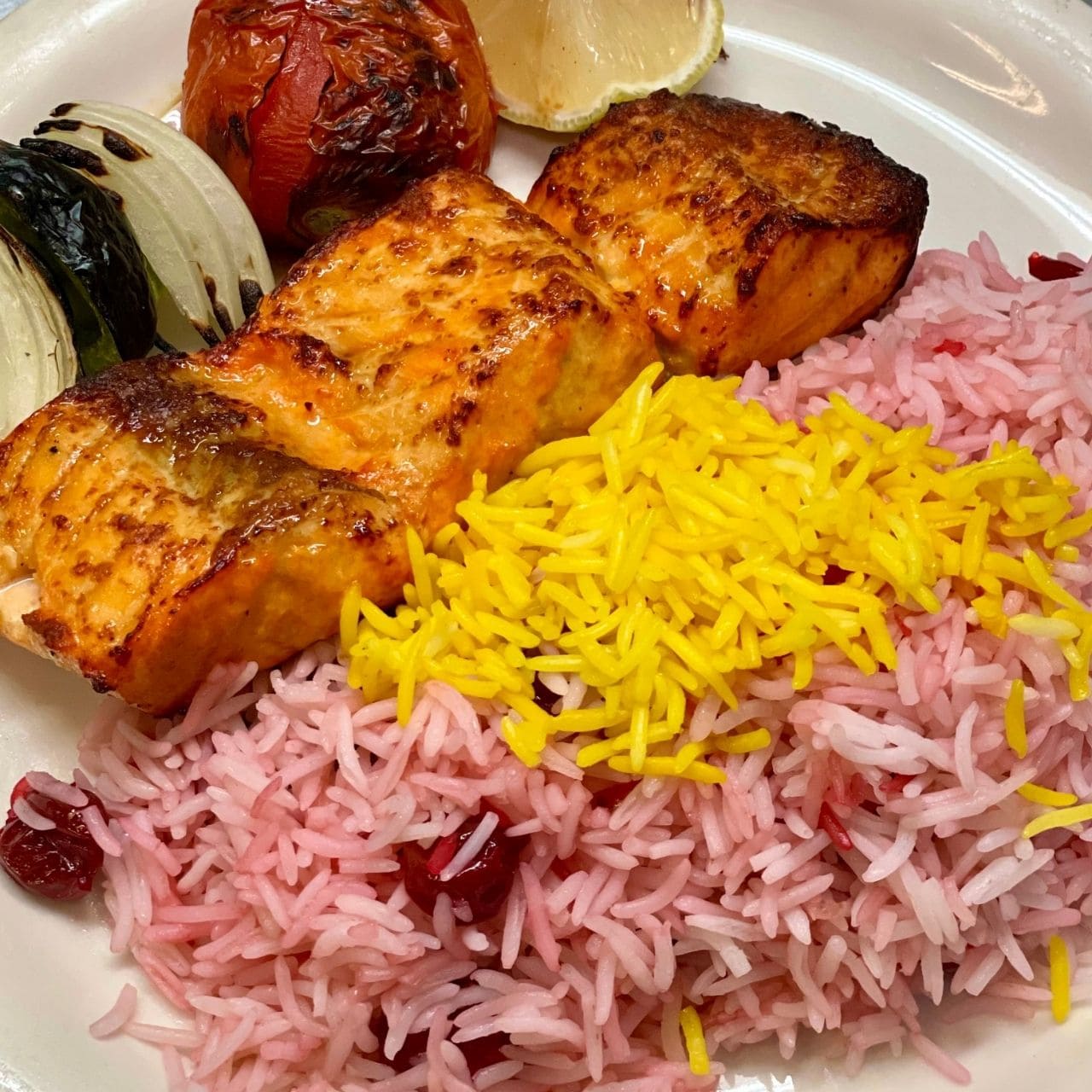
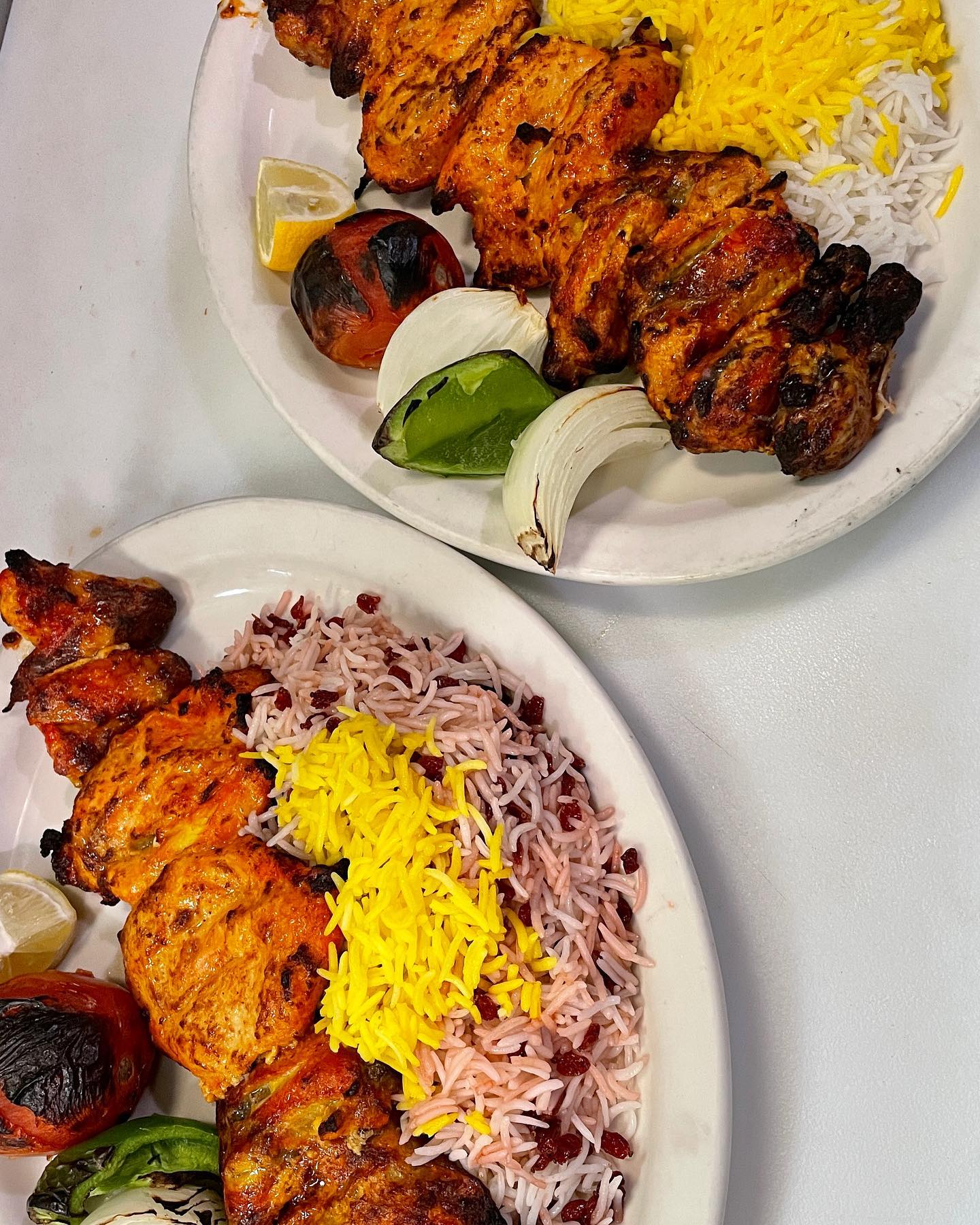
- Chelow (steamed basmati rice): The grains should stand completely separate, fluffy, and elongated, crowned with a spoonful of golden saffron-infused rice and a pat of real butter to catch the meat drippings.
- Grilled whole tomatoes: Blistered over the same open coals until the skin blackens and splits, offering sweet acidity when mashed into the rice alongside a bite of kabob.
- Table sumac and raw onion: Deep maroon sumac powder and crisp wedges of raw onion allow each diner to add sharp brightness to every forkful.
- Lavash or sangak bread: Traditionally placed underneath or on top of the hot skewers the moment they slide off the steel blade to soak up escaping steam and saffron butter.
Whether you order a plate for an evening meal or explore local dining options along the corridor, checking these four visual markers tells you immediately how much care happened at the prep table hours before the fire was lit.
Can you store and reheat leftover koobideh without drying it out?
Yes, you can reheat leftover ground meat skewers without turning them into dry leather by using a covered skillet with a splash of water and butter over low heat instead of a high-powered microwave. Microwaves agitate water molecules unevenly and boil out the delicate emulsion of rendered fat in seconds.
The short answer for storage is airtight and fast. Following FDA cold food storage guidelines, place any uneaten meat and rice into sealed containers inside a refrigerator kept at or below 40 degrees Fahrenheit within two hours of cooking. Wrap the kabob links tightly in foil or parchment before placing them in the container so the refrigerator air does not strip moisture from the ridged crust.
When you are ready to eat the next day, skip the open oven broiler and skip the microwave on full power. Place a heavy skillet over medium-low heat. Add one tablespoon of water and a small piece of butter. Lay the cold kabobs in the pan and cover it immediately with a tight lid. Within three to four minutes, the trapped steam gently warms the core to a safe serving temperature while the butter refreshes the outer saffron crust. If you have leftover flatbread, lay it directly on top of the meat inside the covered pan for the final sixty seconds to soften.
When to Leave Koobideh to a Dedicated Grill Kitchen
Mounting ground meat onto wide blades over live charcoal takes practice, specialized hardware, and patience. Skip the backyard trial and let a dedicated kitchen handle the fire in these situations:
- You do not own a grate-free mangal or wide steel blades: Standard backyard gas grills have grates that stick to the raw meat paste and prevent the skewer from hovering cleanly over radiant coals.
- You lack the three-to-four-hour chilling window: Without adequate cold rest after kneading, the meat mixture warms up on your hands and falls straight into the fire.
- You are feeding a group of four or more people: Grilling a dozen skewers requires simultaneous 15-second rotations over a long coal bed so every plate hits the table hot at the same time.
- You want the double-ground texture without a heavy-duty meat grinder: Supermarket pre-ground beef lacks the fine emulsion and exact fat ratio required to hold onto vertical steel.
When you want traditional flavour without the prep work in Glendale, CA, connect with Shamshiri Persian Grill Glendale and explore our Glendale location today.