The types of Persian kabobs worth knowing in Glendale come down to seven: koobideh, barg, joojeh, soltani, chenjeh, shishlik and vegetable kabob, with koobideh the one to try first. Skip learning them and you end up ordering the same plate every time, missing the cuts and marinades that make Persian grilling distinct.
1. Koobideh: the ground meat kabob
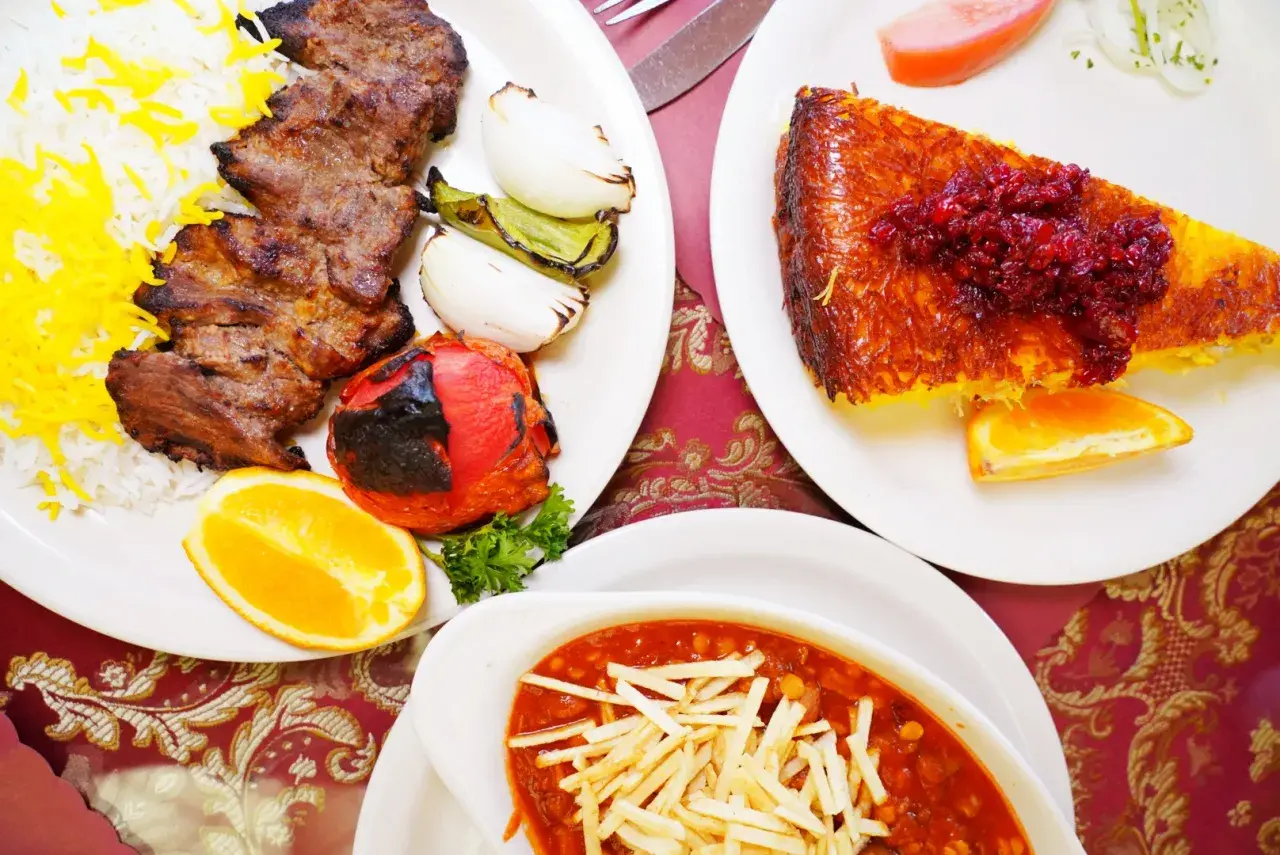
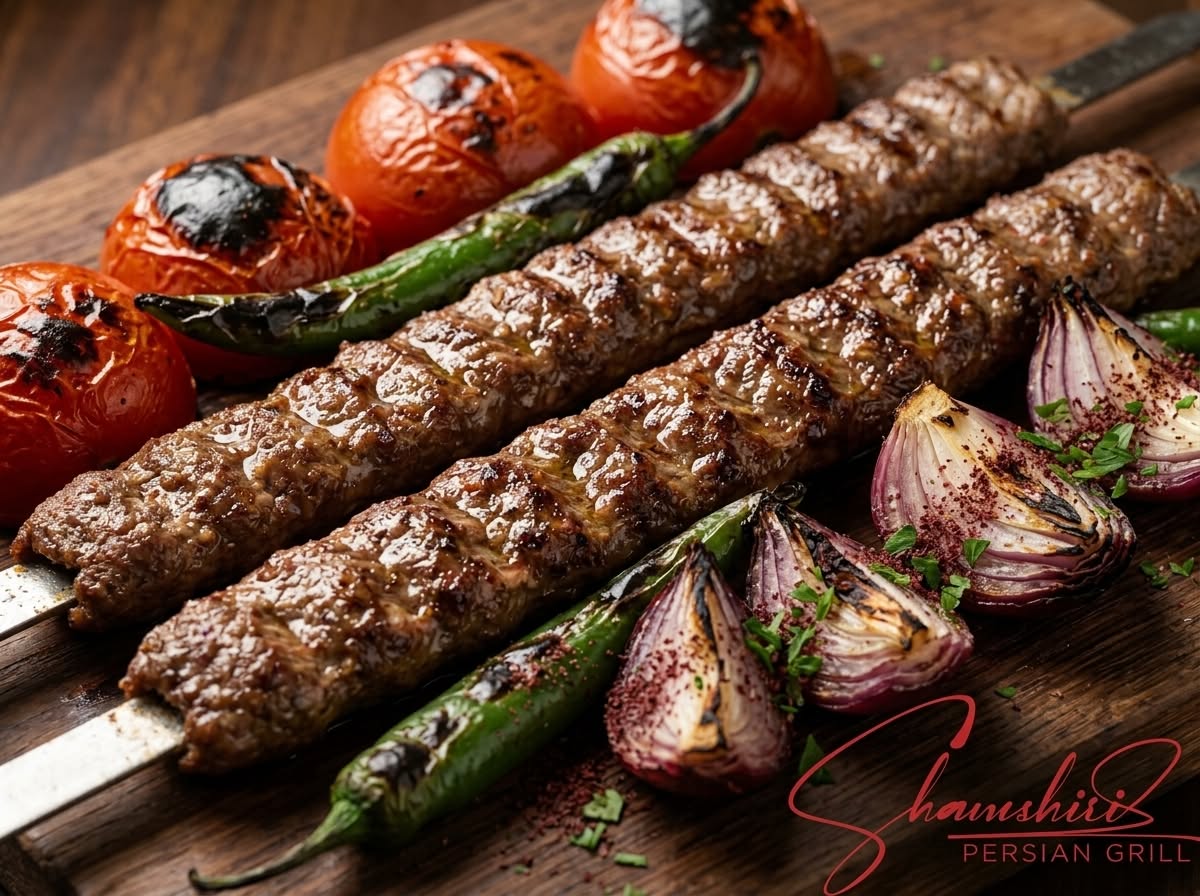
Koobideh is ground lamb, beef or a blend, mixed with grated onion and salt, then pressed by hand onto wide, flat skewers. That’s it. The grind and the onion do the work. The onion is grated and squeezed so its juice seasons the meat without making it wet. Too wet and it slides off the skewer into the fire. Fat content matters for the same reason, since it holds the meat together and keeps it juicy over high heat. Look for the ridges left by the cook’s fingers along the length of each kabob. They’re a sign it was shaped by hand. Koobideh usually comes in pairs, served with saffron rice and a charred tomato. Squeeze that tomato over the rice. Here is why: it adds acidity the meat needs.
2. Barg: thin-sliced lamb or beef fillet
Barg means “leaf,” and the name tells you the cut. Tenderloin or fillet is pounded or sliced thin, then marinated in onion, saffron and often a little yogurt or oil. Thin meat cooks fast. That speed keeps it tender instead of chewy. A good barg stays pink-edged and soft, with a light char on the outside. Because the cut is lean, timing over the flame is everything. A few seconds too long and it dries out. Order barg when you want a cleaner, beefier flavor than koobideh. It’s the kabob that shows off the quality of the meat itself rather than the seasoning.
3. Joojeh: saffron chicken, bone-in or boneless
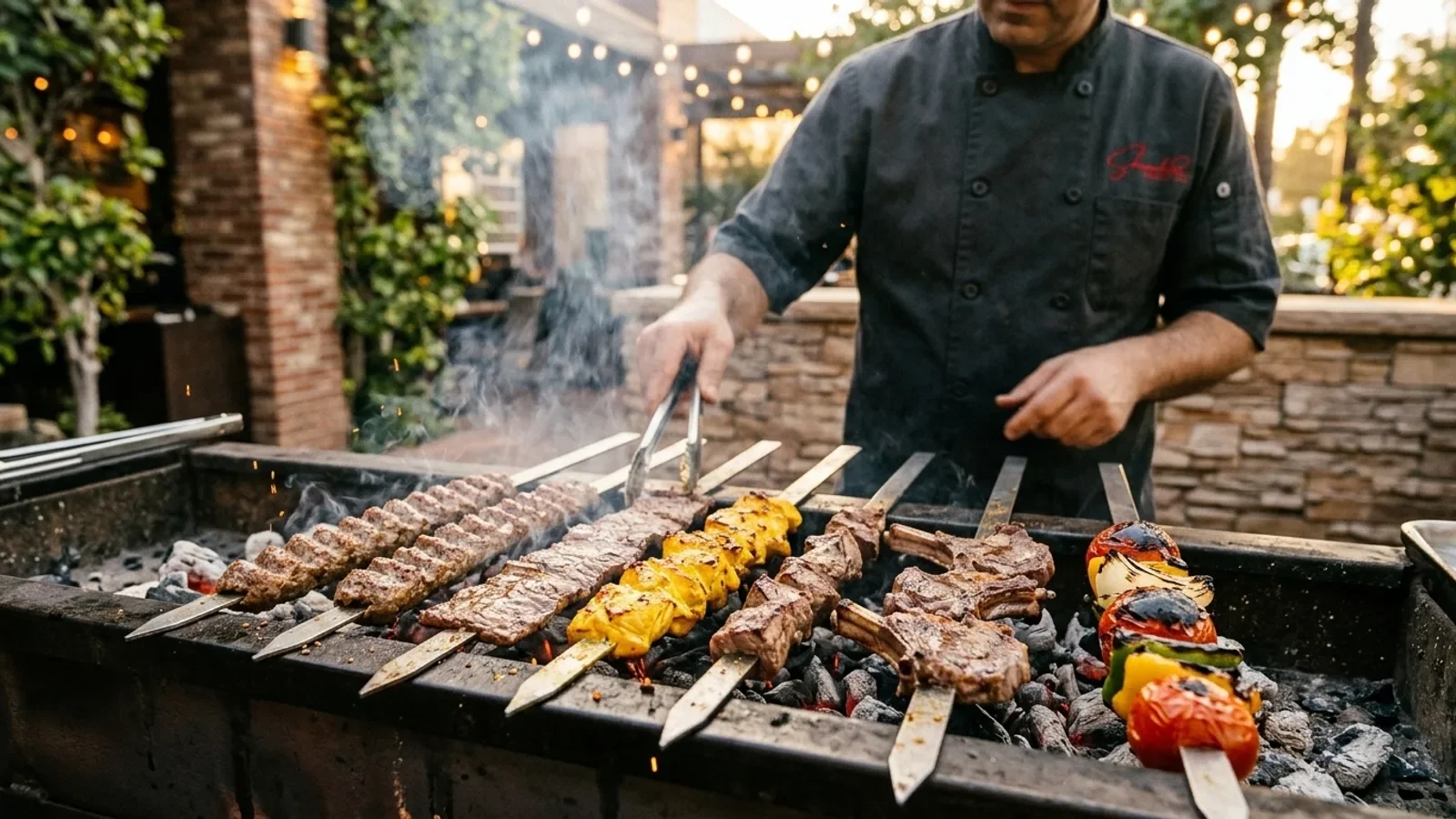
Joojeh is chicken marinated in saffron, lemon, onion and often yogurt, then grilled on skewers. The marinade turns it golden. Bone-in joojeh is the traditional version, usually using Cornish hen or chicken pieces on the bone. The bone slows cooking and keeps the meat moist, so it takes longer and needs steady attention over the coals. Boneless joojeh is quicker and easier to eat. Pick bone-in if you want more flavor. Pick boneless if you want convenience. Either way, the lemon and saffron should come through clearly, and the edges should carry a little char without tasting burnt.
Frequently Asked Questions about Persian kabobs
What are the different kebab meats?
The most common kebab meats are lamb, beef and chicken, with ground lamb-and-beef blends used for koobideh. Some Persian kabobs also use lamb chops, and vegetable skewers are a common side or meatless option.
What is a Persian kabob?
A Persian kabob is meat or vegetables marinated simply, often with onion, saffron, lemon or yogurt, and grilled on flat skewers over an open flame. It’s usually served with saffron rice or flatbread, grilled tomato and sumac.
What is an Arabic kebab called?
Arabic-style grilled meat goes by several names depending on the region, with kofta (spiced ground meat) and shish tawook (marinated chicken) among the most familiar. They overlap with Persian kabobs in form but usually use different spice blends.
Is sumac supposed to go on the kabob?
Yes, sumac is meant to be sprinkled over the kabob and rice at the table. Its tart, lemony flavor cuts through the richness of the grilled meat.
4. Soltani: the two-skewer combination
Soltani, often translated as “the sultan’s,” pairs one skewer of barg with one of koobideh on the same plate. It’s the classic order for a first visit. You get the contrast in one sitting: tender sliced fillet next to juicy, onion-rich ground meat. That contrast is the point. Eating them side by side teaches you more about Persian grilling than ordering either alone. Soltani is a big plate, traditionally with a generous mound of saffron rice. Plan to share or come hungry. If you’re new to the cuisine, the beginner’s walkthrough of Persian dining in Glendale covers how plates like this are usually served and eaten.
5. Chenjeh: cubed lamb or beef
Chenjeh is cubed lamb or beef, marinated and threaded onto skewers. Think chunks, not slices. The cubes give you more texture and a deeper chew than barg, plus more surface area for char. Marinades often include onion, black pepper and sometimes yogurt to tenderize the meat. Chenjeh is sometimes grilled with tomato or onion between the pieces, though it’s often served plain on the skewer. It suits people who like a steak-style bite. Ask how it’s cooked if you have a preference. Lamb chenjeh in particular tastes best with some pink left in the center.
6. Shishlik: marinated lamb chops
Shishlik is lamb chops, bone-in, marinated and grilled over high heat. It’s the richest kabob on most Persian menus. The marinade usually leans on onion, saffron and lemon, sometimes with yogurt, and it needs time to soak in. Long marinating softens the meat around the bone. The fat on the chop renders over the flame and crisps up, which is where much of the flavor lives. Eat it with your hands. Nobody minds. Shishlik is the plate to choose when you want something celebratory, and it pairs well with plain rice so the lamb stays the focus.
7. Why Glendale is a good place to learn Persian kabobs
Glendale sits in one of the largest Iranian-American communities in the country, around greater Los Angeles, and that shapes how kabobs are judged here. Local diners grew up on this food. They notice when koobideh falls apart or when barg is overcooked. That pressure keeps the traditional styles in front, rather than fusion versions. The climate helps too. Mild weather much of the year, including late autumn and winter evenings that are cool rather than cold, makes outdoor dining near the grill comfortable for long stretches. If you want to tell real technique from shortcuts, read up on how to spot authentic Persian cooking around town before you go. When you’re ready to taste the open-flame classics for yourself, start with an authentic Persian restaurant in Glendale that grills to order.
How to match the types of Persian kabobs to your appetite
Pick by texture first, then flavor. Short version: koobideh for juicy and soft, barg for tender and lean, chenjeh for chewy and meaty, shishlik for rich and bone-in, joojeh for bright and citrusy. Mixed groups do well ordering a soltani plus a joojeh to share. That covers most of the range. Add a vegetable skewer of tomato, onion and peppers if anyone at the table skips meat. Taking food home? Kabobs travel better than you’d think if they’re kept separate from the rice. See tips for ordering Persian takeout in Glendale for what holds up best on the drive. For a sit-down meal, what a good Persian restaurant visit looks like is worth a quick read too.
Quick checklist
- Koobideh: hand-shaped ground meat, onion-seasoned, try it first.
- Barg: thin fillet, tender, best slightly pink.
- Joojeh: saffron-lemon chicken, bone-in for more flavor.
- Soltani: barg plus koobideh, ideal for a first visit.
- Chenjeh and shishlik: cubed meat and lamb chops for heartier appetites.
- Finish every plate with sumac and grilled tomato.
Pick one kabob you haven’t tried and order it next time. Ready to taste them off the flame? Come grill-side for Persian kabobs in Glendale.