Authentic charcoal grilled Persian food Glendale diners seek depends on dry, radiant heat from glowing hardwood embers to sear skewered meat instantly while keeping the interior juicy. Skipping real coals for weak heat causes ground meat to steam in its own juices, turn rubbery, or drop right off the metal skewer into the fire.
Why does charcoal grilled Persian food Glendale diners eat taste different from gas-grilled meat?
Hardwood charcoal burns hotter and drier than propane or natural gas, creating a crisp outer crust and real smoke aroma that gas flames cannot replicate. That dry heat is the secret. When natural gas or propane burns, it produces water vapor as a chemical byproduct. That extra moisture wraps around the food and slows down surface browning.
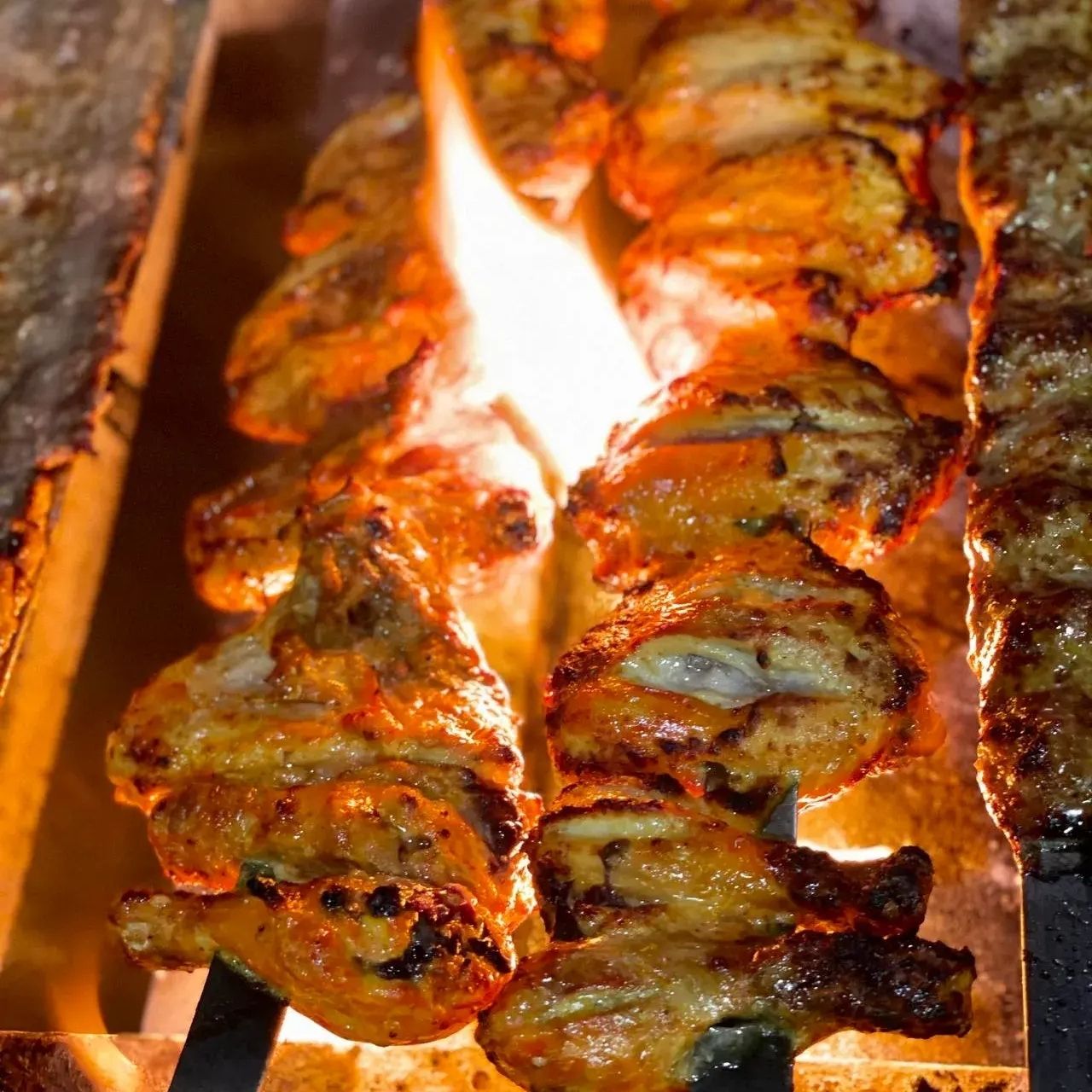
Hardwood lump charcoal works differently. Once lit and covered in a thin layer of gray ash, it radiates pure, dry infrared heat. There is no damp vapor in the fire box. As soon as a cold skewer of meat sits over the channel, the surface moisture evaporates in seconds. The proteins and natural sugars in the meat undergo the Maillard reaction almost right away, forming a savory brown crust while the center is still warming up.
The second difference is flavor compounds from dripping fat. As meat heats over glowing embers, rendered fat and onion juice drip downward onto the white-hot coals. They vaporize on contact. Tiny plumes of aromatic smoke rise right back up and coat the exterior of the skewer. That cycle of dripping and smoking builds a complex, wood-fired taste that has nothing to do with artificial liquid smoke or heavy marinades. Skip gas grills if you want that specific char. You can read more in our breakdown of how gas grates compare to live charcoal troughs for traditional skewers.
How does radiant heat from glowing embers transform ground meat textures?
Intense infrared heat from real coals sears the outside of ground meat in seconds, locking the protein structure onto the wide skewer before the fat can melt away. Ground meat skewers are fragile. Unlike solid cubes of beef tenderloin or bone-in chicken pieces, minced lamb and beef rely entirely on a delicate emulsion of cold fat, muscle protein, and grated onion.
Here is why heat speed matters so much. If the grill temperature is too low, the fat inside the raw mixture melts before the outer proteins coagulate and firm up. When the fat liquefies too early, the meat loses its grip on the flat stainless steel blade. It sags, splits along the edges, and falls straight into the ash bed.
Glowing hardwood coals prevent that collapse. They throw intense radiant energy directly upward across the open trough. A skilled grill cook places the raw skewers over the hottest zone first and flips them within thirty seconds. That initial blast sets a firm outer shell on both sides of the meat. Once that thin protein skin sets, it acts as a natural casing. The fat melting inside has nowhere to escape. It bastes the interior fibers instead of dripping out completely. That exact thermal balance is what produces authentic charcoal grilled koobideh kabobs with a springy, juicy bite and distinct thumbprint ridges.
What happens inside the meat when fat and saffron hit live hardwood coals?
Dripping animal fat and saffron-infused butter vaporize instantly on hot charcoal, sending aromatic compounds upward to coat the meat without burning the delicate spices. Persian grilling rarely uses thick, sugary barbecue sauces. High heat turns sugar black and bitter in moments. Instead, traditional preparation relies on simple, volatile aromatics: brewed saffron water, melted butter, lemon juice, grated onion, and black pepper.
When a cook brushes saffron-infused melted butter across a skewer during the final moments over the fire, two things happen at once. First, the warm fat carries fat-soluble flavor molecules from the saffron threads deep into the tiny cracks of the seared crust. Second, excess butter and meat drippings hit the glowing carbon below.
Because the coals are already burned down to pure glowing embers without raw wood flames, the drippings do not produce thick, sooty black smoke. They flash into a thin blue vapor. That clean vapor carries toasted lipid notes and wood aromatics straight back onto the moist surface of the chicken or beef. Keep the basting light. Drenching the meat douses the coals and kicks up wet ash. A quick brush right before pulling the skewers off the trough gives the crust its golden sheen and sharp aroma while keeping the meat safe in the temperature range recommended by the USDA safe minimum internal temperature chart.
Why do traditional Persian grills leave open air between the skewer and the fire?
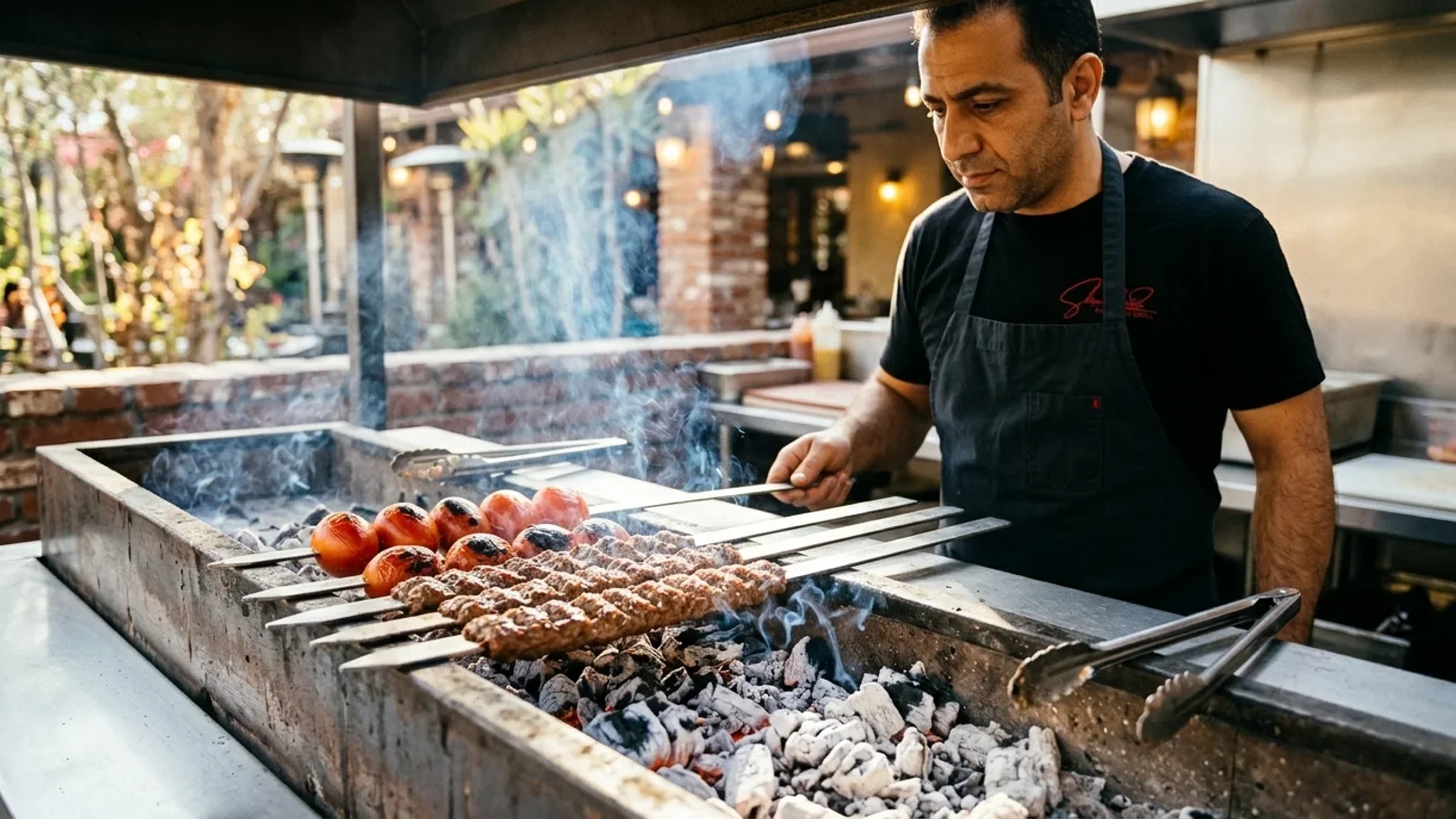
Suspending flat metal skewers across an open trough prevents metal grate marks from steaming the meat and lets radiant heat wrap evenly around all sides. Look at a traditional mangal or commercial charcoal kabob trough. You will not see cast-iron grates or stainless steel bars sitting over the fire. The grill is a long, narrow metal box with raised edges.
The wide wooden or metal handles of the skewers rest on the front and back lips of the trough. The meat hangs suspended in open air, usually two to four inches above the glowing bed of coals. Here is why grates get skipped in traditional Persian cooking:
- No uneven contact burns: Metal grates conduct heat much faster than air. Where meat touches a hot metal bar, it burns black into hard lines while the areas between the bars cook much slower.
- Zero sticking or tearing: Ground meat skewers and saffron-marinated chicken breast are delicate when raw. Laying them onto a metal grate rips the exterior as soon as you try to turn them.
- 360-degree airflow: With no metal grid blocking the trough, hot air and radiant waves flow freely around the curved sides of the meat.
- Instant flipping control: The cook can rotate ten or twelve skewers in rapid sequence by rolling the handles on the metal lip. This keeps the internal juices spinning inside the meat. Nothing drips out the bottom.
Wait until the coals burn down evenly before laying the skewers across the gap. The distance between the meat and the fire acts as the thermostat.
Not sure where to begin? Start with persian food services in Glendale.
How do Glendale air rules and Southern California weather affect charcoal grilling?
Cooking over live charcoal in Glendale and the greater Los Angeles basin requires strict commercial ventilation and dry fuel storage to manage airflow and regional emissions rules. Operating an open-fire grill in the Verdugo Mountains foothills is very different from setting up a backyard kettle grill.
In Los Angeles County, commercial kitchens using solid fuel like hardwood lump charcoal fall under strict air quality oversight. Exhaust hoods over solid-fuel troughs must use dedicated spark-arrestor filters, high-draw ductwork, and regular grease-trap maintenance to handle the heat and particulate load. That heavy exhaust pull actually changes how the fire behaves. A high-velocity commercial hood pulls massive volumes of air up from the dining room and across the charcoal bed. It acts almost like a blacksmith’s bellows. If the cook does not manage the ash layer or damper height, the hood draft will make the coals burn twice as fast and run way too hot.
Local weather plays a role too. Glendale sits in a semi-arid valley where dry Santa Ana winds often drop relative humidity into the single digits during late autumn and winter, while cool marine layers can push damp air inland during spring mornings. Lump charcoal acts like a sponge for moisture in the air. If bags of natural wood charcoal sit in an unsealed storage shed during a damp morning, the carbon absorbs moisture. Damp charcoal sparks, pops, and throws bitter gray smoke when lit. Good fire management in Glendale means storing charcoal in dry, sealed indoor areas and adjusting the coal bed depth to match the draft pulling through the hood.
Why do different Persian kabobs need specific heat zones over the coals?
Lean cuts of filet, fatty ground meat, and delicate saffron chicken each cook at different rates and will dry out or char too early if placed over the exact same coal depth. A charcoal trough is never uniform from left to right. A smart grill cook rakes the embers into distinct thermal zones before a single skewer touches the metal rails.
Ground lamb and beef mixtures need the highest, fastest heat at the start. They go over a deep, bright-red bed of coals so the exterior sets immediately and stays on the skewer. Once the crust forms, the cook flips them constantly until the center is done. That only takes a few minutes. You can spot when this process starts with quality ingredients by checking the signs of freshly ground koobideh skewers before and after they hit the fire.
Whole muscle cuts demand a calmer zone. Thick cubes of marinated beef tenderloin or sirloin (barg and chenjeh) need strong heat to brown the outside, but if the coals are piled too high, the exterior turns leathery before the center reaches medium. Bone-in Cornish hen or lemon-saffron chicken (joojeh) requires the gentlest section of the trough, where the coals have burned down to a thinner layer covered in white ash. Chicken absorbs yogurt and lemon juice from its marinade, which makes the surface brown very fast. Raking the coals thin under the poultry skewers lets the meat cook all the way to the bone without turning the delicate yellow saffron crust black. Knowing how to spot properly charcoal grilled koobideh and tender whole-cut skewers comes down to watching how evenly the crust is browned from end to end.
What happens to grilled vegetables like Roma tomatoes over live embers?
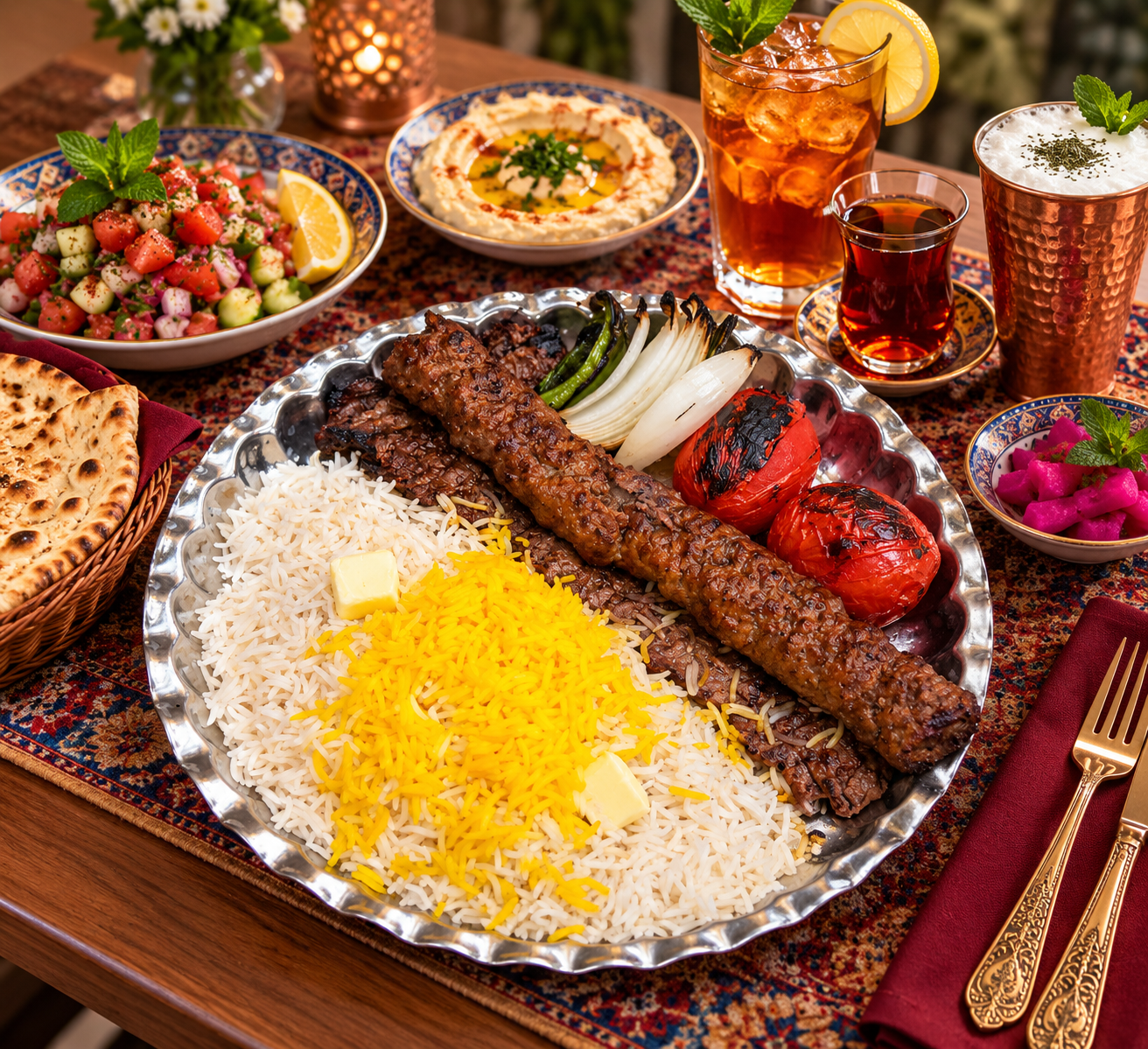
Whole Roma tomatoes and peppers blister on the outside over live coals while their inside flesh turns into a warm, smoky sauce that balances rich grilled meats. A plate of Persian skewers is incomplete without charred tomatoes sitting alongside the rice and sumac. They are not an afterthought or a raw garnish. They are cooked over the exact same hardwood embers on their own narrow metal skewers.
When a whole, firm Roma tomato hangs over glowing charcoal, the dry radiant heat blisters and blackens the thin outer skin within minutes. Meanwhile, the water inside the tomato heats up to a simmer, trapped inside the skin until tiny splits form. The sharp acidity of the raw tomato mellows out as the natural fruit sugars caramelize against the hot steel skewer running through its core.
Gas grills or oven broilers struggle to get this texture right. In an oven, the entire tomato bakes slowly and collapses into mush before the skin ever chars. Over hot hardwood coals, the intense surface heat blackens the skin while the center stays intact enough to hold onto the metal blade. Press the charred tomato into steamed basmati rice with a fork. The skin peels away easily. It releases hot, smoky tomato juice that cuts right through the richness of melted butter and grilled lamb fat.
When to Leave Charcoal Kabob Grilling to a Dedicated Kitchen
Grilling traditional Persian skewers at home takes specialized gear and strict temperature control that standard backyard setups rarely offer. Skip the home struggle and rely on an experienced kitchen in these situations:
- You only have a grated backyard grill: Standard kettle or propane grills with wire grates will tear fragile ground meat skewers apart and block the 360-degree airflow needed for an even crust.
- You are feeding a large group at once: Turning twenty heavy stainless steel skewers simultaneously over live embers without dropping the meat or scorching the saffron takes dedicated trough space and constant movement.
- Your ground meat keeps falling into the fire: Getting minced lamb and beef to bind without eggs or breadcrumbs requires precise meat-to-fat ratios, thorough onion draining, and an intense initial sear that small home fireboxes struggle to sustain.
- You cannot vent heavy charcoal smoke at home: Apartment balconies, windy patio days, and HOA fire rules in Southern California often make lighting open hardwood troughs unsafe or impractical.
When you want to judge real wood-fired cooking on your plate, review our complete guide on identifying authentic charcoal grilled koobideh kabobs in Glendale or explore the Glendale Persian dining options at Shamshiri Persian Grill Glendale to plan your next meal.