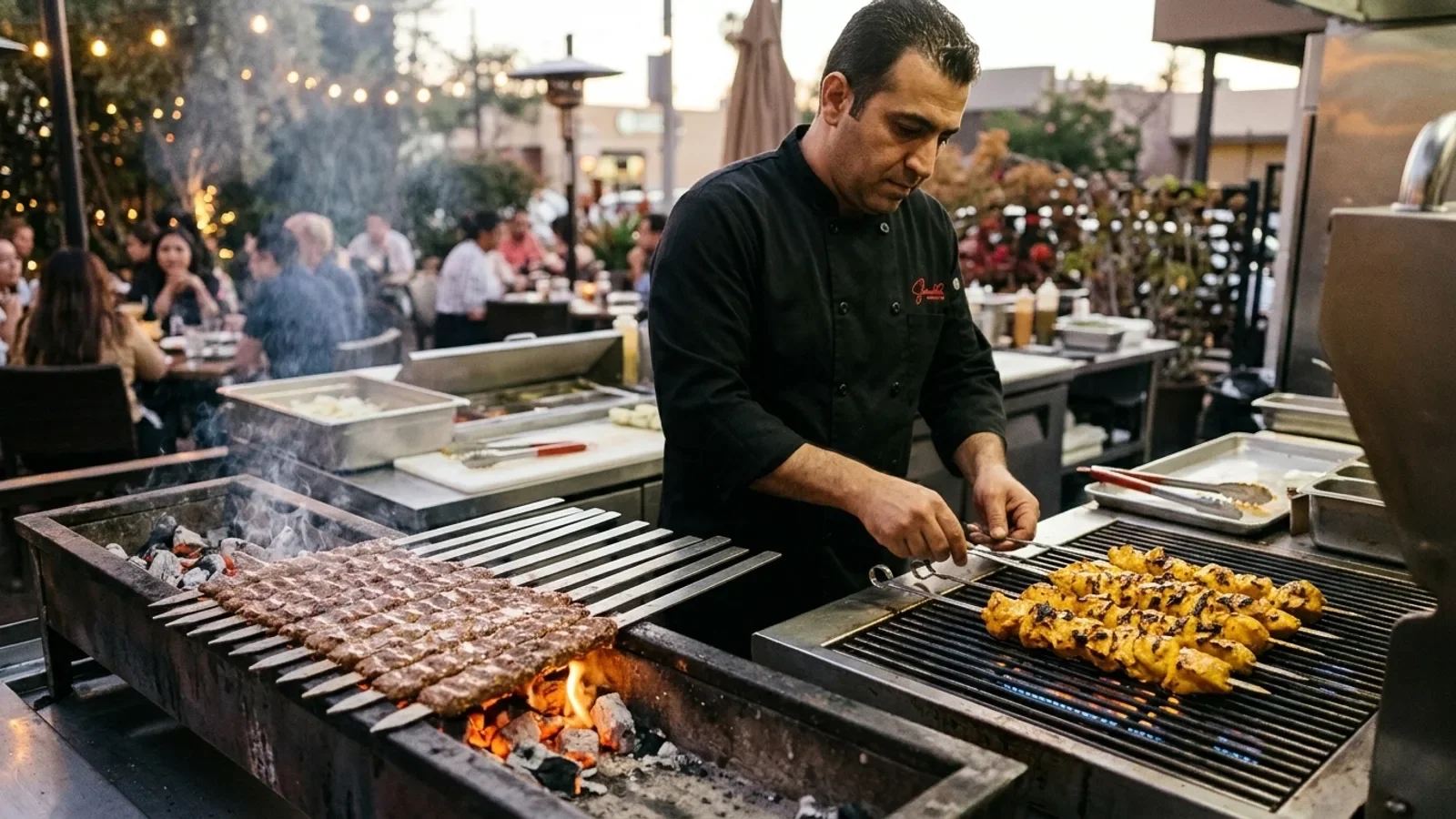
For flavor, charcoal usually wins the gas vs charcoal Persian kabobs debate, because glowing coals deliver intense radiant heat and drippings that hit the coals and flavor the meat with smoke. Persian koobideh is traditionally cooked on wide, flat skewers over an open charcoal trough. In Glendale, choose charcoal for depth of flavor and gas for consistency and speed.
Charcoal grilling: the traditional Persian fire
Charcoal is the classic heat source for Persian kabobs, and it produces the deepest char and the most smoke-driven flavor. That is the short answer. Here is why.
Hot coals throw strong radiant heat straight at the meat. The surface browns fast, while the inside stays juicy. Fat drips onto the coals, flashes into smoke and rises back into the meat. That smoke is a big part of what people mean by “grilled taste.”
The traditional Persian setup matters too. Kabobs sit on long, flat metal skewers suspended over a narrow trough of coals, with no grate in between. The meat never touches metal bars. So you get even browning all the way around instead of stripes.
For ground-meat koobideh, this is a big deal. The intense heat sets the outside quickly, which helps the mixture grip the skewer. Too little heat, and ground meat can slump or slide off. Grill cooks rotate the skewers constantly and fan the coals to control hot spots.
What charcoal costs a kitchen is effort. Coals need lighting, tending and replacing. Heat drifts over a long service. The person at the grill has to read the fire by eye and by feel. That skill is the core of the Persian kabob grilling technique worth looking for, and it shows on the plate.
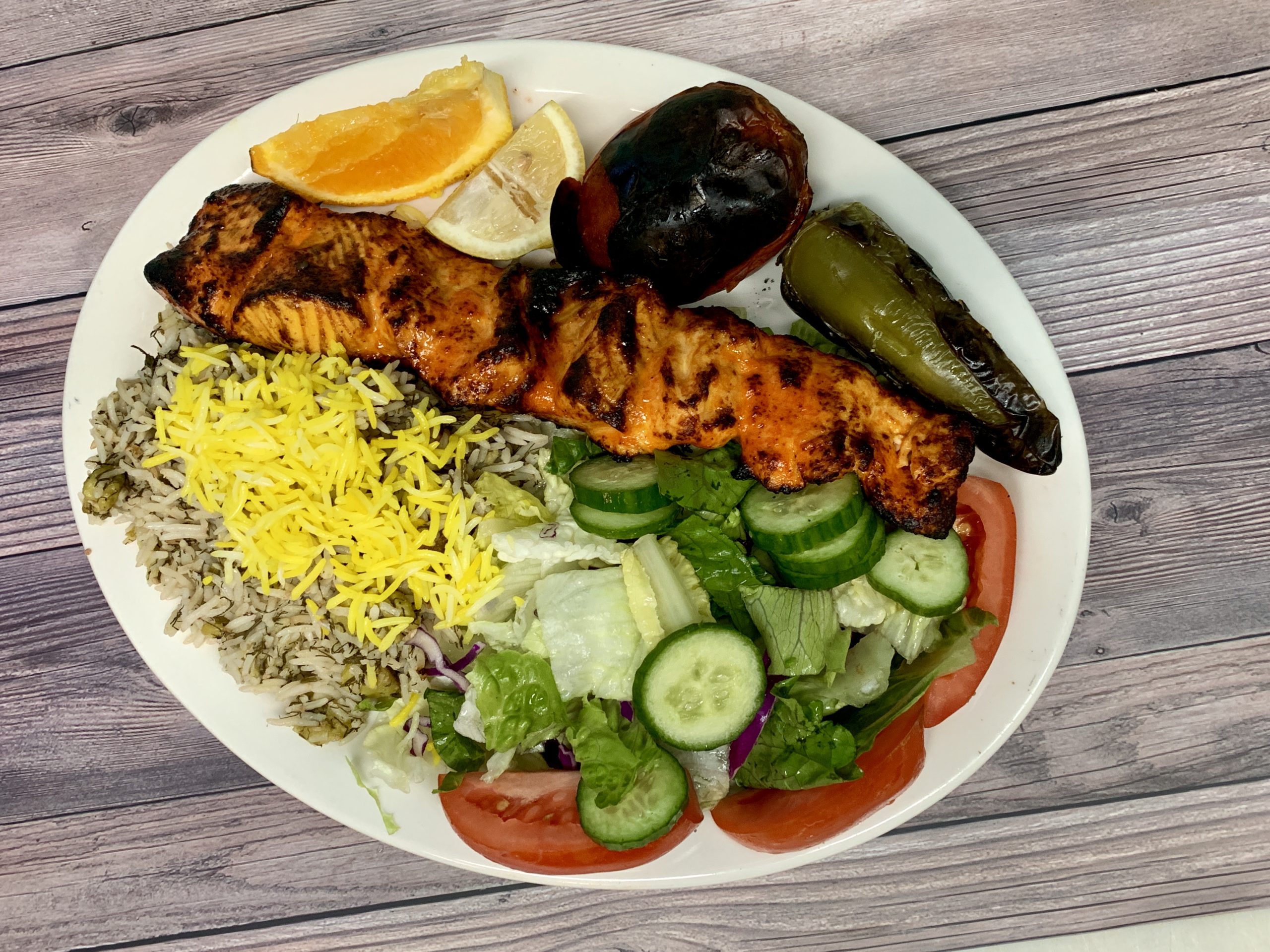
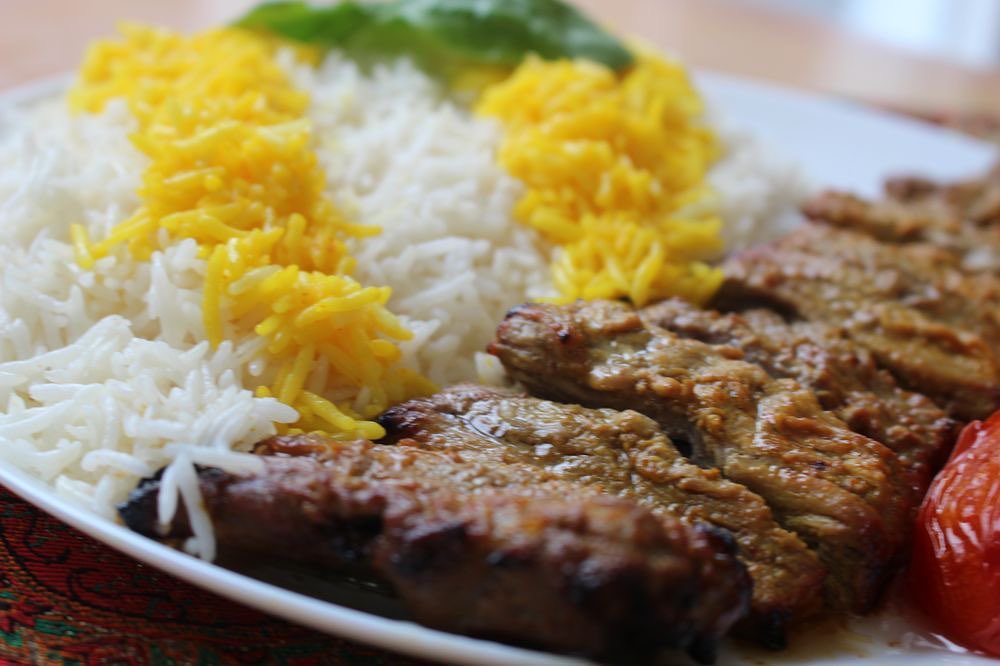
What charcoal kabobs look like on the plate
- Uneven, deep brown spots with small blackened edges, not uniform tan.
- A faint smoky aroma when the plate lands.
- For koobideh, ridges pressed along the length from the cook’s fingers, with browning concentrated on the ridges.
- A juicy center that still looks moist when you cut in.
Gas grilling: steady heat, milder flavor
Gas grilling gives reliable, adjustable heat and consistent results, but a milder flavor with less smoke. It is a practical tool, not a cheat.
Turn a knob and the temperature changes. No waiting for coals to ash over. No refilling mid-rush. For a busy kitchen or a home cook on a weeknight, that control is real value.
The trade-off is flavor. A gas flame cooks mostly through hot air and heated metal. Drippings land on burner shields or lava rock rather than live coals, so far less aromatic smoke comes back up. Most gas grills also have grates, which leave stripe marks rather than all-over browning.
Gas can still produce good kabobs. Marinated cuts like chicken or filet hold up well because the marinade carries a lot of the flavor. Ground koobideh is harder. Without strong radiant heat, the surface sets more slowly, and the meat can steam a little before it browns.
What gas kabobs look like on the plate
- Even, lighter color, often with parallel grill lines.
- Little or no smoke in the aroma.
- A firmer, more uniform surface with less crispy edging.
- Consistent doneness from skewer to skewer.
Gas vs charcoal Persian kabobs, side by side
Charcoal leads on flavor and char. Gas leads on control and consistency. The table sums it up.
| Criteria | Charcoal | Gas |
|---|---|---|
| Flavor | Smoky, deep, savory from drippings hitting coals | Clean and mild, flavor comes mostly from the marinade |
| Surface char | Uneven deep browning with crisp edges | Even, lighter color, often grill-stripe marks |
| Juiciness | Fast sear helps hold moisture inside | Good, but slower browning can dry thin cuts |
| Koobideh grip on the skewer | Strong, since high heat sets the meat quickly | Harder, ground meat can slump before it sets |
| Consistency | Depends heavily on the cook’s skill | High, temperature is easy to hold |
| Tradition | The classic Persian method on flat skewers | A modern convenience approach |
Why Glendale is a good place to compare
Glendale makes this comparison easy, because Persian and broader Middle Eastern cooking is woven into the local food scene. The city and the surrounding area have long-established Iranian and Armenian communities. Kabob grills here face diners who grew up eating the real thing. Standards are high.
The climate helps too. Glendale’s mild Southern California weather means patio dining works most of the year, even in late fall. Eating outside, you can often smell a charcoal grill before you see it. That aroma is a useful first clue.
Many Glendale homeowners rely on expert persian restaurant services in Glendale when it is time to act.
There is a regulatory angle as well. Commercial cooking in the Los Angeles area falls under regional air quality and local fire rules, and solid-fuel grilling can come with extra requirements on ventilation and equipment. Those rules vary, so do not assume anything about a specific kitchen. Some restaurants keep charcoal anyway. Some use gas or hybrid setups. The only way to know is to look, smell and ask.
For home cooks, check your local codes and your building or HOA rules before firing up a charcoal grill on a balcony or patio. Apartment rules in dense parts of Glendale can be stricter than single-family homes.
Which is right for Glendale homes and diners?
Pick charcoal when flavor is the goal, and gas when speed and convenience matter most. That is the verdict.
Dining out? If you want koobideh at its best, seek charcoal. The ground meat benefits most from intense radiant heat. Look for the uneven char, the smoky aroma and a juicy center. Also check the meat itself. Our guide to spotting freshly ground koobideh covers texture and color cues that pair well with the char check.
Cooking at home? Gas is fine for chicken and marinated beef. Skip ground koobideh on a gas grill unless you can get it very hot. If you want the full experience, a charcoal grill with flat skewers is worth the extra effort. For more on fuel, airflow and setup, read about how charcoal shapes Persian food in Glendale.
Short on time? Gas. Hosting a weekend gathering? Charcoal. Want to judge a restaurant? Learn how to identify properly charcoal grilled koobideh and trust your eyes and nose.
Frequently Asked Questions about gas and charcoal kabobs
Why does charcoal grilling have a better taste than gas grilling?
Charcoal tastes stronger because fat drips onto hot coals and turns into aromatic smoke that flavors the meat. Coals also give intense radiant heat, which browns the surface fast and builds deeper savory flavor than the hot air of a gas flame.
What type of grill has the best flavor?
For Persian kabobs, a charcoal grill with flat skewers suspended over the coals generally gives the fullest flavor. It combines smoke, direct radiant heat and all-around browning without grate marks.
Which is healthier, gas or charcoal barbecue?
Neither is clearly healthier, since any high-heat grilling can form charred compounds on meat. Common general advice is to trim excess fat, avoid heavy blackening and pair kabobs with vegetables and herbs; ask your doctor if you have specific dietary concerns.
Can I tell if a restaurant kabob was cooked on charcoal?
Usually, yes. Look for uneven deep browning with crisp edges, no parallel grill stripes and a light smoky aroma, and simply ask the staff how the kabobs are grilled.
When to ask the kitchen directly
Sometimes the plate does not tell the whole story. Ask the restaurant how they grill when:
- The kabob looks evenly tan with grill stripes and you expected charcoal.
- You are ordering for a group or event and flavor really matters.
- You are ordering delivery and cannot see or smell the grill.
- You have dietary needs and want to know about marinades or fats used.
Ready to taste the difference yourself? Visit Shamshiri Persian Grill Glendale and see what’s on the kabob menu before your next meal out.