To reheat Persian kabobs moisture intact in Glendale, wrap the cold skewers tightly in aluminum foil with a small splash of water or a dab of butter. Warm them in a 300-degree oven for twelve minutes. The sharp hiss of a microwave turning tender beef into gray rubber is completely avoidable. Use gentle, trapped steam instead.
Quick facts
- Best appliance: A standard oven or toaster oven set to 300 degrees Fahrenheit gives the most even heat without drying the exterior.
- Moisture seal: Heavy-duty aluminum foil crimped tightly around the meat traps steam and keeps rendered fat inside the skewer.
- Liquid ratio: Add just one teaspoon of water, broth, or unsalted butter per skewer inside the foil packet before heating.
- Stovetop option: A lidded skillet over medium-low heat restores a single serving in about five minutes using a splash of water.
- Food safety target: According to USDA food safety guidelines for leftovers, reheated meat should reach an internal temperature of 165 degrees Fahrenheit.
- Starting quality: Skewers originally cooked over live charcoal hold onto their natural juices much better the next day than meat baked or gas-broiled.
Picture a typical Tuesday evening in a Verdugo Woodlands kitchen. A large white takeout container sits on the counter from the night before, loaded with leftover basmati rice, a blistered tomato, and two thick ground beef skewers. You pull the container from the refrigerator after a long commute down the 134 freeway. Your first instinct is to toss a plate into the microwave for ninety seconds. Wait. That single shortcut ruins the meal. Within a minute, the aromatic saffron and sumac notes flatten out, the fat separates into a greasy puddle, and the beef turns tough. Taking ten extra minutes with an oven or a covered pan changes everything.
Why leftover skewers dry out so fast
Leftover skewers dry out because cooling solidifies the natural animal fats, and aggressive reheating boils away water molecules before that fat can slowly melt back into the meat fibers. When you apply high, direct heat to cold meat, the exterior overcooks while the center stays chilly. You end up chewing through a leathery crust.
To understand what happens inside the takeout box, look at how different cuts are built. A traditional Persian platter usually features two distinct styles of meat. First is koobideh, made from ground beef or lamb kneaded with grated onion until the proteins bind into a springy paste. Second is barg, joojeh, or shishlik. These are whole muscle cuts of beef tenderloin, chicken, or lamb marinated in olive oil, onion juice, lemon, or yogurt. Both styles rely on a delicate balance of water and fat for their texture.
During the initial cook over high heat, muscle fibers contract and push moisture toward the center and the surface. Once the meat cools in your refrigerator overnight, the melted tallow and butter solidify into firm white flecks. Meanwhile, the dry refrigerator air pulls surface moisture straight out of the exposed char marks. If you blast that cold skewer with microwave radiation, water molecules vibrate violently and escape as steam in seconds. The solid fat melts too rapidly and runs off onto the plate rather than re-emulsifying with the meat proteins. The short answer: fast heat breaks the structure of the kabob.
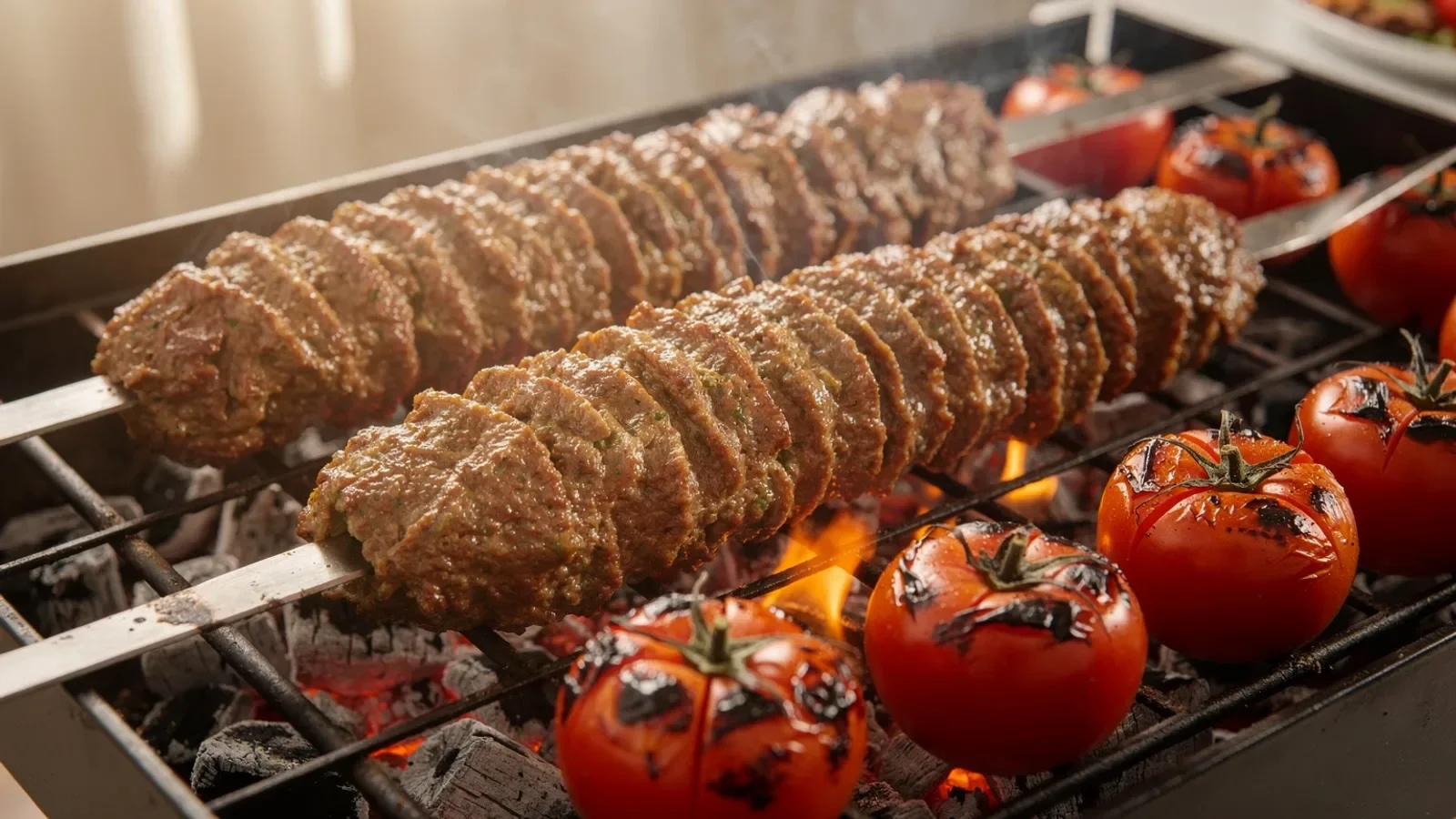
The original cooking method also plays a massive role in next-day texture. When you start with genuine charcoal grilled koobideh kabobs, the intense radiant heat of live embers sears the outside almost instantly while keeping the interior spongy and saturated with onion juice and rendered fat. That quick exterior crust acts as a natural barrier. If the meat was originally cooked slowly over a weak flame, it already lost most of its internal moisture before it ever went into your takeout container. Starting with well-prepared skewers gives you a much wider margin of error when warming them up the next afternoon.
Why Glendale kitchens and delivery habits compound the problem
Glendale’s warm, dry foothills climate and the vented containers used for local delivery pull surface moisture out of hot grilled meats before they ever reach your refrigerator. By the time leftovers are stored in a typical San Fernando Valley or Glendale apartment, the meat has already lost a noticeable fraction of its steam.
Look at the local geography and housing stock. Whether you live in a mid-century apartment near Brand Boulevard, a classic Spanish-style bungalow in Rossmoyne, or a hillside home up in Chevy Chase Canyon, indoor air here stays relatively dry for most of the year. When warm Santa Ana breezes push down from the mountains or the air conditioning runs steadily through late autumn, indoor humidity drops low. Leaving an open platter of grilled beef or chicken on the dining table for forty-five minutes during a family dinner lets that dry room air wick away surface juices.
Delivery logistics play a part too. To keep freshly grilled meat from getting soggy during a fifteen-minute drive across town, family platters are often packed in large aluminum trays with crimped cardboard lids or vented containers. That ventilation is great for preserving the smoky crust right off the grill. Yet it also means steam escapes continuously on the ride home. Do not tuck that exact same vented cardboard lid straight into the refrigerator. Without transferring the skewers to an airtight glass container, cold refrigerator air circulates over the meat all night long.
Kitchen setups across the city vary just as much. Many older Glendale apartments have compact galley kitchens equipped with older gas ranges that run hot or lack precise low-temperature calibration, alongside countertop microwave ovens that people rely on for speed. Knowing how your specific oven behaves matters. If your older gas oven runs twenty-five degrees hotter than the dial claims, an unwrapped skewer will scorch in minutes. Wrapping the meat protects it from uneven oven hotspots and dry ambient air alike.
How to reheat Persian kabobs moisture intact
The most reliable way to restore cold skewers is the low-heat foil packet method in a 300-degree oven, followed closely by a covered skillet steam on the stovetop. Skip the microwave completely. Keep your air fryer turned off unless you wrap the meat first.
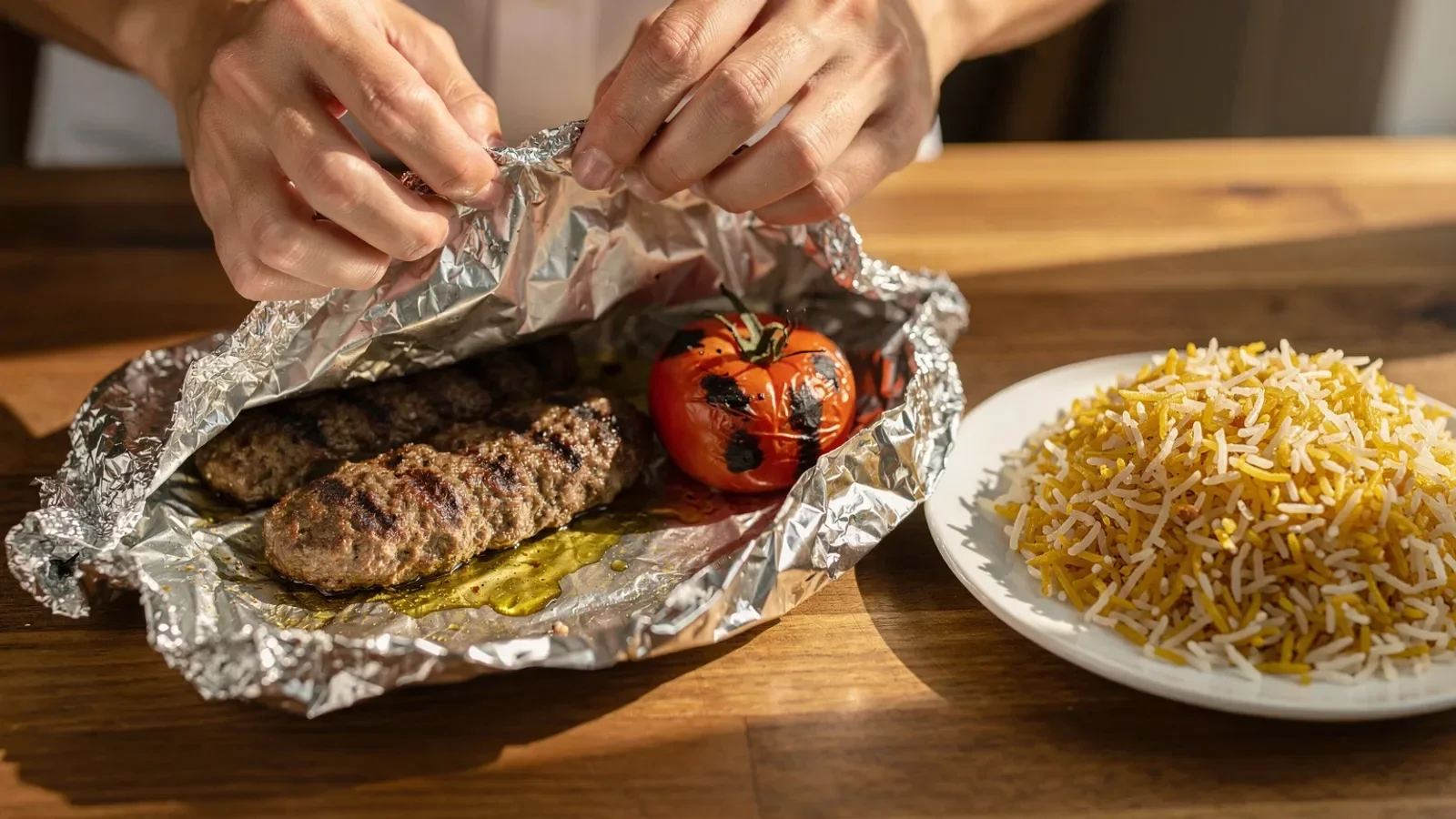
Here is why the oven method works so well. By sealing the kabobs inside a tight foil pouch with a tiny measure of liquid, you create a miniature convection steamer. The gentle 300-degree air warms the metal foil evenly. Inside the pouch, the added water turns to light vapor, softening the crust while giving the solid internal fat time to melt gradually back into the meat fibers. Follow this exact routine for the oven.
First, pull your containers from the refrigerator about fifteen minutes before you plan to eat. Taking the intense chill off the meat on the counter shortens the cooking time so the outer layer does not overcook while waiting for the center to warm. Preheat your oven or countertop toaster oven to 300 degrees Fahrenheit. Tear off a sheet of heavy-duty aluminum foil large enough to fold over the skewers twice. Place one or two skewers in the center of the foil. Sprinkle one teaspoon of water or low-sodium broth directly over the meat, or lay two thin shavings of unsalted butter on top. If you have a leftover grilled tomato in the box, slice it in half and set it right next to the beef. The tomato releases natural acidic juices as it warms. Fold the foil edges together and crimp them tightly so no steam can leak out. Place the packet on the center rack for ten to twelve minutes for ground koobideh, or twelve to fifteen minutes for thicker chunks of chicken joojeh or lamb. Open the foil carefully, let the meat rest for one minute, and serve.
If you only have one skewer and do not want to heat the entire kitchen, use a heavy skillet on the stovetop. Choose a pan with a tight-fitting lid, like cast iron or heavy stainless steel. Set the burner to medium-low and add a small pat of butter or a light splash of neutral oil just to coat the bottom. Lay the cold kabobs in the pan and pour one tablespoon of water around the edges, not directly on top of the spice rub. Put the lid on immediately. The water hits the warm pan and creates an instant burst of steam. Let the skewers warm in that trapped vapor for three minutes, flip them once with tongs, and cover for another two minutes. Remove the lid for the final thirty seconds to let any excess water evaporate and re-crisp the bottom char.
Do not mix different meats in the same foil packet or pan if they have wildly different thicknesses. A delicate fillet of barg (thinly sliced beef tenderloin) warms through in six or seven minutes and turns tough if left longer. Bone-in chicken joojeh takes nearly twice as long because the bone acts as a thermal sink. Group ground meats together, keep thin steaks separate, and give bone-in poultry its own foil pouch. Also, pay attention to how the meat was prepared before it ever reached your kitchen. When diners understand how traditional charcoal grilling works in Glendale, they notice that authentic open-flame sear locks in marinades far better than flat-top griddles.
Ready for the next step? See how persian restaurant services in Glendale can help.
Frequently Asked Questions
What is Koobideh made of?
Traditional koobideh is made from freshly ground beef, lamb, or a combination of both with a higher fat ratio (typically around 80/20), mixed thoroughly with finely grated and squeezed yellow onion, salt, black pepper, and occasionally a pinch of saffron or turmeric. True recipes never use breadcrumbs, eggs, or flour as binders. They rely instead on vigorous hand-kneading to make the meat proteins sticky enough to cling to a wide flat skewer.
How to make kebab juicy and not dry?
Keeping a kebab juicy starts with choosing meat that has enough natural fat, grating onion into ground mixtures or using an acidic onion-and-oil marinade for whole cuts, and cooking rapidly over high heat so the exterior sears before the interior dries out. When reheating leftovers, trap moisture around the meat using a sealed foil packet with a splash of water or butter over low heat. Never expose the bare skewer to dry oven air or a microwave.
How do you reheat doner kebab meat?
Reheat thinly shaved doner kebab meat by placing it in a warm skillet over medium-low heat with a teaspoon of water or broth and covering the pan with a lid for two to three minutes until steamed through. Shaved doner strips are much thinner than Persian skewers. They dry out in seconds under dry oven heat, making a quick covered-skillet steam the safest method.
How to keep kebabs from falling apart?
Kebabs stay together on the grill when the grated onion is squeezed completely dry of excess water before mixing, the meat paste is kneaded until tacky, and the mixture is chilled before being pressed onto clean, dry metal skewers. During reheating at home, handle leftover ground skewers gently with wide tongs or a spatula. Warm them flat inside foil so the softened fat does not cause the meat to break into pieces.
How to make kurdish kebab?
Kurdish kebab is typically made by mixing coarsely ground lamb or beef with tail fat, finely chopped onions, minced garlic, parsley, and warm spices like sumac or chili flakes, then pressing the mixture onto wide flat skewers to grill over hot coals. Classic Persian koobideh uses a smooth paste of meat and squeezed onion only. Kurdish styles often include fresh herbs and mild aromatics right in the grind.
What to do with the saffron rice, grilled tomatoes, and marinades
Warm leftover basmati rice and grilled vegetables separately from the meat so the grains stay fluffy and do not soak up excess grease. Each item in a Persian takeout platter has a different water content and needs its own quick revival.
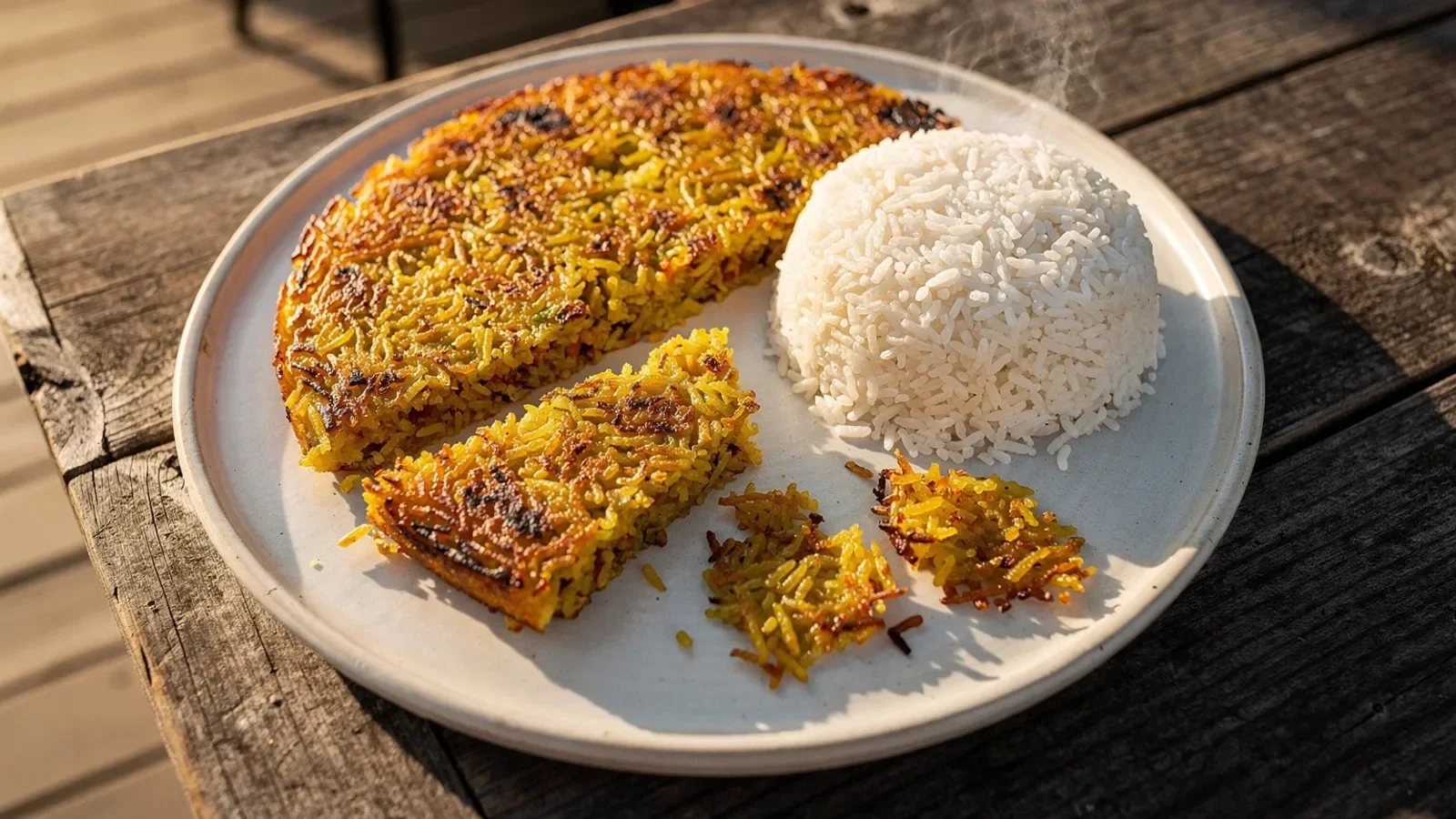
Cold basmati rice feels hard and dry the next day because the starch molecules crystallize in the refrigerator, a process food scientists call retrogradation. To reverse it, you need pure steam. Scoop the cold white rice and golden saffron rice into a heatproof dish or a small saucepan. Sprinkle one to two tablespoons of water over the top, break up any big clumps gently with a fork, and dot the surface with a sliver of butter. If you are using the stovetop, cover the pot tightly and set it over the lowest possible flame for five minutes. Unlike the meat, rice actually handles the microwave well. Just cover the bowl with a damp paper towel or a microwave-safe lid and heat it for sixty seconds. The trapped steam rehydrates every grain right back to its original fluffy texture.
What if your container has different varieties of skewers, like ground turkey or marinated beef cubes? Ground turkey koobideh is much leaner than traditional beef and lamb blends. Because poultry has very little saturated fat to melt during reheating, turkey skewers need extra help. Brush the cold turkey lightly with olive oil or melted butter before sealing the foil packet. Pull it from the oven after eight to ten minutes. For chunks of beef shish kabob or chenjeh that were cured in a Persian beef marinade of grated onion, olive oil, black pepper, and yogurt or lemon juice, the outer fibers can tighten up if heated too long. Keep the foil packet tightly sealed and let the meat sit inside the closed foil on the counter for three minutes after taking it out of the oven. That resting period lets the pressure drop. The warm juices settle back into the center of each cube instead of spilling onto your cutting board.
Learning how to spot fresh ground koobideh skewers when you first order also helps you predict how well leftovers will hold up. Freshly ground meat retains a tight, springy grain that traps liquid inside, whereas previously frozen or overworked meat releases its water the moment it hits the heat. Similarly, understanding what separates authentic charcoal-grilled koobideh from shortcuts explains why genuine smoky crust revives with a pleasant aroma in your oven while gas-broiled substitutes can taste flat the next day.
What to expect when you open the foil
When you unfold the foil packet after twelve minutes, expect a gentle puff of fragrant steam, a pliable texture that yields to the side of a fork, and juices that stay inside the meat rather than pooling in the wrapper. The skewer will not have the exact brittle crunch of the first sixty seconds off an open charcoal pit. That is completely normal.
Check the texture with your fork before plating. Press down lightly on the thickest part of the koobideh. It should feel bouncy and warm all the way through, never spongy or stiff. If you cut a piece in half, the interior should glisten with melted fat and release the sweet, savory scent of cooked onion and saffron. If you want a bit of that freshly grilled edge back on the outside, you can run the warmed skewers under your oven broiler for just forty-five seconds with the foil folded open. Watch them every second. The goal is only to sizzle the surface fat, not to cook the meat a second time.
Serve the revived skewers immediately over your steamed basmati rice. Set out fresh herbs if you have them in the crisper drawer, a wedge of raw onion, and a shaker of crimson sumac. Sprinkling fresh sumac over warm meat right before eating adds a bright, citrusy pop that wakes up the rich flavors of the beef and lamb. Every bite stays tender, warm, and deeply satisfying, turning last night’s dinner into a meal worth sitting down for.
Quick checklist
- Transfer leftover skewers from vented delivery boxes into airtight containers as soon as the meal ends.
- Let cold kabobs sit on the counter for fifteen minutes before applying any heat.
- Preheat your oven to 300 degrees Fahrenheit and skip the microwave for all grilled meats.
- Wrap skewers tightly in heavy-duty foil with one teaspoon of water, broth, or butter per skewer.
- Steam leftover basmati rice separately under a damp cover with a splash of water.
- Let the heated foil packet rest unopened for two minutes before plating with fresh sumac.
Next time you bring home extra skewers in Glendale, follow the low-heat foil method to keep every bite tender. When you want to start with properly prepared platters built over real fire, explore our Glendale Persian grill and see how traditional preparation makes every meal better from the first night to the next day.