How do you know you’re eating properly charcoal grilled koobideh kabobs in Glendale? Look for patchy, uneven char with a faint smoky smell, a ridged surface left by the hand-pressed skewer, a juicy interior that holds together, and meat that tastes of onion and smoke rather than grease. Those four signs tell you most of it.
The rest of this guide walks through each check in order. Do them at the table. They take a minute, and they sharpen how you taste every skewer after.
Before you start
You don’t need gear. You need attention and a fair test. Bring this to the table:
- A plate served straight from the grill, not one that sat under a heat lamp or traveled across town.
- A fork and knife, so you can cut one skewer crosswise.
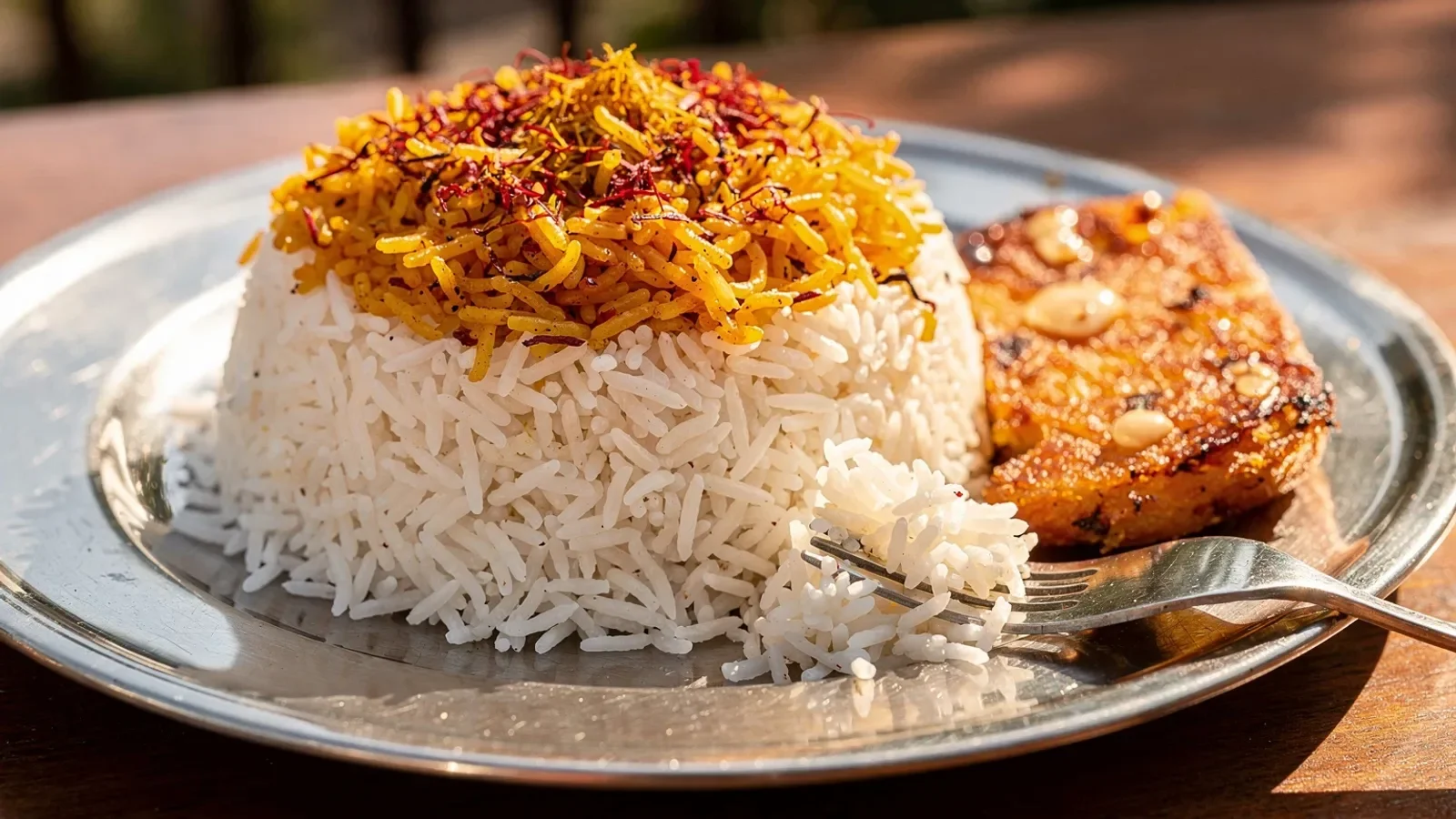
- Plain rice or bread on the side to reset your palate between bites.
- A rough idea of what koobideh is: ground meat (often lamb, beef or a blend) mixed with grated onion and seasoning, pressed by hand onto a wide flat skewer.
- Patience. Eat the first bite plain, before any sumac, butter or grilled tomato.
Step 1: Look at the char pattern first
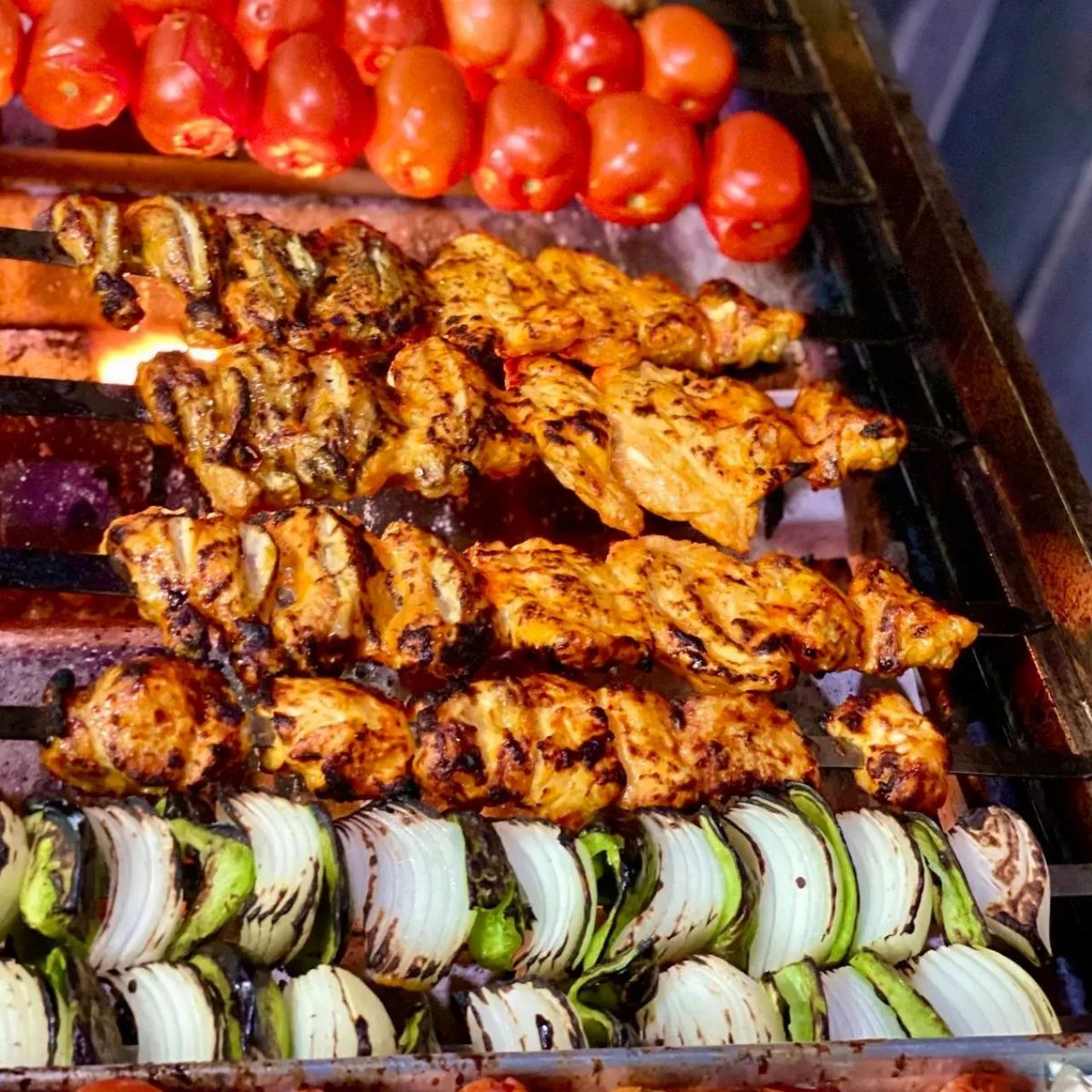
Check the color before you touch anything. Real charcoal heat is uneven, so the outside of the kabob should show a mottled finish: deep brown patches, a few darker spots, and lighter areas between them. A perfectly uniform brown, or neat parallel grill-grate stripes, usually points to a flat-top or gas grate. Koobideh is grilled suspended over the coals, not resting on bars, so classic grate marks don’t belong. Small black flecks at the edges are fine. A thick bitter crust is not.
Step 2: Read the ridges left by the skewer
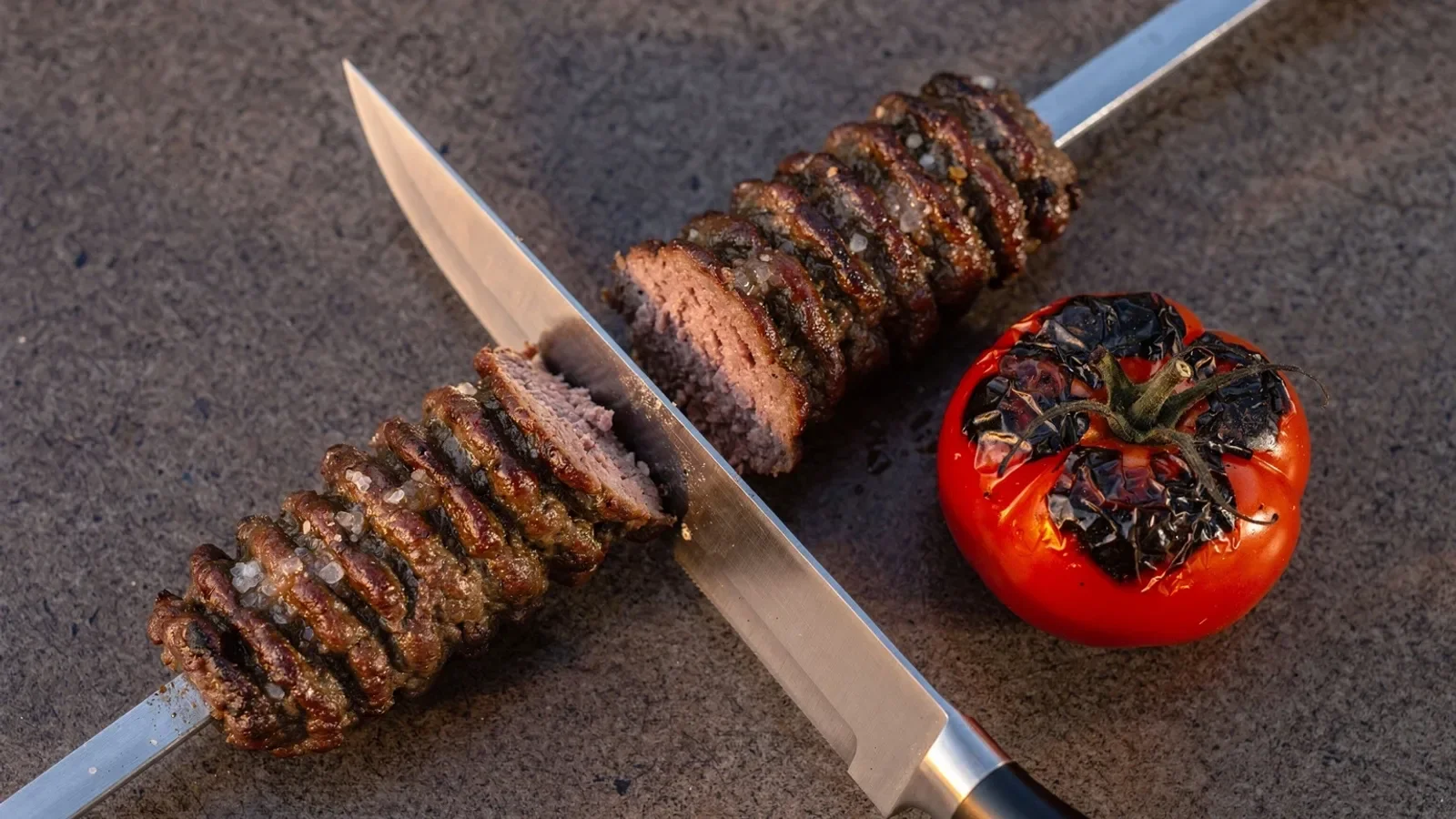
Run your eye along the length of the meat. Hand-pressed koobideh carries a row of shallow ridges, the finger marks a cook leaves while squeezing the meat flat along the blade. Those ridges catch the heat and brown faster than the dips between them. That’s why a good skewer shows a striped rhythm of darker peaks and paler valleys. Smooth, molded, perfectly even meat suggests a different shaping method. It isn’t wrong, it’s just a different kabob.
Step 3: Smell it before you cut
Lean in and breathe. Charcoal grilling throws a light, clean smoke as fat drips onto the coals and vaporizes back up into the meat. You should catch smoke, browned onion and a little spice. What you shouldn’t catch is a stale, sooty smell or the flat odor of old frying oil. Smoke should sit in the background. If it shouts, the coals were probably too fresh or flared.
Step 4: Cut across and check the inside
Slice one skewer crosswise in the middle. Here’s what a well-cooked koobideh looks like inside:
- Cooked through, with no raw pink center for ground meat.
- Moist, with juice beading on the cut face.
- A tight, fine grain, not crumbly and not rubbery.
- Tiny pale flecks of onion, or none visible if the onion juice was squeezed in.
Dry and gray means it sat too long over the fire or waited too long after. If the meat falls apart in pieces, the mixture was likely too loose or the grind too coarse. For more on that side, read our guide to telling whether koobideh was freshly ground.
Step 5: Taste the first bite plain
Eat a bite with nothing on it. Charcoal grilled koobideh kabobs should taste of the meat first, then onion sweetness, then a smoky finish that lingers a few seconds. The texture should give a slight snap at the crust and turn soft inside. Greasy mouthfeel is a warning sign. Fat should render into the coals, not pool on your plate. Then add sumac and taste again. The sour lift should sharpen the smoke, not hide a flat kabob.
Step 6: Check the plate for grease and juice
Look under the skewer. A little clear juice on the bread or rice is a good sign, because it means the meat stayed moist. A puddle of orange grease is different. That usually means too much fat in the mix, or meat cooked somewhere the drippings had nowhere to go. Over open coals, excess fat falls away. On a flat surface, it stays with the meat.
Step 7: Compare the grilled tomato
Use the tomato as a cross-check. Tomatoes grilled over the same coals should be blistered, slightly collapsed and charred at the skin, with a sweet, smoky interior. Firm, barely-warm tomatoes with clean skin suggest they never met a real fire. It’s a small detail. It often matches what the kabob tells you.
Charcoal grilled koobideh kabobs and the Glendale setting
Location changes the experience more than people expect. Glendale has one of the largest Armenian and Iranian communities in the United States, so many diners here grew up on home-grilled kabobs and judge them hard. That’s a useful benchmark. Southern California air rules also shape how restaurants grill. The South Coast Air Quality Management District regulates commercial cooking emissions, including charbroilers, and requirements vary by operation, so kitchens plan their grills around them. Weather plays a part too. Late fall evenings in Glendale cool off quickly after sunset, so a skewer eaten on an outdoor patio loses heat faster than one indoors. Eat the koobideh first, while the crust is crisp. Judge it within the first few minutes, not after it has cooled on the table.
A good outcome starts with the right crew, so explore expert menu services in Glendale before you commit.
If you want the background on why coals matter so much here, see our piece on charcoal grilling Persian food in Glendale, and for the side-by-side, how gas and charcoal grilling differ.
When to call a professional in Glendale
Some calls aren’t yours to make at the table. If the meat is pink in the middle, send it back. Ground meat should be fully cooked, and the USDA lists a safe minimum internal temperature for ground beef and lamb on its safe minimum internal temperature chart. Ask your server. That’s what they’re there for.
The same goes for questions about the meat blend, the onion, or allergens. Ask the kitchen directly instead of guessing from taste. If you’re grilling at home and something about your grill, gas line or coals feels off, stop and have a qualified technician look at it. Don’t troubleshoot fire equipment by trial and error.
And if you’re reheating leftovers, the rules change. Our guide on reheating Persian kabobs at home covers how to keep them moist.
Frequently Asked Questions about koobideh kabobs
How long do kabobs take on a charcoal grill?
Koobideh cooks fast, usually just a few minutes per side over hot coals, because the ground meat is pressed thin. Thicker chunk kabobs take longer. Exact time depends on coal heat and skewer thickness, so check doneness, not the clock.
What is the difference between koobideh and kebab?
Kebab is the broad word for grilled meat, while koobideh is one specific type made from seasoned ground meat and onion pressed onto a flat skewer. Other kebabs use whole cuts or cubes, such as chicken or fillet.
Why does koobideh sometimes fall off the skewer?
It usually falls off when the mixture holds too much moisture or isn’t kneaded enough to bind. A grill that isn’t hot enough can also loosen it before the outside sets.
Can you get the same result on a gas grill or air fryer?
You can cook good ground-meat kabobs that way, but you won’t get the same smoke and uneven char that coals give. Expect a cleaner, milder flavor.
Now go test it. Stop by and try our koobideh straight off the coals in Glendale, run the seven checks, and see the difference for yourself.