There are eight primary types of persian rice dishes glendale diners should know, starting with foundational saffron chelo, tart zereshk polo, and crispy golden tahdig. These varieties divide neatly into two distinct culinary families. The first is plain steamed white rice meant to soak up savory meat juices and rich stews. The second is layered mixed rice cooked directly with herbs, dried fruits, or beans.
1. Chelo: The Foundation Among Types of Persian Rice Dishes Glendale Tables Serve
Chelo is plain, parboiled, and steamed long-grain basmati rice. It serves as the foundation for almost every traditional grilled meat plate and slow-simmered stew. Do not confuse it with simple boiled white rice from a standard countertop cooker. True chelo goes through a multi-stage process. Each individual grain stretches to its maximum length while staying completely separate from its neighbors.
Here is why the texture feels so light on the fork. First, the raw aged basmati soaks in heavily salted water for hours to relax the outer starches. Next, a cook boils the grains in a large pot of rolling water. They turn soft on the outside but still carry a firm core in the center. The pot is drained in a colander. Then the grains are mounded back into a warm vessel in a pyramid shape to steam slowly in their own trapped vapor. Steam escapes through small chimney holes poked into the mound with a wooden spoon handle. Finally, a clean kitchen towel or heavy cloth wraps around the underside of the lid. It catches condensation before it can drip back down and make the rice soggy.
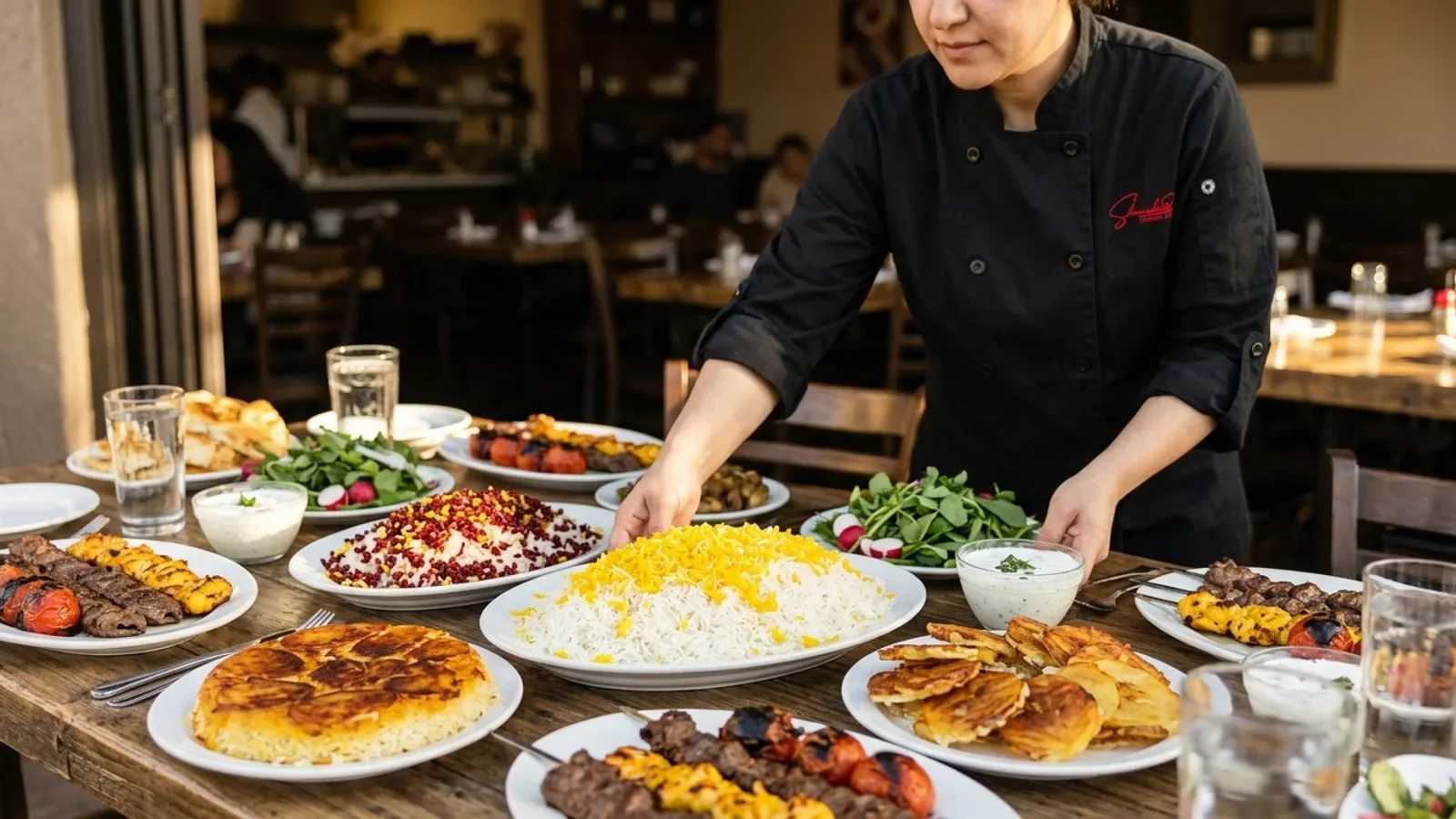
On the plate, chelo looks predominantly snow-white. It is crowned with a bright yellow spoonful of saffron-infused grains mixed with melted butter or oil. When you look at how the types of persian rice dishes glendale kitchens prepare fit into a full meal, chelo is the blank canvas. Skip heavy spiced rice when you have a richly seasoned main course. Pair chelo with charred skewered meats or deep, saucy bowls. The pure basmati aroma complements the main dish without competing for your palate’s attention. You can read more about building a balanced plate of traditional kabobs and stews to see exactly where plain steamed rice fits best.
2. Tahdig: The Prized Crispy Golden Crust
Tahdig literally translates to “bottom of the pot” in Farsi. It is the crunchy, golden-brown crust that forms underneath steamed rice during the final stage of cooking. Technically, it is a structural component of making chelo or polo rather than a separate recipe. Still, diners treat it as a standalone dish and the centerpiece of the table. If you see a plate of golden, wafer-like rice wafers arrive at a dining table, eat it while it is hot.
The short answer on how it forms comes down to heat, fat, and patience. After draining the parboiled basmati, the cook coats the heavy bottom of the pot with oil or clarified butter. They add a splash of saffron water and sometimes a spoonful of thick yogurt. The bottom layer of rice presses firmly into this mixture while the rest of the grains pile loosely on top. Over low, steady heat, the bottom layer fries into a cohesive, crackling crust. Meanwhile, the upper layers stay fluffy and soft.
Cooked properly, tahdig breaks apart with an audible snap. It tastes deeply of toasted grain, rich butter, and floral saffron. Beyond standard plain rice tahdig, traditional cooks frequently line the pot with thin slices of starchy potato (tahdig-e sibzamini) or torn sheets of flatbread like lavash or sangak (tahdig-e noon). The bread or potato absorbs the saffron oil. It crisps into a savory shield that protects the delicate white grains above from burning. You can eat tahdig by hand like a savory cracker. You can also top it with a single ladle of thick stew, letting the warm gravy slightly soften the crunch right before you take a bite.
3. Zereshk Polo: Ruby Barberries and Saffron
Zereshk polo is a sweet-and-sour mixed rice dish. It is layered with tiny red barberries, slivered pistachios or almonds, and generous threads of steeped saffron. It is easily the most famous celebratory rice dish in Iranian cooking, appearing at weddings, family gatherings, and holiday feasts. The visual contrast alone sets it apart. Jewel-toned crimson berries scatter across snowy white and sunny yellow basmati grains.
Barberries (zereshk) are not like raisins or dried cranberries. They are sharply tart, seedless little fruits that grow on thorny shrubs and pack a bright, citrus-like punch of acidity. If you eat a raw dried barberry straight from the bag, it will make your mouth pucker. To prepare them for the rice, a cook rinses the delicate berries carefully to remove grit. Then they sauté them very briefly in butter with a pinch of sugar and bloomed saffron. Cooking them for even thirty seconds too long turns them dark brown and bitter. The pan comes off the heat the moment the berries plump up and glisten.
That sharp acidity serves a specific culinary purpose. Rich poultry dishes, especially chicken braised in a saffron-tomato-onion broth, need a bright counterpoint to cut through the savory fat. Zereshk polo provides that exact balance in every forkful. When exploring how to pair savory meats with traditional rice, zereshk polo is the go-to choice for bone-in chicken or mild grilled poultry skewers where plain white rice might feel too simple.
4. Baghali Polo: Dill Weed and Tender Fava Beans
Baghali polo combines steamed basmati rice with vibrant green dill weed and tender lima beans or peeled fava beans. If zereshk polo is the champion of tart fruitiness, baghali polo is the standard-bearer for earthy, herbal depth. You can recognize this dish from across a room by its flecked emerald appearance. The unmistakable, warm scent of steamed dill and garlic or cinnamon notes rises from the platter.
Authentic preparation requires double-peeled fava beans (baghali). Fresh or dried fava beans have a tough, waxy outer skin that holds the two halves of the bean together. Taking that outer skin off splits the bean into neat, flat halves. These halves cook at the exact same speed as the parboiled rice. During the boiling step, the beans go into the water just long enough to turn creamy without falling apart into mush. Then, the drained grains return to the pot for steaming. The cook alternates layers of rice with handfuls of finely chopped fresh or dried dill and the blanched beans.
Here is why baghali polo holds up so well next to rich red meats. Dill and fava beans have a robust, grounded flavor profile. It does not get lost next to gamey or deeply caramelized proteins. In traditional menus, baghali polo sits directly alongside slow-braised lamb shanks, lamb neck, or hearty beef skewers. You can also enjoy it alongside a crisp plate of fresh table herbs, radishes, and tangy torshi to amplify the green, garden-fresh notes of the meal.
5. Sabzi Polo: Fragrant Spring Herbs in the Steaming Pot
Sabzi polo is an intensely aromatic herb rice. It is packed with a specific quartet of finely chopped greens: flat-leaf parsley, cilantro, dill, and tareh (Persian chives or garlic chives), often finished with a small pinch of fenugreek leaves. While baghali polo relies strictly on dill and beans, sabzi polo celebrates the full spectrum of fresh green herbs. It is traditionally served during Nowruz (the Persian New Year) to symbolize rebirth and spring. Yet it stays popular all year long for diners who prefer bold, verdant flavors over sweet fruit-based combinations.
The secret to good sabzi polo is keeping the herbs bright and distinct rather than stewed and dull. If all the greens boil in the water with the rice, their volatile oils wash down the drain with the cooking liquid. Skilled cooks take a different approach. They fold the finely minced raw or lightly wilted herb blend into the drained basmati right as it mounds into the steaming pot. Sometimes they tuck whole unpeeled cloves of fresh garlic into the middle of the pile to roast gently in the steam. The lid comes off forty-five minutes later. A swirl of melted butter or warm oil brings the chlorophyll and herbal aroma back to life.
The herbs carry a subtle, pleasant bitterness and a fresh oniony snap from the chives. As a result, sabzi polo pairs naturally with lighter proteins, particularly white fish or char-grilled chicken. If you enjoy herb-forward cooking, you will notice a family resemblance between the greens used here and those cooked down for hours in slow-simmered Persian herb and meat stews, though sabzi polo keeps the herbs light and feathery rather than dense and saucy.
6. Adas Polo and Lubia Polo: Hearty Lentils, Green Beans, and Spices
Adas polo (lentil rice) and lubia polo (green bean rice) represent the warm, spice-driven comfort foods of the polo family. Chelo and baghali polo rely on single-note purity. These two dishes build an entire meal inside the rice pot by incorporating legumes, vegetables, aromatics, and warming spices. Common spices include cinnamon, cumin, turmeric, and advieh, a traditional Persian spice blend that often includes dried rose petals and cardamom.
Adas polo layers brown or green lentils with caramelized onions, golden raisins, and sometimes chopped sweet dates. The lentils cook separately until tender but intact. This ensures they do not turn the white basmati gray. When you take a bite, you get the earthy nuttiness of the lentils first. That is followed immediately by a pop of sweetness from the plump raisins or dates and a lingering warmth from cinnamon and saffron. It is satisfying enough to stand on its own as a vegetarian main course. It can also anchor a plate of roasted meat.
Lubia polo takes a different path by introducing tomato paste into the steaming pot. Fresh green beans are snapped into bite-sized pieces. They are sautéed with diced onions, turmeric, cinnamon, bruised garlic, and rich tomato sauce, often cooked with ground beef or diced lamb. This savory red mixture gets layered with the parboiled basmati. As the pot steams, the tomato oil tints the rice grains a vibrant sunset orange. Of all the rice varieties, lubia polo delivers the softest, most savory bite. Its tomato base produces a deeply caramelized, slightly chewy tahdig at the bottom of the pot that cooks fight over at the dinner table.
7. Shirin Polo and Albaloo Polo: Jewels of Citrus and Tart Sour Cherries
Shirin polo (sweet jeweled rice) and albaloo polo (sour cherry rice) occupy the festive, fruit-heavy end of the Persian rice spectrum. Both dishes treat the steamed basmati like a treasure chest. Cooks tuck bright, candied or simmered fruits and toasted nuts between the layers of grain so every scoop reveals a new texture.
Shirin polo gets its sweetness primarily from thinly julienned orange or tangerine peels. Raw citrus peel is intensely bitter. The strips must be blanched and drained in boiling water three or four separate times. Then they are simmered in a light saffron sugar syrup along with matchstick carrots, slivered almonds, pale green pistachios, and barberries. The result is fragrant, floral, and lightly sweet without ever crossing into dessert territory. The citrus oils perfume the entire mound of basmati. It makes a decadent companion for rich, celebratory meat dishes.
Albaloo polo relies on sour Morello cherries (albaloo). These are significantly tarter than the dark sweet Bing cherries found in standard produce aisles. The pitted sour cherries simmer briefly with sugar until they release a ruby-red syrup. After the cherries are slotted out, they are layered with the steaming rice. The reduced cherry syrup spoons over the top at service along with toasted pistachio slivers. The balance of sugar and sharp cherry acid wakes up the palate immediately. Like zereshk polo, these fruit-studded rice dishes shine brightest next to savory chicken, lamb meatballs, or mild kabobs. These proteins allow the complex citrus and cherry aromatics to take center stage.
8. How Glendale’s Dining Culture and Climate Shape Your Rice Order
Understanding the local dining landscape and Southern California climate changes how you should choose, share, and store these rice dishes in Glendale. The city sits in the Verdugo Mountains pocket just north of downtown Los Angeles. Here, a dense concentration of multi-generational Iranian-American families and serious food enthusiasts means diners expect traditional steaming technique rather than shortcuts. Authentic chelo and polo take hours of soaking, parboiling, and slow steaming to produce real tahdig. Because of this labor, rice here is almost always served family-style on large oval platters meant for the center of the table rather than tiny individual ramekins.
Glendale’s weather also plays a direct role in what makes sense on the table. Through the hot, dry summer months and warm early autumn afternoons, temperatures routinely climb into the eighties and nineties across the San Fernando Valley and Glendale border. Lighter, brighter rice dishes dominate outdoor patio tables during these months. A platter of sabzi polo with crisp fresh herbs or tart zereshk polo paired with grilled poultry feels refreshing in the heat. By late November, crisp autumn winds sweep down from the foothills and evening temperatures drop quickly after sunset. Appetites shift toward denser, warming platters. That cooler weather is the exact time to order earthy baghali polo with braised meats or spiced adas polo with dates. You can also order a mountain of steaming buttered chelo alongside a bubbling bowl of walnut-pomegranate or herb stew.
Finally, consider how Glendale’s low ambient humidity affects leftovers. Basmati rice contains very little surface moisture compared to short-grain rice. The dry Southern California air will pull the remaining softness out of uncovered grains in minutes. When dining at a table, scoop from the bottom up to keep the heat trapped in the mound. If you take extra polo or chelo home, seal it tightly while it is still slightly warm. Steam it back to life with a splash of water rather than blasting it dry in an uncovered dish. Our guide on selecting the right rice and stew combinations for a group meal covers how to balance these platter sizes so every guest gets both fluffy top grains and a piece of the bottom crust.
Frequently Asked Questions About Persian Rice Dishes
What are some common Persian dishes?
Common Persian dishes divide into three main groups. First are charcoal-grilled kabobs like koobideh (seasoned ground meat), barg (flattened filet), and joojeh (saffron chicken). Second are slow-simmered stews called khoresh, such as ghormeh sabzi (herb stew with kidney beans and dried lime) and fesenjoon (pomegranate and crushed walnut stew). Third are fragrant basmati rice dishes including plain saffron chelo, barberry-topped zereshk polo, and dill-infused baghali polo.
What is special about Persian rice?
Persian rice is special because of its two-step cooking method. Cooks boil it first to wash away excess starch and then steam it slowly under a cloth-wrapped lid. This process produces long, feather-light, completely separate grains at the top of the pot and a golden, crunchy saffron crust called tahdig at the very bottom.
What is the difference between chelo and polo?
Chelo is plain white basmati rice that is soaked, boiled, drained, and steamed by itself with only oil, salt, and a finishing crown of saffron rice. It is normally served alongside grilled meats or stews. Polo uses the exact same boiling and steaming technique. However, the cook layers ingredients like fresh herbs, beans, berries, lentils, or spiced meats directly into the rice pot before the final steaming stage.
How do you keep tahdig crispy when ordering for a group?
Keep tahdig crispy by asking for it served on a flat open plate rather than sealed inside a closed container where trapped steam will quickly soften the crunch. At the table, break the golden crust into bite-sized shards immediately. Keep stews or sauces in their own separate bowls until the exact moment you are ready to eat each piece.
When to Let a Professional Kitchen Handle the Rice Pot
Making basic boiled rice at home takes twenty minutes. Executing traditional steamed Persian polo and fragile tahdig for an important meal is a high-wire act of heat management. Leave the soaking, draining, and crust-flipping to an experienced professional kitchen in these situations:
- You are hosting a large family gathering or dinner party where timing multiple pots of parboiled basmati alongside hot grilled skewers is impractical on a standard four-burner home stove.
- You want a thick, evenly golden tahdig crust without risking a scorched pot bottom or undercooked upper grains minutes before your guests sit down.
- Your group wants to taste three or four distinct types of rice side by side, such as plain saffron chelo, tart zereshk polo, and herbal baghali polo, which would require hours of separate prep work at home.
- You are pairing rice with complex, slow-simmered traditional stews that already demand half a day of attentive simmering and flavor balancing.
When you are ready to enjoy fluffy, saffron-crowned rice and crisp tahdig without hovering over a steaming pot all afternoon, explore authentic Persian dining in Glendale at Shamshiri Persian Grill to plan your next meal.