To reheat persian stews and rice glendale cooks swear by low heat, a splash of water and separate pans: stew on the stovetop, rice steamed under a lid, kabobs warmed gently in the oven. You open the fridge, smell saffron and dried lime, and the next five minutes decide whether tonight tastes like last night.
The leftover problem everyone in Glendale knows
Persian leftovers go wrong when they get reheated together, fast, in one container. That’s the whole problem in one sentence.
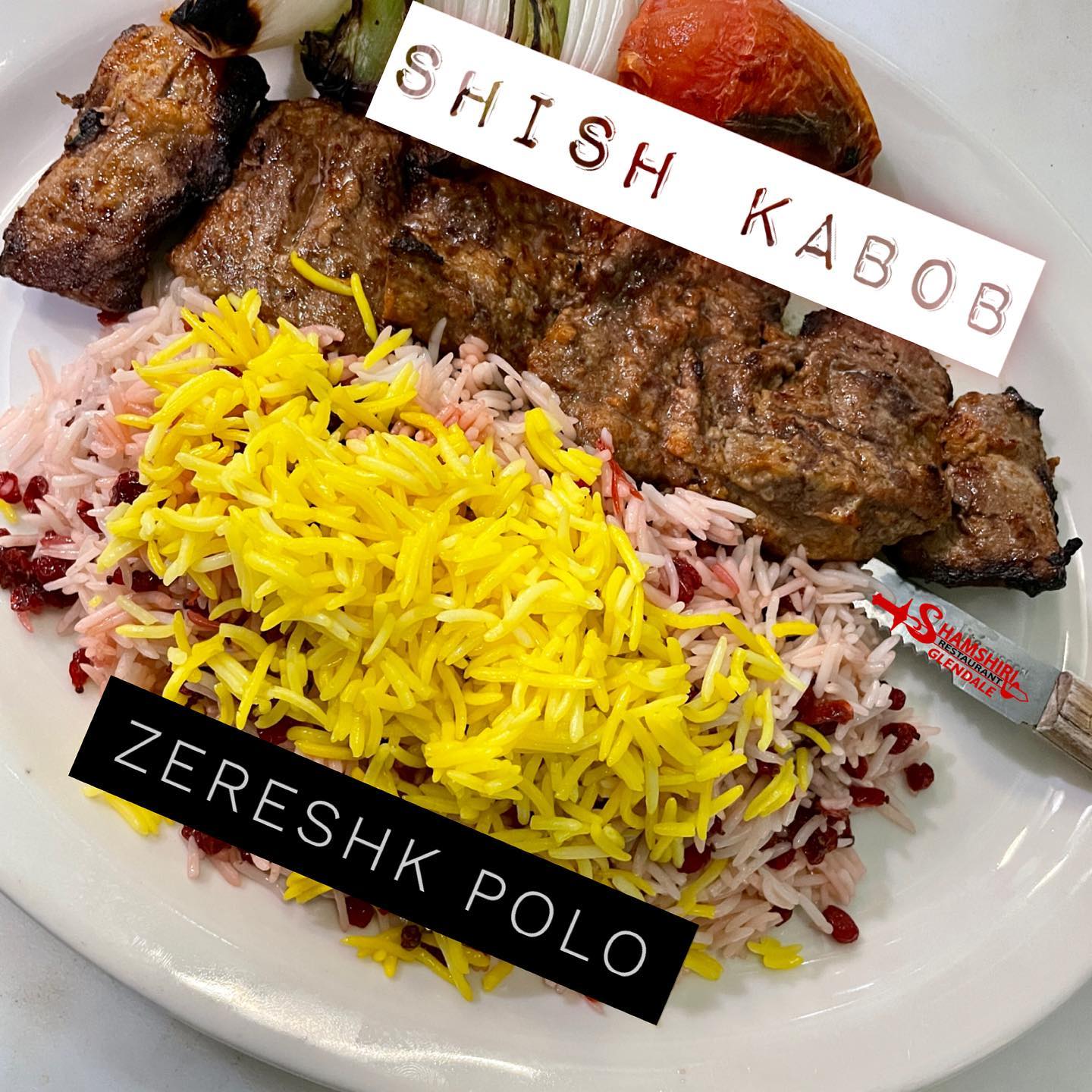
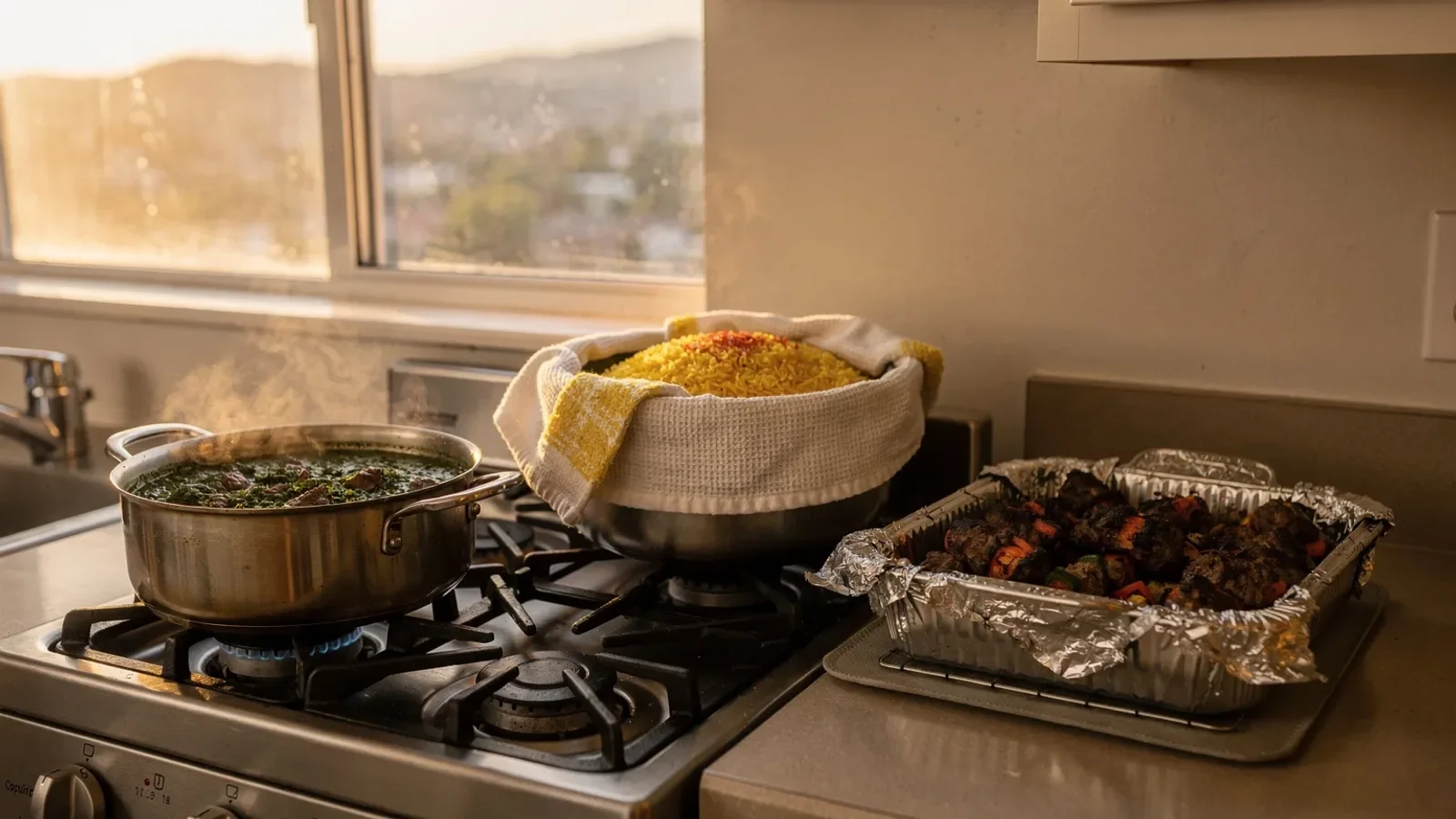
Picture it. A big dinner the night before, foil trays stacked on the counter, rice with a crisp golden crust, a pot of herb stew, a few skewers of ground beef kabob. Next day you tip it all onto one plate and microwave it on high. The rice turns hard at the edges and gummy in the middle. The kabob shrinks and goes rubbery. The stew splatters and thickens into paste.
None of that is the food’s fault. Each part of a Persian meal was cooked a different way, so each needs a different way back to warm.
Why Persian rice and meat dry out so fast
Persian rice dries out because it’s parboiled, drained and steamed, so there’s little starchy liquid left to protect it once it’s cold. Kabobs lose moisture because they’re grilled hot and fast over open flame.
Here is why that matters. Long-grain basmati-style rice cooked the Persian way is meant to be separate, fluffy and dry to the touch. Chill it and the starch firms up. Blast it with dry heat and the grains go brittle. Ground meat kabob is a fine, tight grind of meat and onion pressed onto a skewer. It’s juicy because it’s cooked quickly. Reheat it slowly in dry air or hard in a microwave and the fat and juice run out.
Stews behave the opposite way. Khoresh like ghormeh sabzi, gheymeh or fesenjoon are slow-simmered, and many taste deeper the next day. Their risk is scorching and over-thickening, not drying out. Fesenjoon in particular, with its ground walnuts and pomegranate, catches on the bottom of a pan easily.
What Glendale kitchens and weather change about leftovers
In Glendale, the real issues are warm counters and small kitchens, not cold. Southern California homes stay mild most of the year, so food left out after a dinner cools slowly and sits in the temperature range where bacteria grow.
Late November is a good example. Days can still be warm in the foothills, and plenty of Glendale apartments and older bungalows have compact kitchens with limited counter and fridge space. After a family dinner the trays tend to sit out while everyone talks. Skip that habit. Get rice, stew and meat into the fridge within about two hours of serving, sooner on a warm day. Rice deserves extra care: cooked rice can carry bacteria that survive cooking, and food-safety guidance from the USDA on leftovers and food safety covers the general timing for cooling and reheating.
Small fridge? Split big trays into shallow containers. They cool faster and stack better. Keep the crunchy rice crust (tahdig) in its own container so it doesn’t soak up moisture from the soft rice.
How to reheat persian stews and rice glendale-style, properly
Reheat each part separately: stew on the stovetop, rice by steaming, kabobs in a moderate oven. Do this and most of the original texture comes back.
Stews: low and slow on the stove
Put the stew in a small pot over low heat. Add a spoonful or two of water if it has thickened in the fridge. Stir now and then, scraping the bottom, until it bubbles gently and is hot all the way through. Fesenjoon needs the lowest heat and the most stirring. Herb stews handle a little more heat. Taste before serving; a squeeze of lemon or a pinch of salt can wake up flavours that dulled overnight.
Rice: steam it back to life
Sprinkle the cold rice with a little water, roughly a tablespoon per cup. Put it in a pot over low heat, cover with a lid wrapped in a clean kitchen towel, and let it steam for several minutes. The towel catches condensation so the rice doesn’t go soggy. Fluff with a fork. For a single portion, a microwave works if you cover the rice with a damp paper towel and heat in short bursts. Add a small pat of butter at the end if it tastes flat.
Tahdig is different. Warm it uncovered in a dry skillet or in the oven so the crust crisps again. Never steam it.
Kabobs: moderate oven, covered
Lay the kabobs in a baking dish, add a splash of water or broth to the bottom, cover with foil and warm in a moderate oven until heated through. Covering traps steam and keeps the meat tender. Want a little char back? Uncover for the last minute or two. Chicken kabob follows the same method; just make sure it’s piping hot in the centre. Grilled tomatoes can go in the same dish.
If you’re building a meal around these leftovers, the pairing logic in our guide to matching kabobs with Persian stews in Glendale helps you decide which stew suits which meat.
What to expect once it’s back on the plate
Done right, reheated Persian food is close to the first night, and stews are often better. Rice won’t be quite as perfect, and that’s normal.
Expect the stew to taste rounder because the herbs, dried lime and spices have had time to settle. Expect the rice to be fluffy but slightly softer than fresh. Kabobs will be tender if covered, a touch less smoky than straight off the grill. Fresh additions close the gap: a plate of herbs, raw onion, yogurt or a quick salad. Our page on the herbs and sides that round out a Persian table lists the ones that keep well and the ones to buy fresh.
Don’t reheat the same portion twice. Warm only what you’ll eat. Most cooked leftovers are best eaten within a few days of the meal.
Plan the next order so leftovers work for you
The easiest leftovers start with a smart order. Ask for stew and rice packed separately, sauces on the side, and tahdig in its own container if it’s available.
Order a little extra rice on purpose. It reheats well and stretches the stew into a second meal. Stews travel better than grilled meats, so a dinner heavy on khoresh gives you more good leftovers than one heavy on kabobs. For ideas on balancing a spread for a group, see how to put together a Persian dinner spread. And when you’re thinking about which stews to try next time, the notes on Persian stews worth pairing at a Glendale table are a good place to start.
Frequently Asked Questions about reheating Persian food
What is the best Persian food?
There’s no single best dish; it depends on taste. Koobideh and joojeh kabobs with saffron rice are popular choices, and slow-simmered stews like ghormeh sabzi and fesenjoon are classics many people return to.
Can I freeze Persian stews?
Yes, most khoresh freeze well in airtight containers. Thaw them in the fridge overnight and reheat slowly on the stovetop, adding a little water if needed.
Why is my reheated rice hard?
It lost moisture in the fridge and was heated dry. Sprinkle it with water and steam it covered over low heat to soften the grains again.
Should I reheat kabobs in the microwave?
It works in a pinch, but the meat often turns rubbery. A covered dish in a moderate oven with a splash of water keeps kabobs more tender.
Next time you’re planning a meal, start with the Persian dishes on Shamshiri’s Glendale menu and order with leftovers in mind.