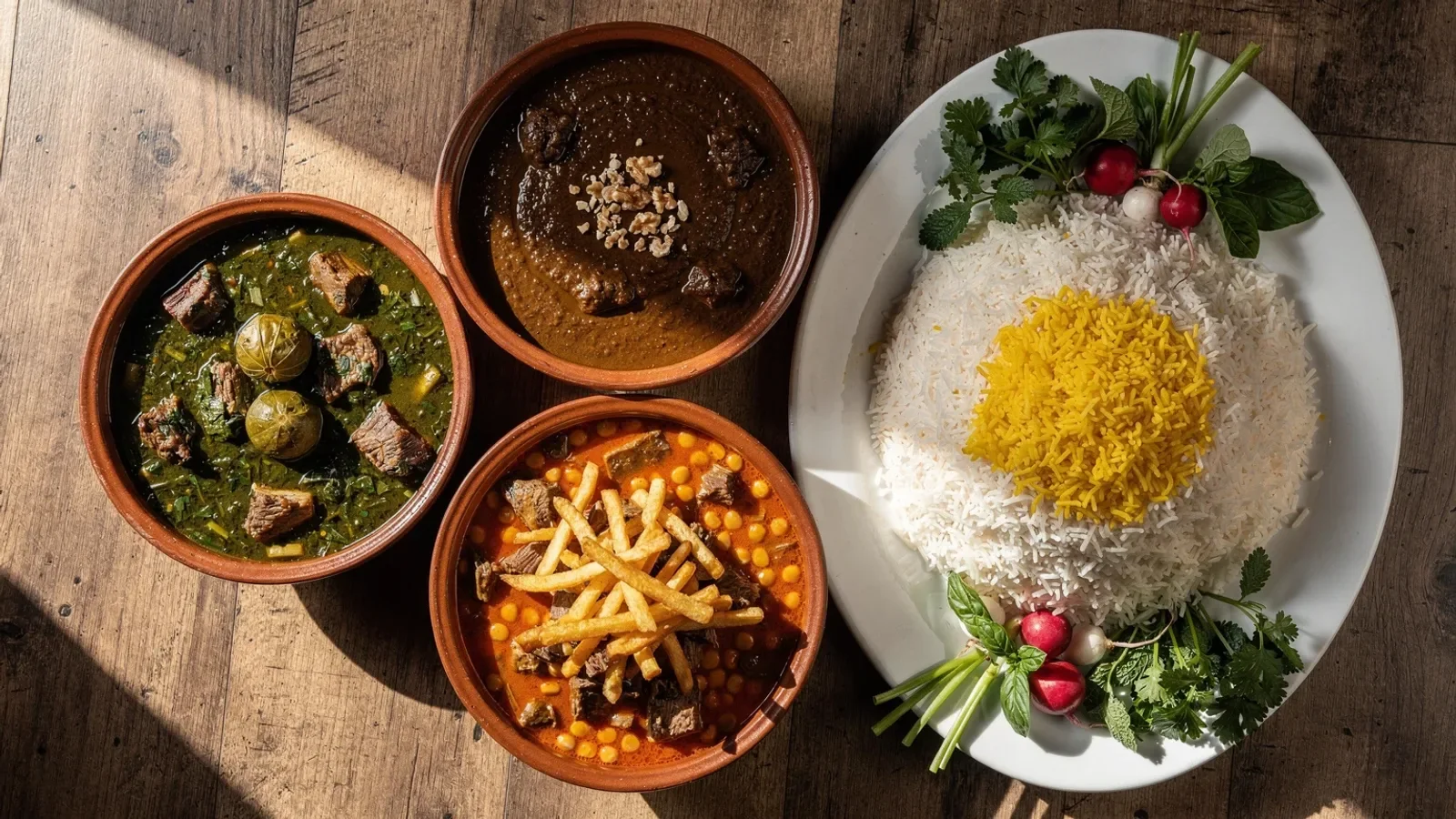
What should a first-timer look for in a persian stews glendale guide? The short answer is to start with the three foundational dishes of Iranian cooking in Glendale, CA: Ghormeh Sabzi for a deep, tart herb profile, Fesenjoon for a rich walnut and pomegranate reduction, and Gheymeh for a bright split-pea and tomato braise.
What is a Persian khoresht and how is it different from western stew?
A Persian khoresht is a slow-simmered, concentrated braise built strictly to be spooned over steamed basmati rice, never eaten by itself like a western soup. Do not treat it like a bowl of beef chili. Here is why.
Western stews rely on flour, cornstarch, or heavy cream to thicken a large pot of broth filled with root vegetables. Iranian cooks skip dairy and starch thickeners entirely. Instead, a khoresht builds body through hours of gentle reduction, using finely minced herbs, ground nuts, or split peas to create a tight, glossy sauce. You will not find big chunks of carrots or potatoes swimming in a loose broth. Every ingredient is cut to a uniform size so you can scoop a single bite of meat, sauce, and legumes onto a forkful of fluffy saffron rice.
Acid is the other major difference. Where European braises lean on red wine or sweet root vegetables, Persian stews get their backbone from sour ingredients. Dried Persian limes (limoo amani), pomegranate molasses, unripe grapes (ghooreh), and sour oranges cut right through the richness of braised lamb or beef. That sharp tang keeps a three-hour simmer tasting bright on the palate. When you look at a menu, think of khoresht as the savory, high-acid counterpoint to the smoky char of the grill. You can see how both sides of the kitchen work together by checking our koobideh kabobs pairing guide for a complete meal.
Which stew should you order first in a persian stews glendale guide?
Order Ghormeh Sabzi first if you want the undisputed national dish of Iran, as this dark green herb and kidney bean braise represents the gold standard of any persian stews glendale guide. It is savory, deeply earthy, and unmistakably tart.
The base of Ghormeh Sabzi is not a simple handful of garnish. Cooks chop mountains of fresh parsley, cilantro, chives or tareh (Persian leeks), and fenugreek leaves, then saute them slowly in oil until the greens turn dark and nutty. Skip rushing this step at home; if the herbs are not fried long enough, the broth turns watery and grass-like instead of rich. Fenugreek is the secret driver here. Too little leaves the pot flat, while too much turns it bitter.
Once the sautéed herbs hit the pot, they simmer for hours with tender cubes of beef or lamb, red kidney beans, and pierced whole dried limes called limoo amani. As the dried limes rehydrate in the hot liquid, they release a fermented, citrusy bitterness that permeates the meat and beans. Press the back of your spoon against the dark lime in your bowl if you want an extra burst of sour juice, or set it aside if you prefer a milder bite. Because the herb sauce is so concentrated, you only need a few spoonfuls to flavor a large mound of white basmati rice.
What makes Fesenjoon taste both sweet and sour?
Fesenjoon gets its signature sweet-and-sour balance from two powerhouse ingredients: finely ground toasted walnuts and thick pomegranate molasses. No other spices or aromatics get in the way of that combination.
Looking at a bowl of Fesenjoon for the first time can fool you. It resembles a dark chocolate mole or a heavy barbecue sauce, yet it contains neither chilies nor cocoa. Cooks grind raw walnuts into a fine meal and toast them gently in a heavy pot before adding cold water and simmering for hours. The slow heat coaxes the natural oils out of the nuts, rising to the top of the pot as a sheen that signals the base is properly cooked. Only then does the pomegranate paste go in, transforming the pale walnut cream into a mahogany sauce.
Traditionally made with duck or chicken (usually dark meat on the bone or tender boneless thighs), Fesenjoon absorbs the tartness of the pomegranate while the walnut fat rounds out the sharp edges. Different kitchens calibrate the sweetness differently. Some cooks keep the stew bracingly tart by using pure, unsweetened pomegranate reduction, while others balance the acidity with a touch of sugar or grated butternut squash. Ask your server whether a kitchen leans tart or sweet before you order. If you are combining a tangy Fesenjoon with grilled meats at the table, review how to balance traditional Persian kabob and stew combinations so one bold sauce does not overpower the platter.
How do Gheymeh and Gheymeh Bademjan compare?
Khoresht-e Gheymeh and Gheymeh Bademjan share the exact same saffron-tomato, split-pea, and beef base, differing only in their topping: classic Gheymeh finishes with crispy matchstick potatoes, while Gheymeh Bademjan crowns the stew with golden fried eggplant. Choose based on texture.
Here is how the base works. Yellow split peas (lappeh) are parboiled and simmered with small cubes of stewing beef, caramelized onions, tomato paste, brewed saffron, and whole dried limes. Unlike Indian dal or western split-pea soup where the legumes break down into a puree, Persian cooks keep the yellow split peas completely intact. They offer a firm, nutty bite against the soft braised meat. A pinch of cinnamon or rosewater sometimes goes into the pot at the very end, adding a warm aroma that pairs cleanly with saffron.
If you order standard Gheymeh, the kitchen piles crispy, shoestring-cut fried potatoes right on top of the hot stew just before serving. Do not stir them in all at once. Keep the potatoes on top so half stay crunchy while the bottom layer soaks up the tart tomato-saffron gravy. If you prefer tender vegetables over crunch, switch to Gheymeh Bademjan. Japanese or Italian eggplants are peeled, salted to draw out bitterness, pan-fried until velvety, and laid across the split-pea stew. Both versions are milder and more familiar to western palates than Ghormeh Sabzi, making either one a safe entry point for cautious eaters.
Why does Glendale’s climate and dining scene suit slow-simmered Persian braises?
Glendale’s cool late-autumn and winter evenings dropping down from the Verdugo Mountains, combined with a family-style dining culture built around shared tables, make slow-simmered Persian braises a year-round staple in the local market. The city eats well past sundown, and these dishes hold their heat and texture better than almost any other comfort food.
Consider how people actually dine across the San Fernando Valley and Glendale corridors. Multi-generational households and large groups rarely order single, isolated entrees. They build a spread. While Glendale summers push diners toward bright cucumber salads and quick-cooking skewers on outdoor patios, the drop in evening temperatures during the late fall shifts orders heavily toward hot clay and copper pots. Furthermore, Glendale apartments and suburban homes often lack the afternoon hours required to wash, dry, chop, and fry four pounds of fresh herbs for Ghormeh Sabzi without filling the house with heavy kitchen steam.
Local housing layouts and busy commuter schedules along the 134 and I-5 freeways mean residents treat neighborhood Iranian kitchens as an extension of their own dining rooms. Stews also travel remarkably well across town. Unlike fried appetizers that go limp in five minutes, a container of Gheymeh or Karafs (celery and mint stew) actually improves as it sits in its sealed broth during the drive home. Whether you are feeding two people in a downtown Glendale condo or setting up a ten-person table in the foothills, a hot tub of khoresht anchors the meal without losing a drop of moisture.
Which rice and table sides belong next to a bowl of Persian stew?
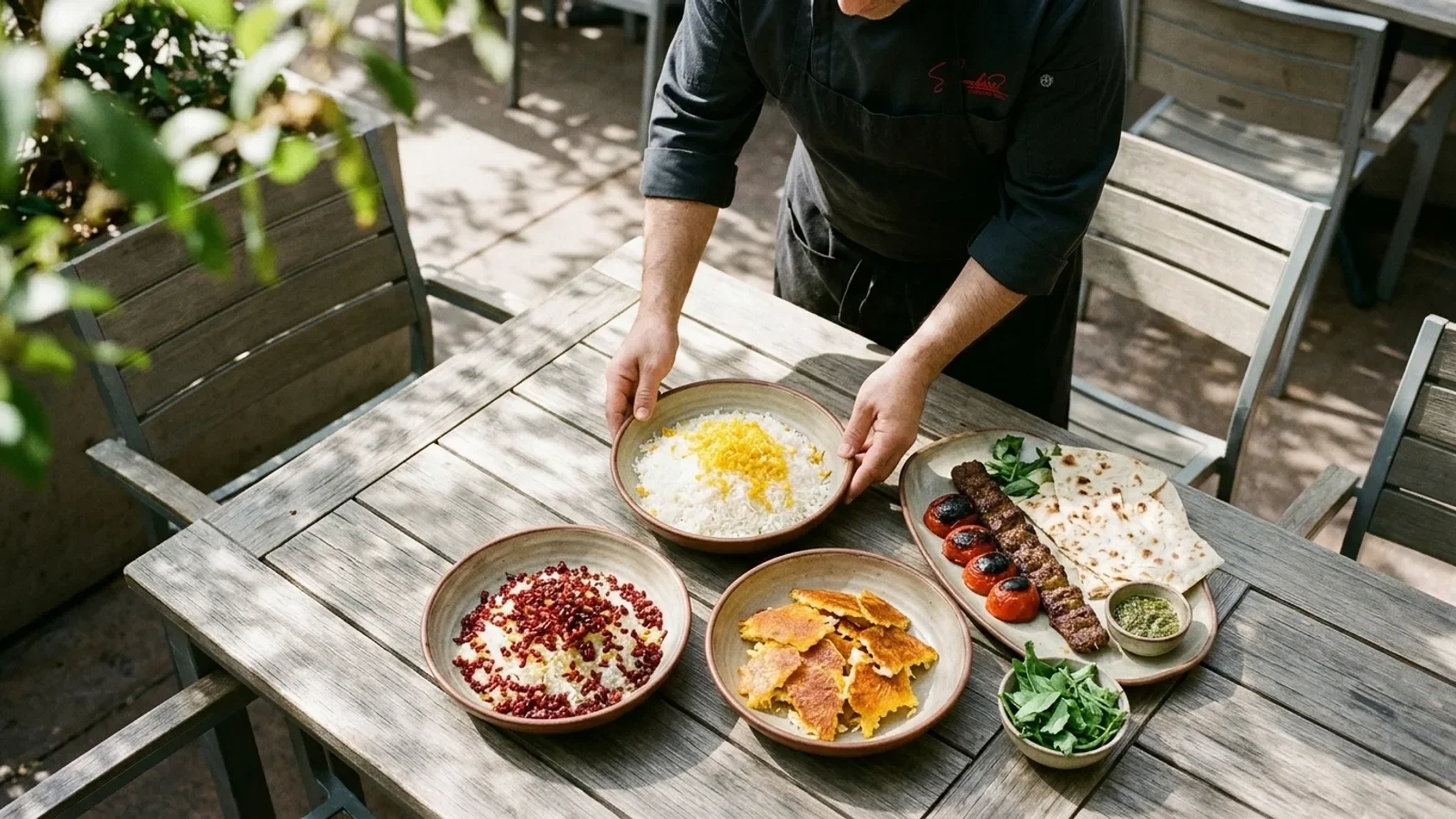
Plain steamed white basmati rice topped with saffron grains (chelo) and a crisp piece of golden tahdig is the only proper grain for a Persian stew, flanked by fresh raw herbs, radishes, and pickled garlic. Skip mixed jewelled rices when eating khoresht.
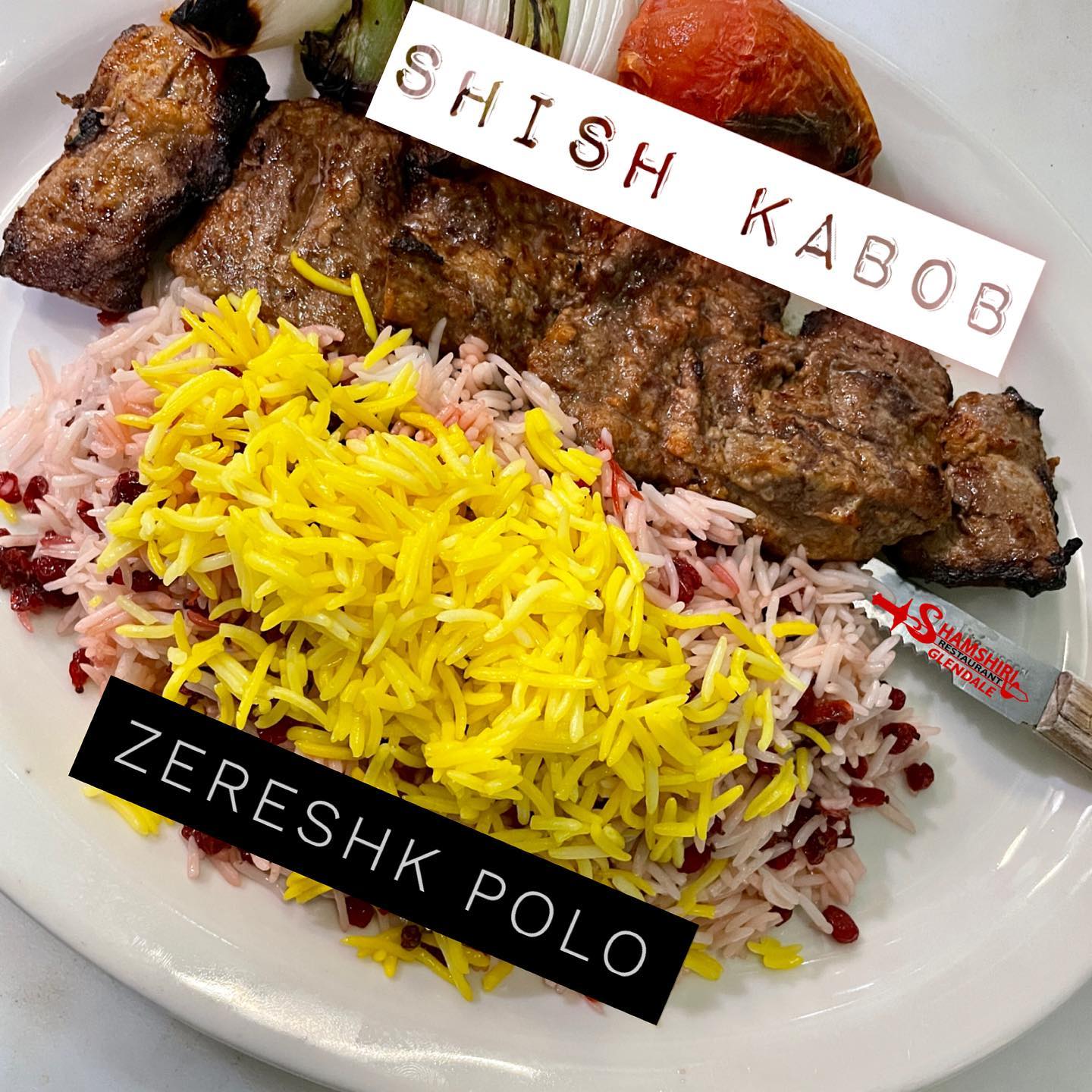
Here is why plain rice wins. Mixed rice dishes like Zereshk Polo (barberry rice) or Baghali Polo (dill and fava bean rice) have strong flavor profiles of their own. Pouring a complex, walnut-heavy Fesenjoon or a tart Ghormeh Sabzi over dill-scented rice creates a muddy clash on your fork. You want pure, aromatic long-grain basmati rice that acts as a clean canvas for the thick gravy. If you want to understand how the prized crunchy bottom crust of the rice pot fits into the meal, read up on choosing between crispy tahdig and mixed polo rices so you order the right starch for the table. Spoon a small amount of stew over one corner of your rice plate at a time rather than drowning the whole mound.
Do not ignore the cold sides either. A heavy, three-hour meat and bean braise demands fresh crunch between bites. Traditional tables always include Sabzi Khordan (a platter of raw tarragon, mint, basil, scallions, and red radishes) or a small bowl of Torshi (aged vegetables pickled in sharp vinegar). Tearing off a leaf of fresh mint or biting a crisp radish resets your palate after a rich spoonful of walnut or herb sauce. According to nutrition data from the USDA FoodData Central nutrient database, raw walnuts pack high levels of polyunsaturated fats, which explains why Fesenjoon feels so dense and benefits from an acidic pickled side.
How do you pair slow-cooked stews with grilled kabobs for a group?
Order one bowl of stew for every two to three kabob plates at the table, treating the khoresht as a shared gravy and second protein rather than an isolated solo meal. This ratio gives everyone both smoky char from the open grill and rich sauce for their plain rice.
Look at any experienced table of diners in Glendale and you will notice nobody eats three plates of plain white rice without moisture. Grilled skewers like Koobideh (seasoned ground beef or lamb) and Barg (flank or tenderloin filet) comes off the fire juicy, bolstered by a grilled tomato and a pat of butter, but a mountain of fluffy basmati still benefits from a ladle of hot braising liquid. When you place a bowl of Ghormeh Sabzi and a bowl of Gheymeh in the center of the table alongside a mixed grill platter, every guest gets to customize their plate. For a full breakdown of which meat skewers match best with specific tart or savory sauces, check our guide to pairing koobideh kabobs with traditional stews.
Use contrast to pick your combo. If your group orders rich, fatty minced beef Koobideh, pair it with an acidic, herb-forward Ghormeh Sabzi or a tart celery stew (Khoresht-e Karafs) to cut the fat. If the table leans toward lean, lemon-marinated chicken breast (Joojeh Kabob), add the velvety walnut richness of Fesenjoon to bring depth to the lighter poultry. When planning portions for four or more people, use a practical checklist for structuring a family-style Persian dinner spread so you do not end up with twice as much rice as you can finish.
How can you tell if a Persian stew was cooked properly?
A properly cooked Persian stew shows a unified, thick sauce that clings to a spoon without separating into a watery pool, topped by a light natural oil sheen (roghan) that proves the herbs or walnuts were simmered long enough. If the liquid races across your plate like clear soup beneath the rice, the kitchen rushed the pot.
Look closely at the three core cues when your bowl arrives:
- Color depth: Ghormeh Sabzi should be a deep, near-black forest green, never bright neon green. Bright green means the herbs were boiled rather than properly pan-fried before simmering. Fesenjoon should be a deep toasted brown; a pale beige sauce means the walnuts did not simmer long enough to caramelize alongside the pomegranate paste.
- Intact textures: In Gheymeh, the yellow split peas must hold their round edges, and the meat cubes should yield to the side of a fork without disintegrating into stringy shreds. In Bademjan, the eggplant halves should hold their shape like a filet rather than collapsing into gray mush.
- Food safety and holding temperatures: Because traditional khoreshts simmer for hours and are held hot during service, commercial kitchens must keep hot-held braises at or above 135°F as outlined in the California Retail Food Code. At home, never leave leftover stew sitting on the stove to cool for hours; refrigerate it promptly in shallow containers and reheat it to a full simmer with a splash of water.
When to Leave Persian Stew Prep to a Professional Kitchen
Making traditional khoresht from scratch at home is a rewarding weekend project, but certain situations call for skipping the stove and ordering from an experienced local kitchen instead:
- You are short on hours: Authentic Fesenjoon and Ghormeh Sabzi demand three to four hours of active chopping, frying, and low-heat simmering that cannot be cheated in a thirty-minute weeknight window.
- You are hosting a mixed crowd: Preparing two different stews plus crispy tahdig rice and grilled skewers simultaneously requires more burner space and timing than a standard home range allows.
- You lack specialty pantry staples: Sourcing quality pierced limoo amani (dried Persian limes), tart pure pomegranate molasses, and large bundles of fresh fenugreek takes a dedicated specialty grocery run.
- You want both open-flame char and slow braises: Getting smoky sumac-seasoned kabobs and a four-hour walnut stew on the table at the exact same moment is effortless when a dedicated kitchen handles both stations.
When you are ready to put these rich, slow-simmered flavors on your table in Glendale, explore Shamshiri Persian Grill Glendale to plan your next meal.