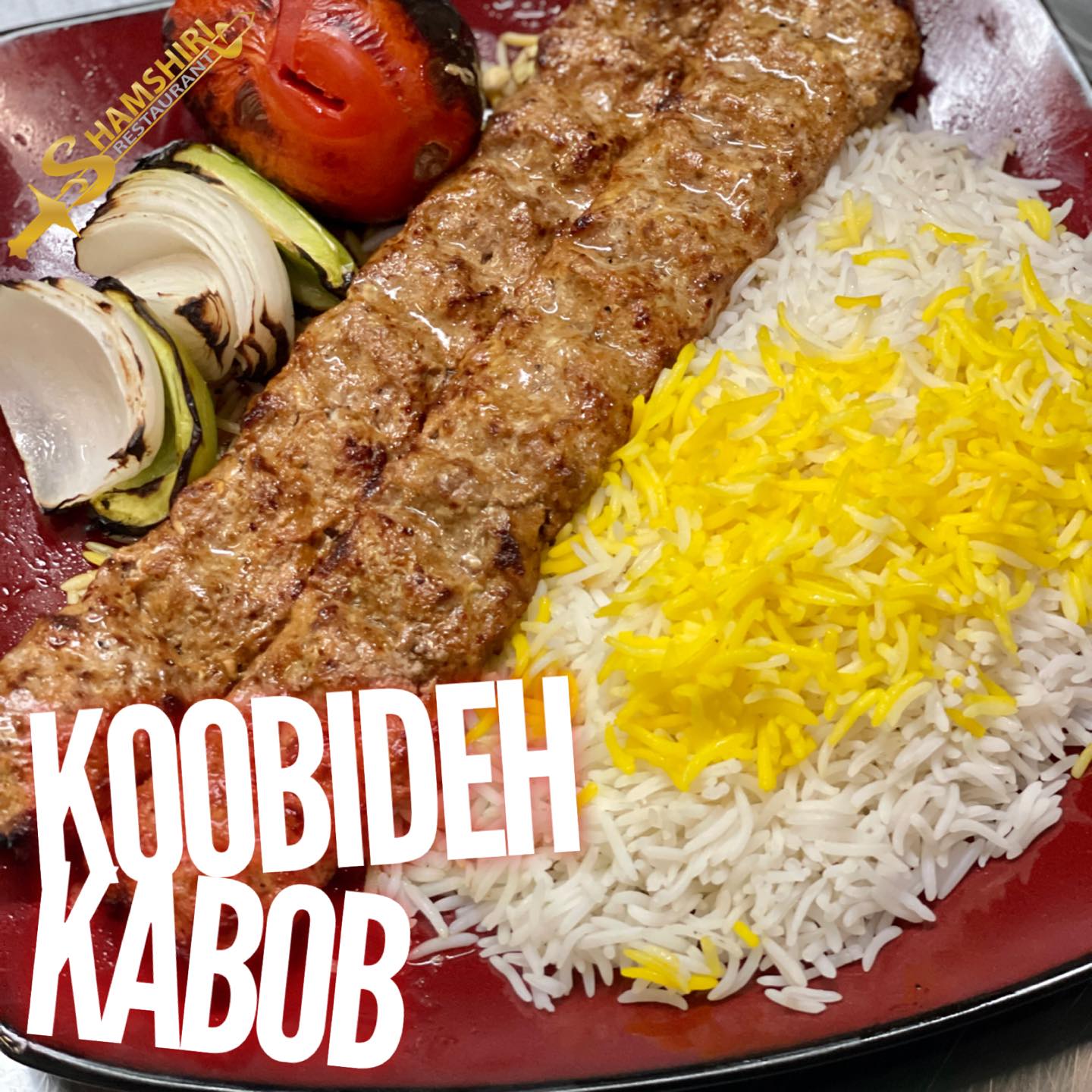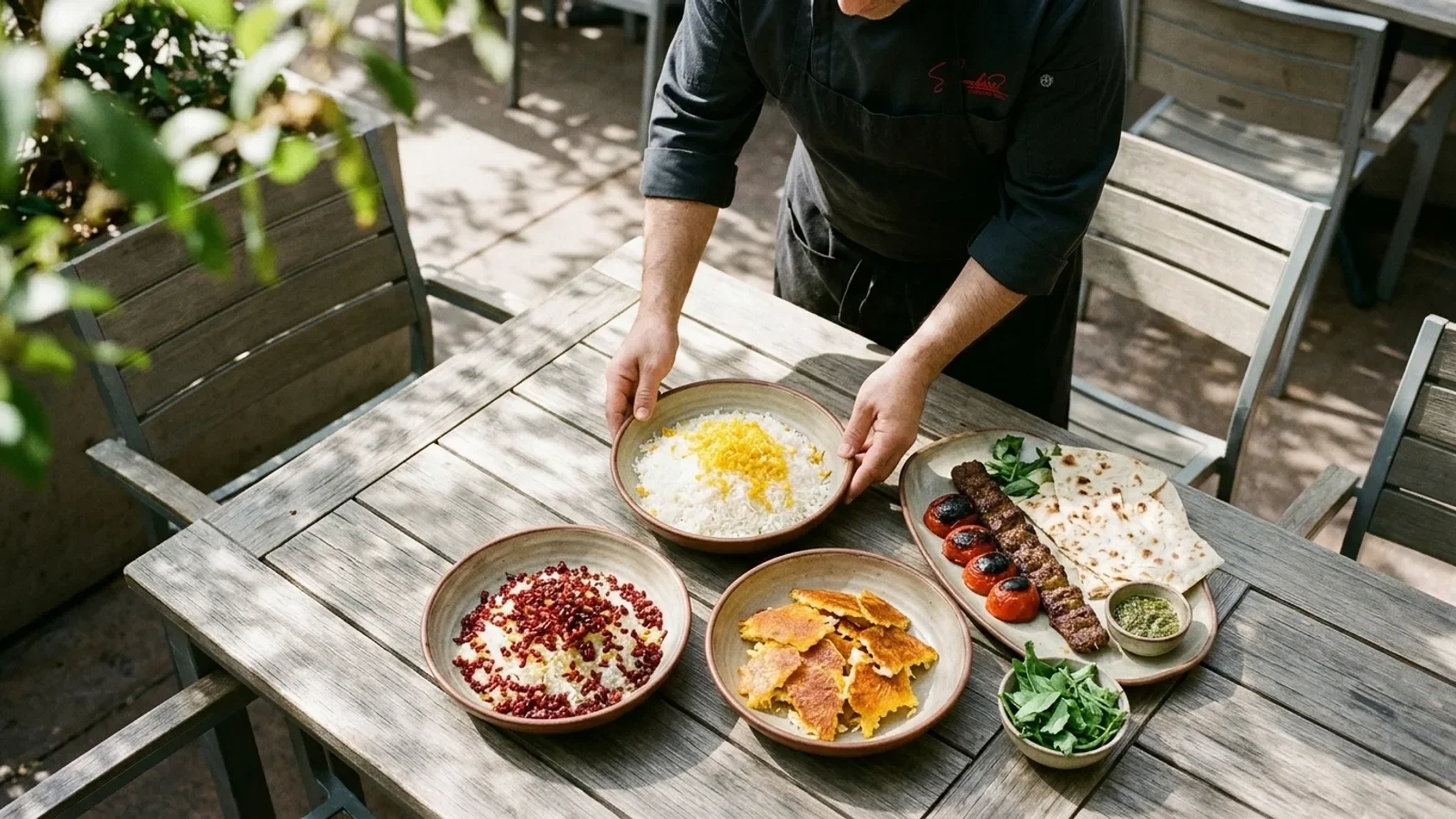
Knowing how to order persian rice in Glendale comes down to one choice: plain saffron chelow, a mixed polo, or a side of crispy tahdig. Pick chelow for grilled kabobs, polo when you want rice as the star, and tahdig as a shared extra. Guess instead, and the rice can fight your meat rather than lift it.
The short version
- Chelow is plain steamed basmati topped with saffron, and it is the classic partner for grilled kabobs.
- Polo is rice cooked or layered with other ingredients, like barberries, herbs or beans, so it carries its own flavor.
- Tahdig is the crisp golden crust from the bottom of the pot, usually ordered as a shared side.
- Match bold, fatty meats to plain rice and mild meats to flavored rice.
- Ask what rice comes with a plate before you order a separate one.
Option one: plain saffron chelow
Chelow is the default for kabobs, and for good reason. It is long-grain basmati, rinsed, parboiled and steamed so each grain stays separate. A cap of saffron-tinted rice sits on top.
Here is why it works. Chelow is quiet. It soaks up meat juices and a pat of butter without arguing with the marinade. Ground koobideh, lamb or a thick beef fillet all have plenty going on, so a neutral base lets them lead.
Order it when this is your first Persian meal, when you have a strong-flavored kabob, or when you plan to add grilled tomato and sumac. Sprinkle the sumac yourself. Skip loading it with sauce until you taste it plain.
Option two: mixed polo, rice with a personality
Polo is rice built with other ingredients, and it changes the meal’s balance. The rice stops being a backdrop and becomes half the flavor.
Common styles include:
- Zereshk polo: saffron rice with tart barberries, often paired with chicken.
- Sabzi polo: rice packed with fresh herbs like dill and parsley, traditionally served with fish.
- Baghali polo: rice with fava beans and dill, a classic with lamb.
- Adas polo: rice with lentils and often raisins or dates.
The rule is simple. Mild meat, flavored rice. Chicken joojeh is lighter than ground beef, so barberries add the brightness it lacks. For a closer look at that sweet-sour tang, read about what zereshk polo actually tastes like.
Skip polo with a very bold kabob if you want to taste the meat. Two loud flavors on one plate tend to blur.
Option three: tahdig on the side
Tahdig is the crunchy layer at the bottom of the rice pot, and most tables share it. It takes time and attention to get golden without burning, so it is prized.
It can be plain rice crust, or made with potato, bread or yogurt-saffron rice. Treat it like a starter or a shared side, not your only rice. It is rich and crisp, so a few pieces go a long way. Pour a little stew over it and it softens just enough.
New to it? Our explainer on why tahdig is the most fought-over part of the pot covers the styles.
How to order Persian rice: comparing the three options
Each option suits a different goal. This table lines them up.
| Criteria | Chelow (plain saffron) | Polo (mixed rice) | Tahdig (crispy crust) |
|---|---|---|---|
| Flavor role | Neutral base | Co-star with the meat | Rich, crunchy accent |
| Best kabob match | Koobideh, lamb, beef fillet | Chicken, fish, milder cuts | Any, shared on the side |
| Texture | Fluffy, separate grains | Fluffy with mix-ins | Crisp and golden |
| Typical serving | Under your kabob | As your main rice | Shared among the table |
| Good for first-timers | Yes, the safe start | Yes, if you like tart or herby food | Yes, as an add-on |
Ordering in Glendale: what the local scene means for you
Glendale has one of the largest Iranian and Armenian communities in the country, and that shapes how you should order here. Menus around town lean traditional, and portions are often built for sharing.
What that changes for you:
- Expect family-style tables. Groups often order a few kabobs, one or two polos and a tahdig to split. Order the same way and everyone tastes more.
- Names can vary. You may see chelow, chelo or polow spelled different ways. Ask if unsure.
- Weather invites patio dining. Late autumn evenings in Glendale stay mild enough that outdoor tables are common, so hot, freshly grilled kabobs over steaming rice are a natural fit year-round.
- Takeout is common. If you bring rice home, keep tahdig separate so it stays crisp. Our tips on keeping leftover rice fluffy help.
Which is right for Glendale diners?
The short answer: match the rice to the meat, then add tahdig if the table is hungry. That one rule covers most orders.
- Ordering koobideh or lamb? Get chelow. Add grilled tomato.
- Ordering chicken? Try zereshk polo.
- Ordering fish? Sabzi polo is the traditional pick.
- Eating with a group? One chelow, one polo, one tahdig.
- Not sure? Start with chelow. You can’t go far wrong.
Want the full breakdown by cut? Our kabob pairing guide walks through each meat. If quality matters to you, learn how to spot rice made the traditional way too. For a wider view of which traditional Persian rice dishes suit each grilled kabob, start there.
Frequently Asked Questions about ordering Persian rice
What is the difference between chelow and polo?
Chelow is plain steamed rice with saffron on top. Polo is rice cooked or layered with other ingredients like barberries, herbs or beans.
Is tahdig a full meal?
No, tahdig is usually a shared side. It is rich and crisp, so most tables order one portion to split alongside regular rice.
Should I put butter on Persian rice?
Many people do. A small pat of butter mixed into hot chelow is a common habit, especially with kabobs.
What rice goes best with joojeh kabob?
Zereshk polo is a popular match. The tart barberries brighten the milder chicken, though plain chelow works fine too.
Can I order two kinds of rice for one plate?
Often you can, but it depends on the restaurant. Ask your server what substitutions or half portions are possible.
Ready to put this into practice? Pick your kabob, match the rice, and plan your Persian rice and kabob meal in Glendale.