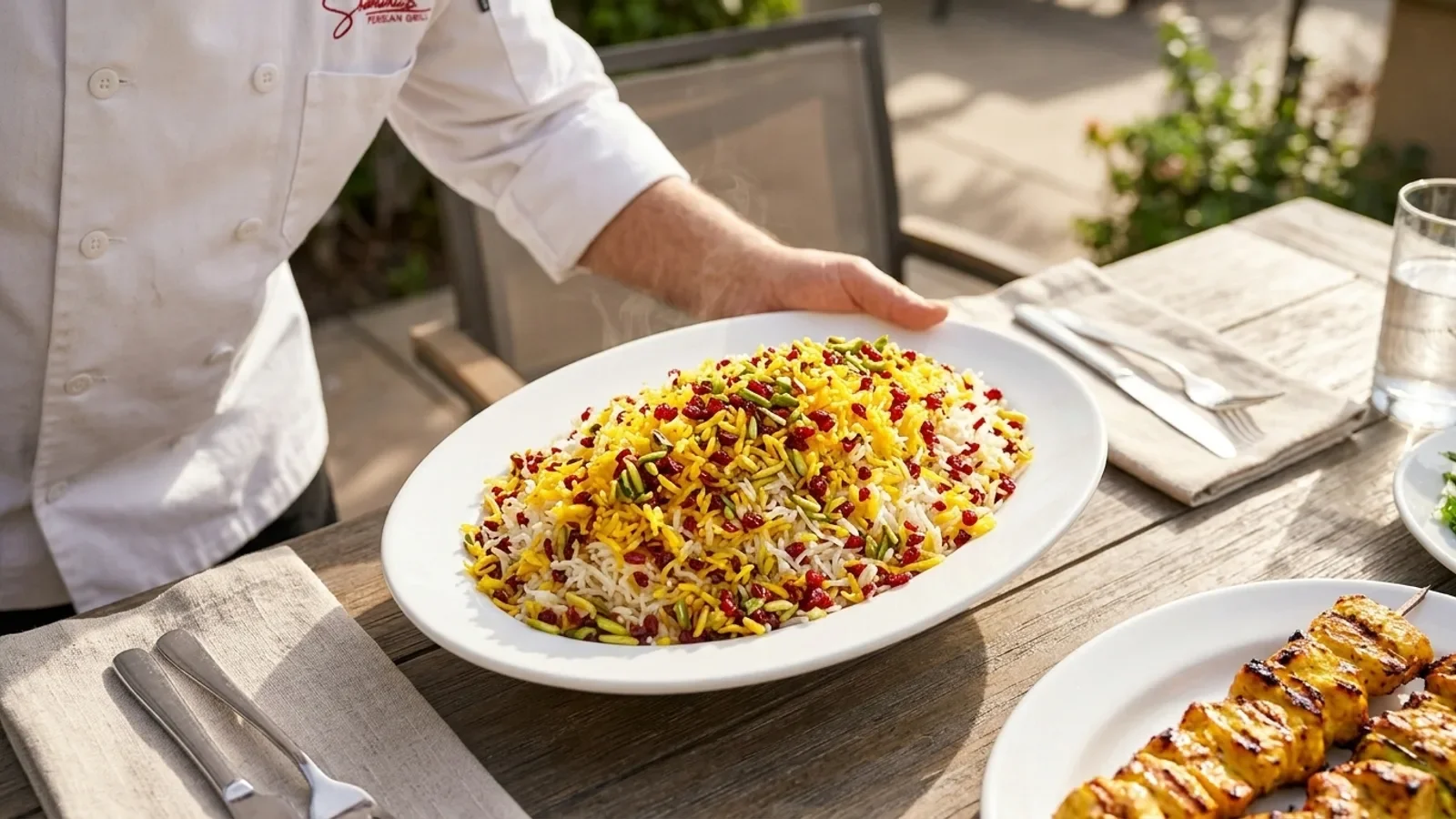
The zereshk polo flavor profile comes down to six notes, and the most important is the sharp, sour pop of dried barberries set against sweet, floral saffron rice. In Glendale, you notice it the moment the plate lands: a red-and-gold scatter on white grains, butter on the air, and a tang that wakes up your mouth.
1. Tart barberries lead the zereshk polo flavor profile
Barberries are the point. Zereshk is the Persian word for them, and polo means rice, so the name tells you exactly what matters. The berries are small, dried and red, with a sourness closer to cranberry than raisin but sharper and less sweet. Cooks usually rinse them and warm them briefly in butter, often with a little sugar. Here is why: raw dried barberries can taste harsh, and a quick sauté softens the edge without killing it. Overcook them and they turn dark and bitter. Get it right and each bite has a bright, almost citrus snap. Taste a berry on its own first. That’s the note the rest of the dish is built around.
2. Saffron adds the floral, honeyed middle
Saffron is the second voice. It brings a floral, faintly honeyed aroma and that deep gold color on part of the rice. Traditional prep grinds the threads and steeps them in hot water before drizzling the liquid over the cooked grains. The result is a layer of saffron rice mixed with plain white rice, so the flavor comes in waves rather than all at once. Good saffron smells sweet and hay-like. It should never taste metallic or medicinal, which can happen when too much is used. The short answer on balance: saffron rounds off the barberry’s sourness. Without it, the dish reads as just sour rice.
3. Butter and long-grain rice carry everything
The base matters more than people think. Persian rice is usually long-grain, often basmati-style, parboiled, drained and then steamed until each grain stands apart. Butter or ghee goes in during steaming and again with the berries. That fat does two jobs. It carries the saffron aroma, and it coats your tongue so the barberry tartness lands softer. Fluffy, separate grains also let the berries and saffron spread through every forkful instead of clumping. If you want to judge the rice itself, these markers of properly made Persian rice are worth knowing. Sticky or mushy rice flattens the whole flavor profile.
Frequently Asked Questions about zereshk polo
Is zereshk polo sweet or sour?
It is mostly tart with a gentle sweetness. The barberries bring the sourness, while a little sugar in the berry sauté and the saffron add a soft, rounded sweet edge.
What does zereshk polo usually come with?
It is traditionally served with chicken, often saffron-braised or grilled. The bright, sour rice also cuts through richer grilled meats nicely.
Can you get the crispy rice layer with zereshk polo?
Sometimes, yes. Many Persian rice dishes form a golden crust at the bottom of the pot, and our tahdig explainer covers how that crunchy layer works.
Are barberries the same as cranberries?
No. Barberries are smaller, less sweet and more sharply sour, so they taste brighter and less jammy than dried cranberries.
4. Nuts and garnish bring texture and a quiet sweetness
Many versions finish with slivered pistachios or almonds. Some add a few strips of orange peel. These are supporting notes, not headliners. Pistachios add a buttery, slightly green taste and a soft crunch. Almonds bring a cleaner, toasted bite. Orange peel, when used, echoes the citrus feel of the barberries. Skip judging the dish by how heavy the garnish is. A light scatter is typical, and too much can mute the tart-floral balance. What you want is contrast: chewy berries, tender rice, a little crunch on top. That texture mix is part of why the dish feels lively rather than flat.
5. Why it works next to grilled kabobs
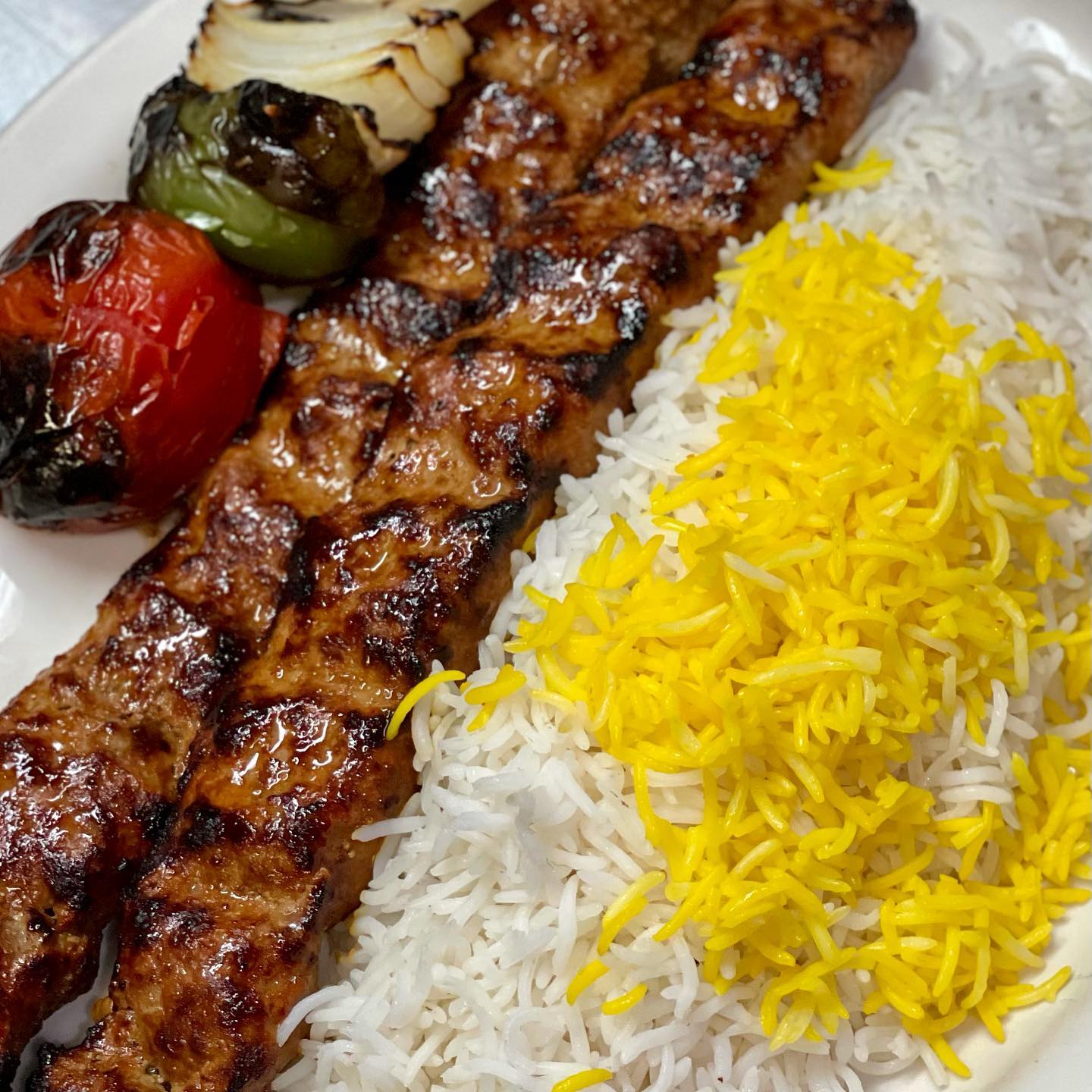
Sour cuts smoke and fat. That’s the core logic. Grilled skewers carry char, rendered fat and onion, and a forkful of tart barberry rice resets your palate between bites. Ground-meat kabobs like koobideh are rich and juicy, so the brightness of zereshk polo keeps the meal from feeling heavy. Chicken kabobs, often marinated in saffron and lemon, echo the rice directly, which makes the plate feel tied together. For a fuller rundown of which rice suits which skewer, read our guide to pairing traditional Persian rice with grilled kabobs. The same principle shows up there: match rich meat with bright rice and mild meat with richer sides.
6. The Glendale angle: a warm-climate dish in a warm-climate city
Zereshk polo suits how Glendale eats. The city sits in a hot, dry Southern California climate where long patio seasons and warm evenings are normal, and a bright, tart rice feels lighter than heavy stews on those nights. Glendale also has a large community with roots across Iran and the wider region, so Persian rice dishes are part of everyday dining here rather than a novelty. That means diners often already know the dish and notice whether the berries are balanced. Even on a mild late-autumn evening in the San Fernando and Verdugo foothill area, the sharp sour note works well beside smoky grill food. If you are new to ordering, our Glendale guide to Persian rice and kabob pairings gives you a simple starting point.
Quick checklist
- Barberries should taste bright and sour, never bitter or burnt.
- Saffron should smell floral and sweet, not metallic.
- Grains should be long, fluffy and separate.
- Garnish should add crunch without burying the tang.
- Pair the tart rice with rich, smoky kabobs for contrast.
Want to taste these notes for yourself? Check out Persian rice and kabobs in Glendale and see how the barberries hold up beside the grill.