How do you reheat persian rice tahdig without drying it out? Separate them. Steam the rice gently with a splash of water under a lid, and re-crisp the tahdig on its own in a dry pan or hot oven. In any Glendale kitchen, seven steps cover it, from fridge to plate.
Persian rice is long-grain, steamed, and built to be fluffy. Tahdig is the opposite: a golden crust from the bottom of the pot. Treat them the same way and you ruin both. The rice goes dry and the crust goes soggy. Here’s how to keep each one right.
Before you start
Gather a few basics. Nothing fancy.
- Shallow airtight containers (two of them, one for rice, one for tahdig)
- A lidded saucepan or nonstick skillet
- A clean kitchen towel or paper towels
- A small amount of water and a little butter or neutral oil
- An oven, toaster oven, or air fryer for the crust
- A microwave-safe plate and damp paper towel, if you’re short on time
Step 1: Cool the rice fast and split it up
Get leftover rice cooling soon after the meal. Spread it in a shallow container so it loses heat quickly instead of sitting warm in a deep pile. Cooked rice left at room temperature for long stretches is a known food-safety risk, so don’t leave it out for hours. Pull the tahdig pieces out now and keep them separate. Mixed together, the crust absorbs moisture from the rice and loses its crunch overnight.
Step 2: Store it airtight and cold
Seal the rice tightly and refrigerate it. Air dries the grains out, and that’s the main reason reheated rice turns hard. Store tahdig in its own container, uncovered for a few minutes first so steam escapes, then sealed. Eat refrigerated rice within a day or so for the best texture and safety. Check the USDA guidance on leftovers and food safety if you’re unsure how long something has been in the fridge.
- Saffron-topped rice: keep the yellow layer on top so the color doesn’t streak through.
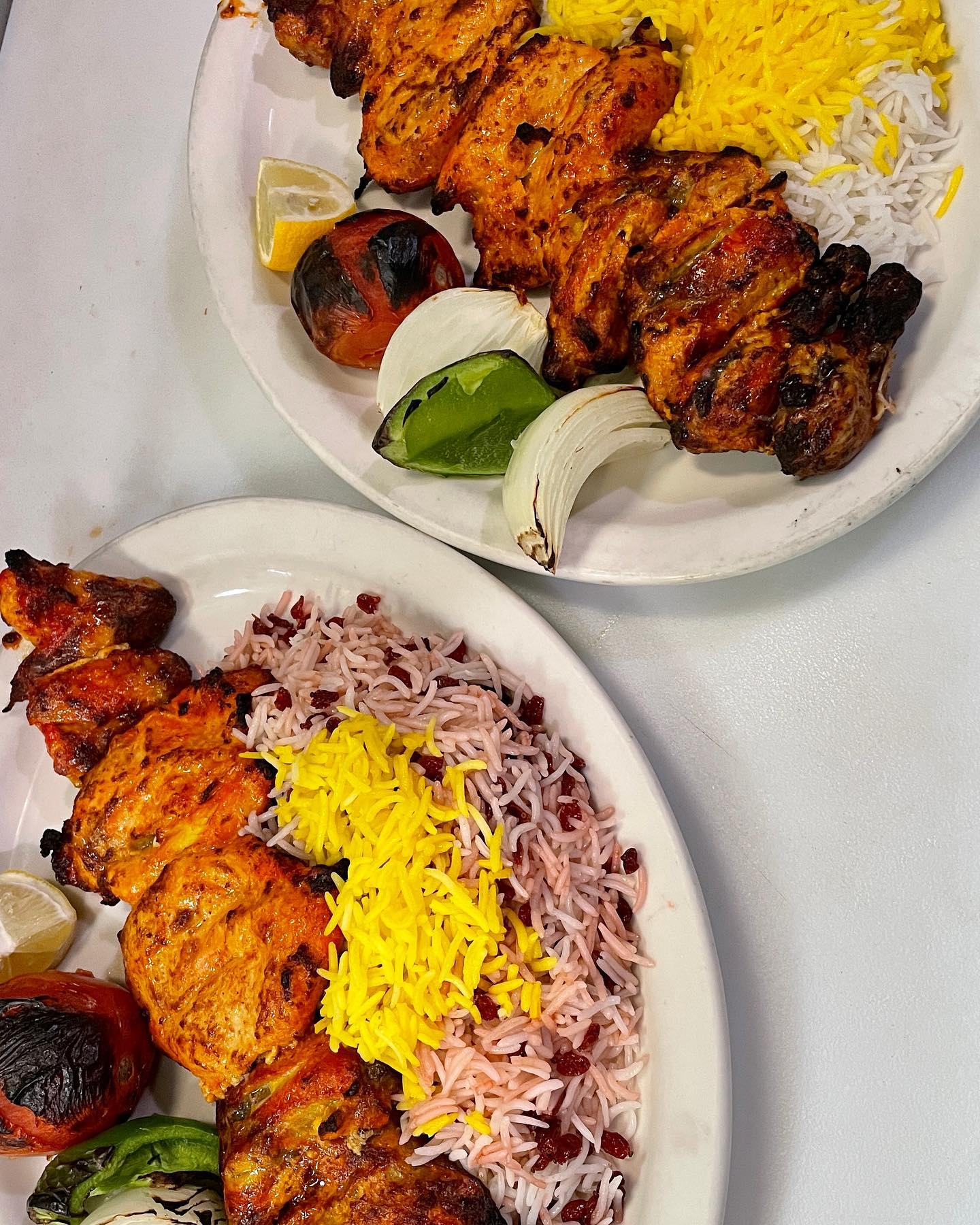
- Rice with toppings like barberries: store as-is; the fruit reheats fine with the rice.
Step 3: Reheat persian rice tahdig separately, rice first
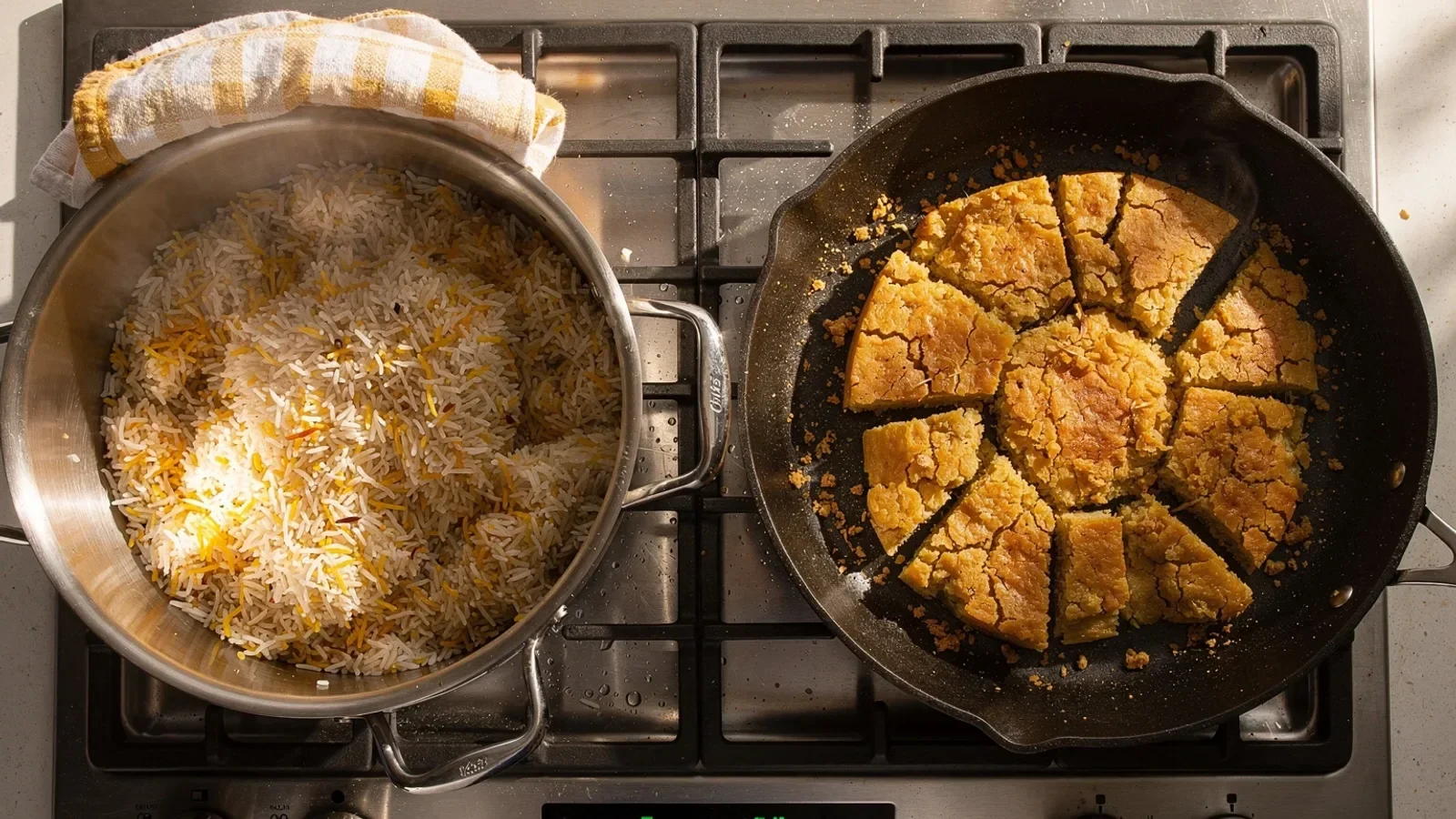
Start with the rice because it takes longer and needs gentle heat. Put it in a saucepan or skillet, sprinkle in a spoonful or two of water per cup, and add a small pat of butter if you like. Cover tightly. Heat low for several minutes, then fluff with a fork. The trapped steam softens the grains the same way the original cooking did. This is why proper steaming brings back the saffron aroma that defines classic Persian rice dishes, instead of baking it off.
Step 4: Use a towel under the lid for extra fluff
Wrap the lid in a clean kitchen towel before covering the pan. It’s the same trick used when Persian rice is first cooked. The towel catches condensation so it doesn’t drip back and make the rice mushy. Keep the towel’s corners tied up and well away from the burner. Short answer: steam in, drips out.
Step 5: Re-crisp the tahdig dry and hot
Now the crust. Skip the water entirely. Place tahdig pieces in a dry nonstick skillet over medium heat, crust side down, with only a light brush of oil if it looks dry. Leave it alone for a few minutes, then flip briefly. An oven or air fryer works too: a single layer on a tray until the edges sizzle. Want to know why the crust behaves this way? Read our explainer on how tahdig gets its golden crunch.
- Potato or bread tahdig: same method, a little longer.
- Very thin crust: watch closely, it burns fast.
Step 6: Use the microwave only for the rice
In a hurry? The microwave works for rice, not tahdig. Spread rice on a plate, sprinkle with water, cover with a damp paper towel, and heat in short bursts, fluffing between them. Never microwave the crust. It turns chewy and stays that way.
Step 7: Plate them together right before eating
Combine at the last moment. Mound the rice, set the tahdig on the side or on top, and serve. If you saved kabobs too, warm them gently and add them last. Pairing matters as much as heat; our guide to ordering Persian rice in Glendale covers which rice goes with which kabob.
Why Glendale kitchens change the math a little
Southern California’s mild, dry air affects leftovers. Rice left uncovered dries out faster here than in humid climates, so airtight storage matters more. Late November evenings in Glendale cool down, but kitchens still stay warm after cooking, so don’t count on the counter to chill rice quickly. Get it into the fridge. Many Glendale homes and apartments also run small kitchens with compact fridges. Shallow, stackable containers fit better and cool faster than one deep bowl. And with takeout common across the city, the rice you’re saving often traveled home in a covered box, where it steamed. Open it, let the tahdig breathe, then store.
Frequently Asked Questions about reheating Persian rice
Can I freeze Persian rice?
Yes, plain steamed rice freezes reasonably well in flat, airtight bags. Reheat it straight from frozen with a splash of water under a lid. Tahdig loses much of its crunch after freezing, so eat it fresh when you can.
Why does my leftover rice come out hard?
It lost moisture, usually from loose storage or reheating without water. Add a little water and cover the pan so steam can soften the grains again.
Can soggy tahdig be saved?
Often, yes. A dry hot skillet or oven drives off moisture and brings back some crispness, though it rarely matches the first serving.
Is it safe to reheat rice more than once?
Reheat only what you’ll eat. Repeated cooling and warming raises food-safety risk and wrecks the texture.
When to skip the leftovers
Some situations aren’t worth rescuing. Toss or replace the rice when:
- It sat at room temperature for hours after the meal.
- It smells sour or off, or feels slimy.
- It’s been in the fridge well past a day or two.
- You want tahdig at its best, crisp straight from the pot.
For rice and crust the way they’re meant to taste, plan your next meal around fresh Persian rice and kabobs in Glendale.