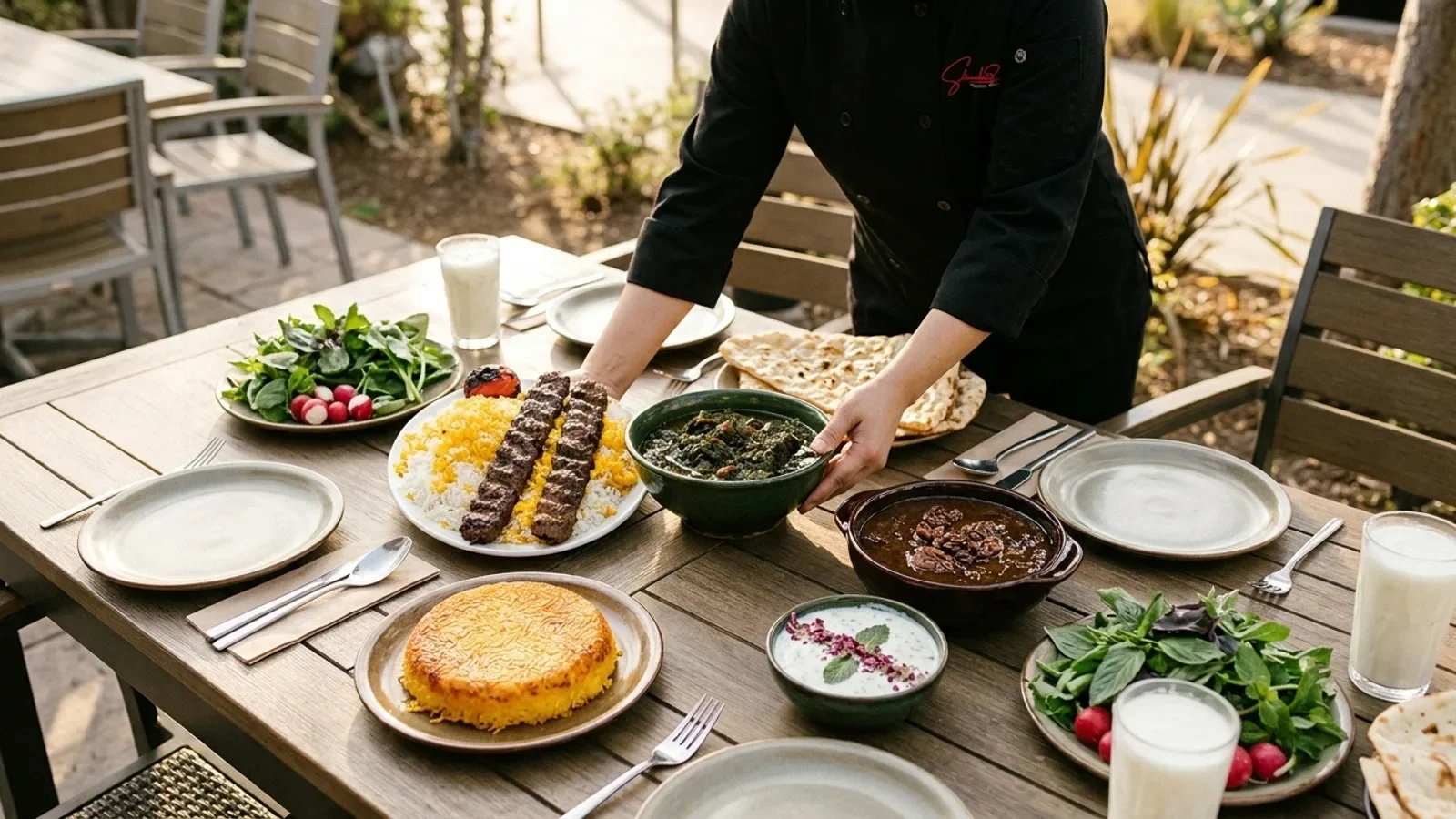
Koobideh doesn’t need a second kabob. It needs contrast, and this koobideh kabobs pairing guide shows how to get it in Glendale. Pair the rich ground-meat skewer with saffron rice, one sour or herby stew such as ghormeh sabzi or fesenjan, a cooling yogurt side and fresh herbs. That balance turns a kabob plate into a complete Persian meal.
Quick facts
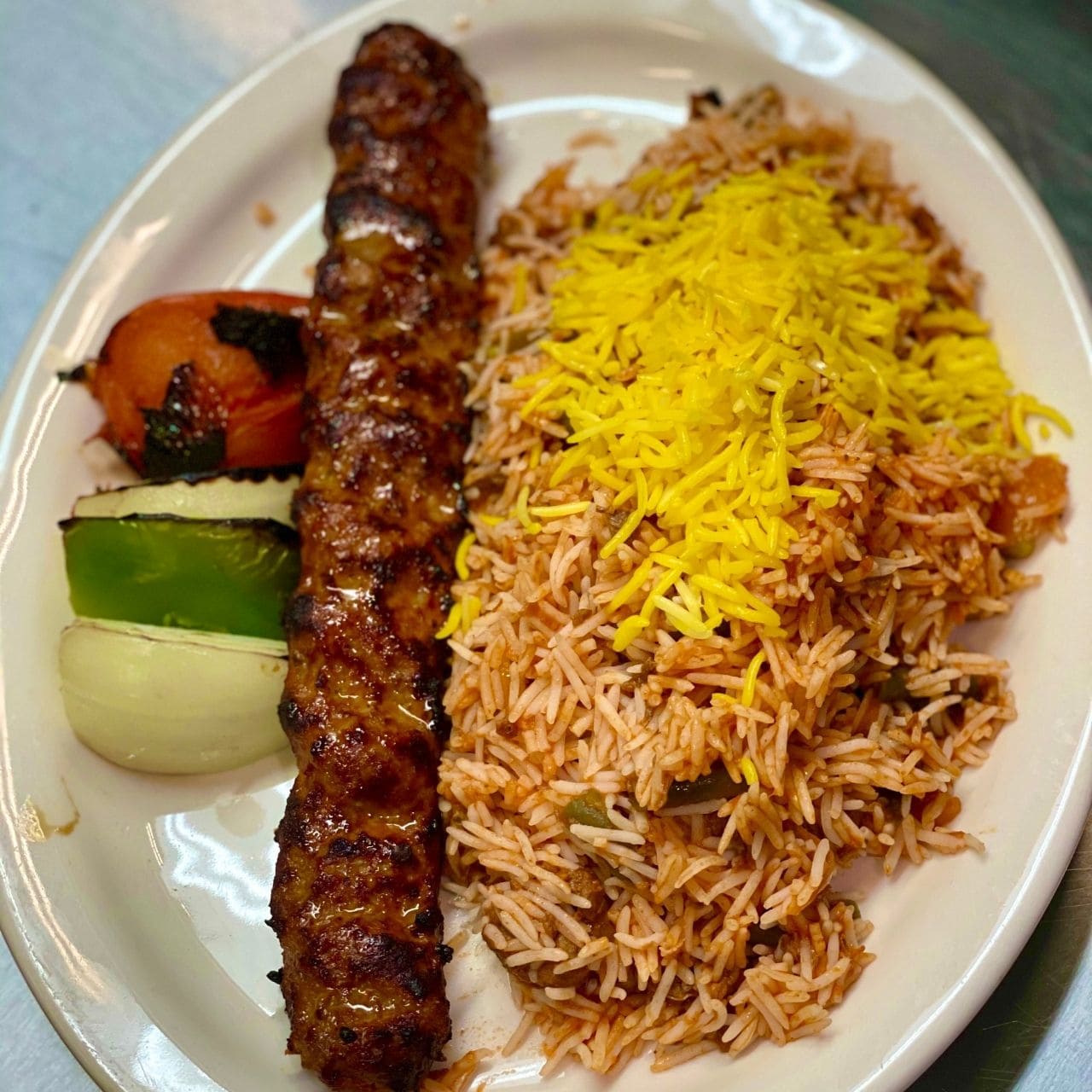
- Core plate: Koobideh is traditionally served with chelow (saffron-topped steamed rice), a grilled tomato, raw onion and sumac.
- Best stew partners: Sour or herb-forward khoresh, like ghormeh sabzi, gheymeh or fesenjan, cut through the richness of ground meat.
- Rice choice: Plain chelow suits a saucy stew. Flavored polo, like zereshk or baghali, suits a kabob eaten on its own.
- Cooling sides: Mast-o-khiar (yogurt and cucumber) and Shirazi salad balance char and fat.
- Rule of thumb: One rich item, one sour item, one fresh item on every plate.
Why koobideh needs a partner
Koobideh is rich, smoky and soft, so it needs something sour, fresh or tangy beside it. On its own it can feel one-note by the third bite.
Here is why. Koobideh is ground meat, usually beef, lamb or a blend, mixed with grated onion and seasoning, then pressed onto wide flat skewers and grilled over high heat. Fat renders. The outside chars. The inside stays juicy. That’s the appeal, and it’s also the problem. Fat and smoke tire the palate fast.
Persian cooking solves this with acid and herbs. Sumac sprinkled on top adds tartness. Raw onion adds bite. A pat of butter melting into the rice adds richness that the next item has to balance. Add a stew with dried lime or pomegranate and the whole plate wakes up.
The short answer: don’t double up on rich. Pair rich with sharp.
The koobideh kabobs pairing guide for stews
The best stews to pair with koobideh are the ones built on sourness or herbs, because they do the job a squeeze of lemon would. Pick one stew per two or three diners and share it family-style.
Khoresh, the Persian word for stew, is slow-cooked and spooned over rice. It’s a different rhythm from the grill: patient, deep, saucy. That contrast is exactly why the two belong together. For a fuller rundown of each one, see our breakdown of the Persian stews worth knowing.
| Stew | Main flavors | Why it works with koobideh | Rice to choose |
|---|---|---|---|
| Ghormeh sabzi | Slow-cooked herbs, kidney beans, dried lime | Herbal and sour, it cuts the fat of ground meat cleanly | Plain chelow |
| Fesenjan | Ground walnuts, pomegranate molasses | Sweet-tart and nutty; rich, but its acidity keeps the plate from feeling heavy | Plain chelow |
| Gheymeh | Yellow split peas, tomato, dried lime, often topped with fried potatoes | Tangy and gentle, a good first stew for newcomers | Plain chelow |
| Khoresh bademjan | Eggplant, tomato, sour grape or lime | Silky and sour, it echoes the grilled tomato on a kabob plate | Plain chelow |
| Khoresh karafs | Celery, herbs, lemon or dried lime | Bright and green, the lightest partner of the group | Plain chelow or sabzi polo |
Notice the rice column. Stews almost always go over plain saffron chelow. Flavored rice competes with the sauce, so save it for plates without a stew.
Picking rice that does the right job
Use plain chelow when a stew is on the table and a flavored polo when the kabob stands alone. That single rule settles most rice decisions.
Chelow is long-grain rice, parboiled, then steamed until each grain is separate and fluffy. A saffron-tinted layer goes on top. It’s the default kabob rice for a reason: neutral enough to carry both kabob juices and stew.
Polo means rice cooked with other ingredients. Three are common kabob companions:
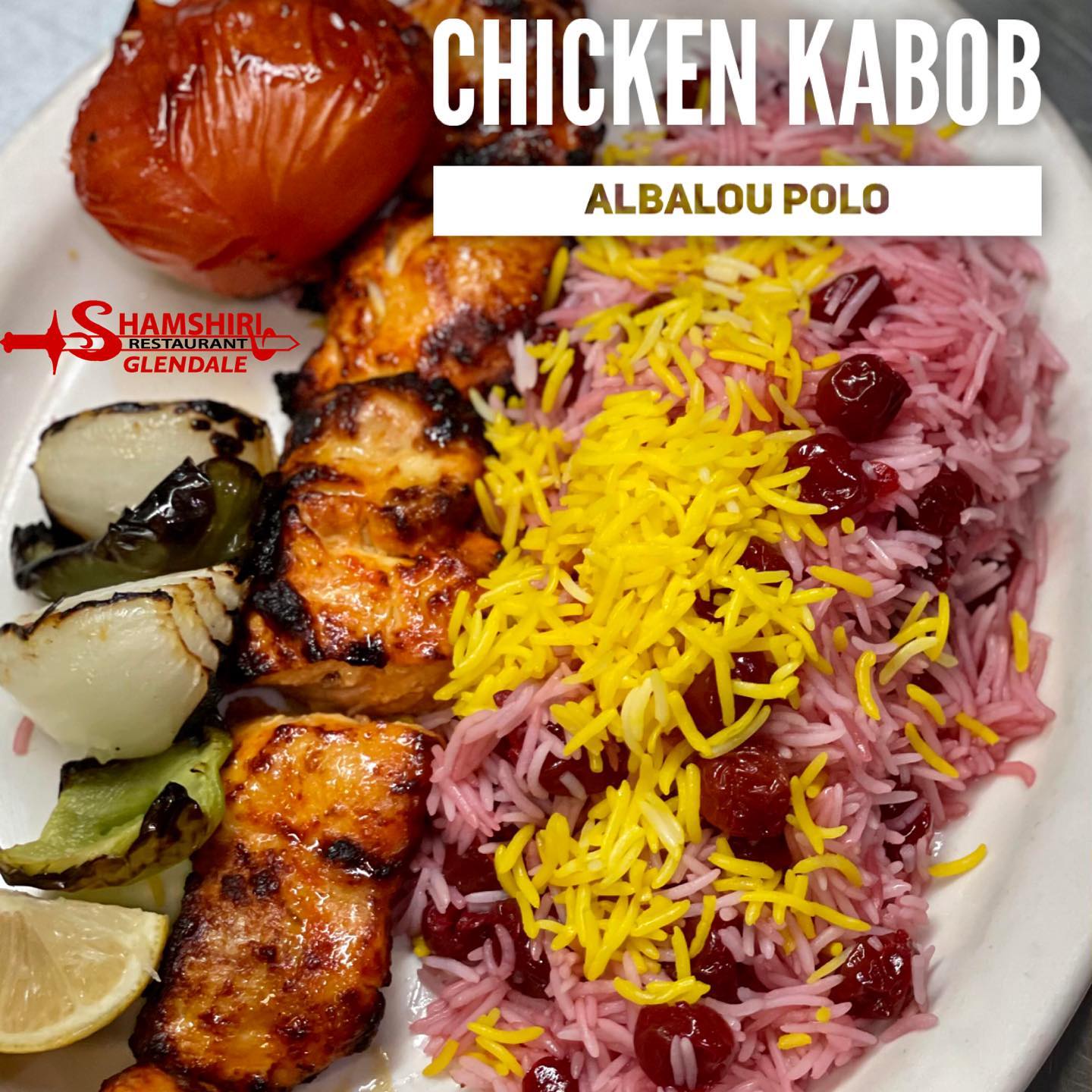
- Zereshk polo: barberries and saffron, tart and jewel-bright. Great with koobideh when you skip the stew.
- Baghali polo: fava beans and dill, herby and soft. Pairs well with lamb-leaning koobideh.
- Sabzi polo: mixed green herbs. Fresh and fragrant, a good match for lighter stews.
Then there’s tahdig, the crisp golden crust from the bottom of the pot. Order it if you can. It’s the texture a soft kabob plate is missing. Our guide to tahdig and the different polo styles covers the variations.
Frequently Asked Questions about pairing koobideh
What is traditionally served with koobideh?
Koobideh is traditionally served with saffron chelow rice, a grilled tomato, raw onion and sumac, often with butter for the rice. This plate is known as chelow kabab and is one of Iran’s best-known dishes.
Can you eat stew and kabob on the same plate?
Yes. Many Persian families serve kabob and khoresh together, spooning the stew over part of the rice and keeping the kabob on the other side so both stay distinct.
Which stew is best for someone new to Persian food?
Gheymeh is a gentle starting point, with a mild tangy tomato base and split peas. Ghormeh sabzi is the classic next step once you like the taste of dried lime.
Should I order koobideh with barberry rice or plain rice?
Choose barberry rice (zereshk polo) when koobideh is your only main and plain chelow when you are also sharing a stew. Flavored rice and stew sauce tend to compete.
Sides and herbs that finish the plate
Every kabob plate needs something cool and something green. Without them, char and fat win and the meal feels heavy.
Skip the idea that sides are optional. In Persian dining they’re structural. Here’s what each one does:
- Mast-o-khiar: yogurt with cucumber and dried mint. Cooling. Eat it between bites of kabob.
- Mast-o-musir: yogurt with Persian shallot. Sharper, with an oniony bite.
- Shirazi salad: diced cucumber, tomato and onion with lime or sour grape juice. Crunch plus acid.
- Sabzi khordan: a plate of fresh herbs such as basil, mint and tarragon, often with radishes and feta. Wrap a bite of kabob in bread with a few leaves.
- Torshi: pickled vegetables. A small amount goes a long way.
- Doogh: a salty, minty yogurt drink. The traditional drink with kabob.
Don’t order all six. Pick one yogurt side, one fresh side and the herb plate. For more detail on how each is made and eaten, read our post on traditional Persian sides and fresh herbs.
Eating Persian in Glendale: what changes the plan
Glendale is home to one of the largest Iranian-American communities in the country, and that shapes how a Persian meal here is usually eaten: shared, generous and built for groups. Plan your pairings for the table, not the individual.
That matters for ordering. In a city where Persian dining is often a family event, the natural move is a spread: a few kabob skewers, one or two stews, a big platter of rice and shared sides. Ordering one combo plate per person works, but you’ll get less variety than a shared table gives you.
Climate changes the plan too. Southern California’s mild weather means patio dining stays realistic well into late autumn and through much of winter. Cooler evenings this time of year suit heartier stews like fesenjan and ghormeh sabzi. On warm afternoons, lean lighter: koobideh, sabzi polo, Shirazi salad and a cold doogh.
Takeout is common in Glendale too. If you’re bringing the meal home, keep stews and rice in separate containers so the rice stays fluffy and any tahdig stays crisp. Our guide to storing and reheating Persian leftovers explains how to handle the extras.
Sample combinations for every size of table
A good Persian spread scales by adding stews and sides, not by piling on more kabob. Use these authentic Persian kabob combinations as starting templates.
For one or two diners
One koobideh plate with chelow and grilled tomato. Add one stew to share, ghormeh sabzi or gheymeh. Finish with mast-o-khiar and an herb plate. That covers rich, sour and fresh in three moves.
For four or more
Mix kabobs: koobideh plus a second style, such as chicken. Add two contrasting stews, one herby (ghormeh sabzi) and one sweet-tart (fesenjan). Order a platter of chelow, one flavored polo and tahdig if available. Add Shirazi salad, a yogurt side, sabzi khordan and torshi. Planning a bigger gathering? Our walkthrough on ordering a Persian dinner spread helps with quantities and pacing.
One more tip. Ask what’s on the menu that day before you build your plan. Stews vary by kitchen and by season, so treat these pairings as a framework, then fill it with what’s available. You can contact Shamshiri Persian Grill Glendale directly to check current offerings before you go.
Quick checklist
- Pair rich koobideh with one sour or herby stew.
- Choose plain chelow with stew and flavored polo without it.
- Add one yogurt side and one fresh side.
- Get the herb plate and wrap bites in bread.
- Order tahdig for crunch when it’s offered.
- For groups, share stews family-style instead of ordering more kabob.
Ready to put this plan on a plate in Glendale? Check what Shamshiri Persian Grill Glendale is serving and build your next kabob-and-stew meal around it.