The best way to reheat Persian rice and stew is to keep them apart: steam the rice gently with a splash of water under a lid, and warm the stew slowly on the stove until it bubbles. For Glendale households, that means the rice comes back fluffy, the tahdig crisp and the stew rich.
Key takeaways
- Store rice, tahdig and stew in separate containers, never mixed together.
- Get leftovers into the fridge within two hours, and sooner on a hot day.
- Reheat rice with a little water and a tight lid so it steams instead of drying out.
- Reheat stews slowly on the stove, adding a splash of water if they have thickened.
- Re-crisp tahdig in a dry or lightly oiled pan, not the microwave.
Picture a Tuesday night in Glendale. You open the fridge and there’s the takeout container from Sunday: a mound of saffron rice, a corner of tahdig and a generous scoop of ghormeh sabzi pooled right against the rice. You microwave the whole thing for two minutes. The edges go hard. The middle stays cold. The tahdig turns chewy, and the rice under the stew is mush. It tasted wonderful two days ago. Now it tastes tired. It doesn’t have to.
Why leftover Persian rice goes hard and stews go flat
Persian rice dries out because its starch firms up in the cold, and stews go flat because their sauce tightens and their aromas fade overnight. Both are normal. Both are fixable.
Persian rice, chelow, is cooked to be long, separate and fluffy. That texture comes from parboiling and then steaming with fat. Once it chills, the starch inside each grain firms and pushes out moisture. Dry heat makes it worse. A microwave without water just drives off what little moisture is left, so the grains turn brittle at the edges.
Stews behave differently. Khoresh like ghormeh sabzi, gheimeh and fesenjan thicken as they sit. The sauce sets up. Fat rises and firms on top. Dried lime and saffron notes mellow, and some people think the stew actually tastes better on day two. That’s often true, as long as you reheat it with patience instead of blasting it.
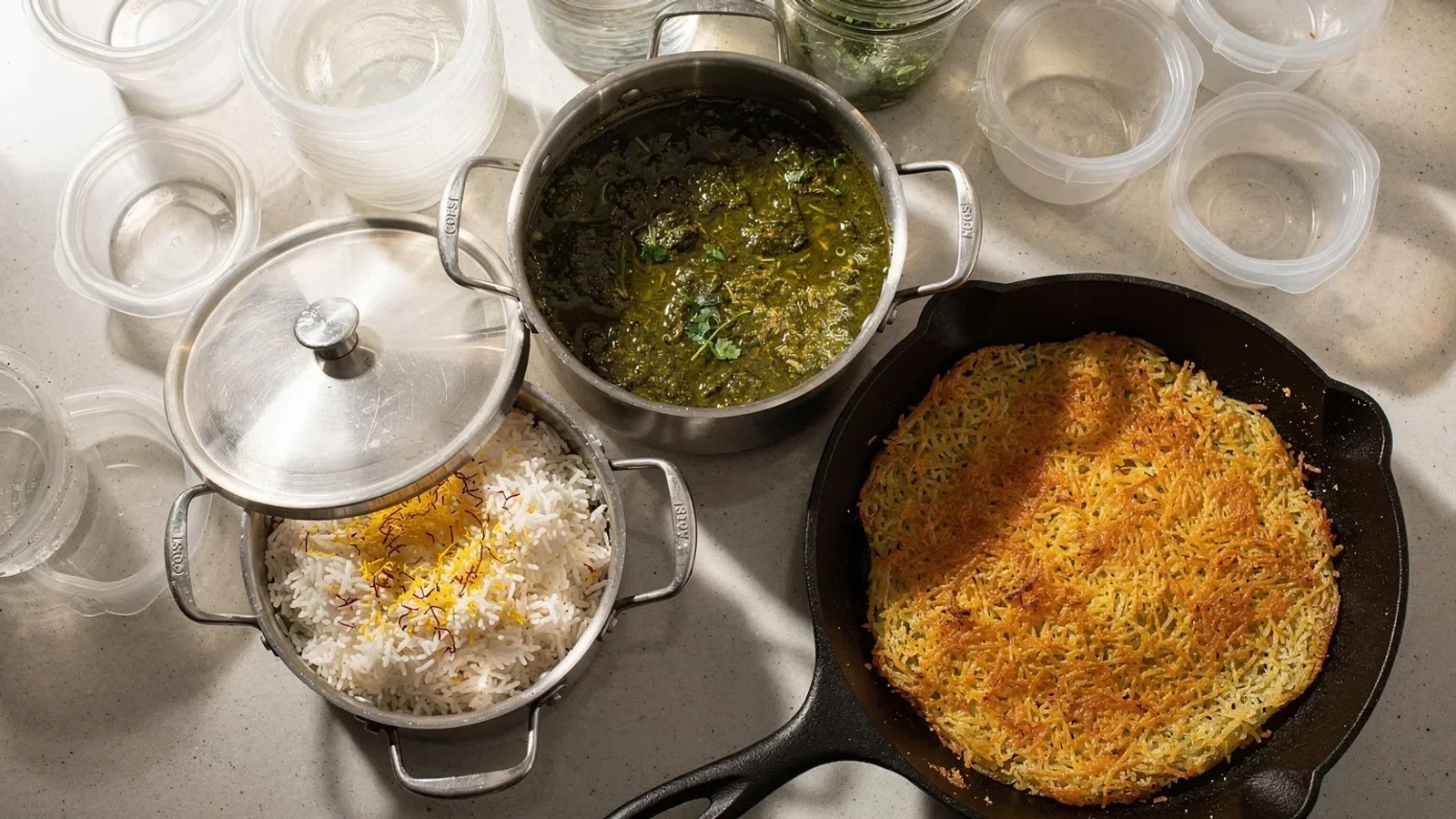
Then there’s tahdig, the crisp golden layer from the bottom of the pot. It’s crunchy because it’s dry and fried. Put it in a sealed container next to damp rice and it softens within hours. Microwave it and it turns leathery.
Store it right the same night
Good reheating starts with good storage: separate the components, cool them quickly and seal them tight. Do this the night you bring the food home, not two days later.
Here’s the routine. Scoop the rice into its own shallow container. Shallow matters, because a deep tub of rice stays warm in the center far longer. Put the stew in a separate container with a lid. Wrap tahdig loosely in a paper towel and keep it in its own container or bag so the rice’s steam can’t reach it. If your order came with kabob, store that apart as well; it reheats on its own schedule.
Timing matters for safety, not just texture. The U.S. Department of Agriculture’s guidance on handling leftovers safely says to refrigerate cooked food within two hours, use it within three to four days, and reheat it to 165°F. Rice deserves extra care. Cooked rice left sitting warm for long stretches is a known food-safety concern, so don’t leave the takeout bag on the counter while you watch a movie.
Freezing works too. Stews freeze well for longer storage. Rice freezes acceptably if you portion it flat in freezer bags and press out the air. Tahdig does not freeze well. Eat it soon.
If you’re still planning the order, it helps to think ahead. Our guide to ordering Persian takeout that travels well covers what to ask for so leftovers are easier to handle later.
How to reheat Persian rice and stew so they taste fresh again
Reheat rice with steam, reheat stew with slow heat, and re-crisp tahdig with dry heat. Three components, three methods.
The rice: add water, trap the steam
The stovetop gives the closest result to fresh. Put the rice in a pot with a tablespoon or two of water for each cup or so of rice. Add a small knob of butter if you like. Cover it tightly. Some cooks wrap the lid in a clean kitchen towel, the way Persian rice is steamed in the first place, to catch condensation so it doesn’t drip back onto the grains. Warm it over low heat for several minutes, then fluff with a fork.
Short on time? The microwave works if you respect the water. Sprinkle the rice with water, cover the bowl with a damp paper towel or a vented lid, and heat in short bursts. Stir between them. Stop when it’s steaming hot all the way through.
Skip the oven for plain rice. It dries the top layer before the middle warms.
The stew: low, slow and a splash of water
Tip the stew into a small saucepan. If it has set up thick, add a splash of water and stir as it loosens. Bring it to a gentle simmer over medium-low heat, stirring now and then so the bottom doesn’t catch. Bean-heavy stews and fesenjan, with its ground walnuts, scorch easily. Keep the heat moderate.
Taste before serving. A squeeze of lemon or lime can brighten a stew that’s gone a little muted. Don’t add salt until you’ve tasted, because the sauce concentrates as it reduces.
Microwaving stew is fine in a pinch. Cover it, heat in short intervals and stir between them, since stews heat unevenly and can stay cold in the middle.
The tahdig: a dry pan, not the microwave
Warm a skillet over medium heat with a thin film of oil or none at all. Lay the tahdig in crisp side down. Let it sit, without fussing, until it’s hot and crackling again. Flip briefly if you want the top warm. An oven or toaster oven on a tray also works, and it’s easier for larger pieces.
Related service: persian food.
That’s the whole trick. Separate, steam, simmer, crisp.
What to expect from leftovers, and what not to
Properly reheated Persian rice and stews come close to fresh, but they won’t fully match food served straight from the pot. Set your expectations there and you’ll enjoy them more.
The stew usually holds up best. Many khoresh taste deeper the next day because the herbs, meat and sour notes have had time to settle together. Rice comes back soft and separate, though rarely quite as long-grained and airy as it was when first steamed. Saffron rice may look a little paler. Tahdig can get crisp again, but day-one crunch has a lightness nothing else matches.
Kabob is the trickiest item on a Persian plate to reheat. Grilled meat dries quickly. Warm it gently, covered, with a spoonful of water or stew juices, and stop as soon as it’s hot.
If you want a reference point for what this food tastes like at its peak, nothing beats Persian restaurant dining in Glendale, where rice comes straight from the steamer and stews come straight off the stove. Use that memory as your benchmark at home. Your reheated plate is aiming for it.
It also helps to know what good Persian cooking looks like in the first place. Fluffy, separate grains and a deep, slow-cooked stew are signs of care. Our piece on what makes Persian cooking authentic walks through those details.
Mistakes that ruin good leftovers
Most bad leftovers come from three habits: storing everything together, reheating with dry heat and reheating more than once. Fix those and you’ve fixed most of the problem.
Mixing rice and stew in one container is the big one. The rice soaks up the sauce, goes soggy, and you lose the contrast that makes the dish. Keep them apart until the plate.
Reheating the same portion again and again is the next. Each round dries the rice further and dulls the stew. It also adds time in the temperature range where bacteria grow. Reheat only what you’ll eat now.
Leaving food out too long is the third. A takeout bag in a warm car or on the counter for the afternoon is a bad start for rice in particular. When in doubt, throw it out.
Finally, don’t drown the rice. A splash of water steams it. A puddle turns it into porridge.
Frequently Asked Questions about reheating Persian leftovers
How long do Persian rice and stews last in the fridge?
Food-safety guidance says to eat cooked leftovers within three to four days if they were refrigerated promptly. For the best texture, eat the rice and tahdig sooner, ideally within a day or two.
Can you freeze Persian stews like ghormeh sabzi?
Yes, most Persian stews freeze well. Cool them, freeze in sealed containers and thaw in the fridge before reheating slowly on the stove with a splash of water.
Is it safe to reheat rice more than once?
It’s best to reheat rice only once. Portion out what you’ll eat, reheat that until it’s steaming hot throughout, and keep the rest refrigerated.
Why does my reheated rice taste dry even with water?
The lid is usually the problem. Without a tight cover the steam escapes, so seal the pot or bowl well and heat gently rather than on high.
Glendale heat and your takeout bag
Southern California‘s warm weather means cooked food warms up faster between the counter and your fridge, so in Glendale the drive home matters more than you’d think. Plan for it.
Glendale summers run hot, and even in the cooler months, sunny afternoons and dry Santa Ana wind spells can push temperatures up quickly. A car parked in the sun heats up fast. That makes the two-hour rule tighter in practice, and on a hot day food-safety guidance shortens the window further. Go straight home with your order, skip the extra errands, and get the rice into the fridge first. Many Glendale homes, especially older ones, also have smaller kitchens and fridges, so shallow, stackable containers make separate storage easier. Winter evenings here are mild but cool, which is a good time for a slow-simmered stew reheated on the stove.
Ready for another round of rice and stew made fresh? Plan your next Persian meal with Shamshiri Persian Grill Glendale and keep these tips handy for the leftovers.